NAIROBI, Kenya, July 9 The Independent Electoral and Boundaries Commission (IEBC) has invited Kenyans to submit public views on proposed election campaign financing regulations as it moves to tighten oversight of political spending ahead of the 2027 General Election, amid growing scrutiny over campaign expenditure in the ongoing Ol Kalou parliamentary by-election.
In a public notice issued on Wednesday, the electoral commission said it had developed draft regulations on campaign financing, contributions, spending limits and authorised expenditures in accordance with the Constitution and the Election Campaign Financing Act.
The move comes at a time when concerns have emerged over the scale of campaign spending in the Ol Kalou parliamentary race, with political observers and rival candidates questioning whether some aspirants are adhering to existing campaign financing principles despite the law not yet being fully operationalized.
The commission said Article 88(4)(i) of the Constitution mandates it to regulate the amount of money that may be spent by or on behalf of candidates and political parties during elections.
“The Election Campaign Financing Act provides for the regulation, management, expenditure and accountability of campaign funds, with candidates and political parties expected to self-regulate under the oversight of the Commission,” IEBC said.
Under Section 29 of the Act, the commission is required to develop regulations governing campaign expenditure, political contributions, financial disclosures, monitoring, record-keeping and other accountability measures.
The law also requires the electoral agency to prescribe campaign contribution limits, spending ceilings and authorised expenditures through a Gazette notice at least 12 months before a General Election.
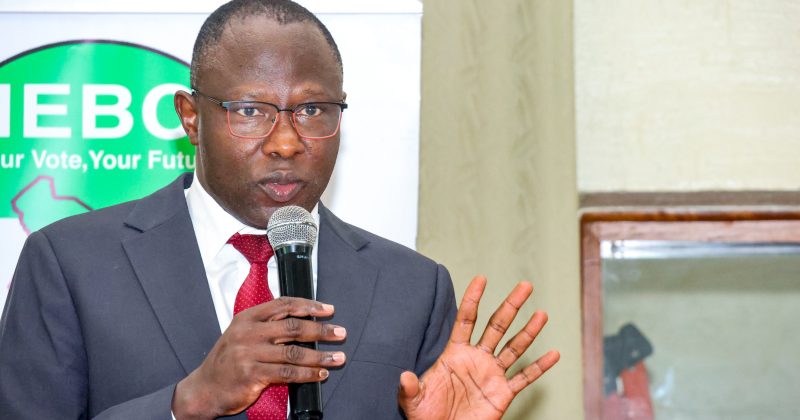
IEBC Chairperson Erastus Edung Ethekon said the draft regulations have been prepared in readiness for the 2027 General Election and are now open for public participation.
The commission has invited individuals, political parties, civil society organisations and other stakeholders to submit memoranda on the proposed regulations and spending limits by July 15, 2026.
The public participation process is expected to inform the final framework that will govern campaign financing in the next General Election, an area that has repeatedly attracted calls for stricter enforcement to curb the influence of excessive spending in electoral contests.
Campaign financing has remained one of the most contentious issues in Kenya’s elections, with concerns that unchecked expenditure can undermine fair competition by giving financially powerful candidates an advantage over rivals.
The debate has been rekindled by the Ol Kalou parliamentary by-election, where allegations of lavish campaign spending have dominated political discourse, prompting renewed calls for the speedy implementation and enforcement of campaign finance rules.
Once finalized, the regulations are expected to provide a clearer legal framework on campaign contributions, expenditure ceilings, financial disclosures and accountability mechanisms aimed at enhancing transparency and promoting a level playing field in future elections.