By Muchira Gachenge,
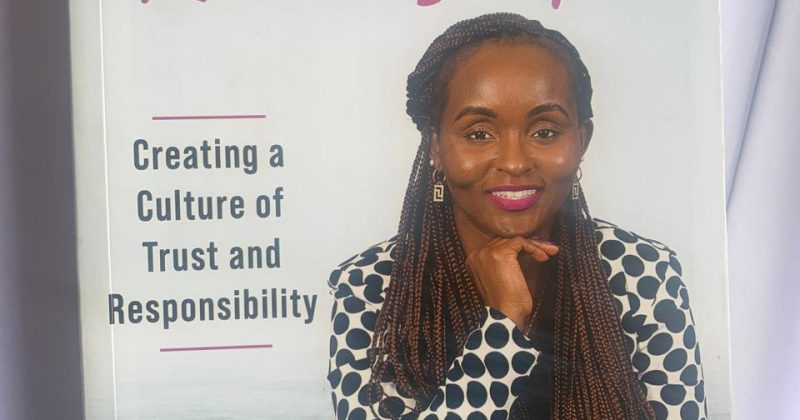
APRIL 18 – In her new debut addition to the leadership genre, “Ethical Leadership: Creating a Culture of Trust and Responsibility,” Carol Banks sets out to interrogate the ever critical question, albeit one that has been variously answered: How can we make Africa great for its people?
To justify the intellectual need for such an inquiry, it may be pertinent to contextualize Africa in the present age of swift technological developments most emphatically characterised by social media, remote work, artificial intelligence, smart travel and other dynamics that are reshaping every facet of our lives.
Africa is endowed with vast natural resources: oil, wind, critical minerals for green energy transition, and more crucially, a young demographic. In fact, it is estimated that by 2050, about 25 years from now, one in four people in the world, or a quarter of the global population will be African, with nearly 40% of the world’s workforce based on the continent. These statistical facts provide a framework through which we can look at Africa’s power and competitive advantage.
On the flipside, it is a continent that is encumbered by a myriad of seemingly endless challenges that keep it saddled in a miasma of corruption, poor governance, rampant unemployment, prevalent endemic diseases, high poverty levels, and war. The contrast between the continent’s potential, and the bleak reality punctuated by these challenges is stark, and necessitates a definite, perhaps even radical, intervention that can turn things around for over a billion people. But what is the solution to Africa’s multiple challenges?
In the 345 pages, Banks draws from her experiences in the leadership roles from the medical industry to pharmaceutical research, personal reflections, and wide travels. While defying the “how to” conventions typical of many leadership books that prescribe solutions, she utilises, to her credit, extensive research to situate the genesis of many problems that we are facing as a continent. Backing her historical research are key statistics, as well as personal anecdotes that make the book even more readable by the general audience.
For every possible level of sphere of leadership and influence: from individual, family, non-governmental organisation, to business and government departments, Banks offers nuanced perspectives that can come in handy when figuring how to make progress in an ever-changing world that demands agility and flexibility as opposed to formulaic approach to everyday challenges.
While she emphasises the role of parents, teachers, mentors, and one’s heroes in building leadership capabilities, the part I consider very valuable in the book is that she does not shy away from acknowledging what she has learnt from her children while raising them. It is a point of intro- and retrospection: it shows that while we endeavour on teaching, shaping and influencing others, remaining teachable is a key part of becoming an effective leader.
In brief, Banks’ leadership offering provides a framework for revolutionizing leadership in its varied expressions: from parenting at home, staff management at the office, service in public offices, religious leadership, among other ways leadership is presented.
While it is an excellent library addition to the genre of leadership, upon reading it, I’d agree with other critics and readers that it is more than that. The book, while offering a bold proviso, is a template that can be applied in any leadership domain to achieve desired results, which mostly is a functional system that works for us all.
What could Banks have done differently? Perhaps, in a possible sequel, it would be worth drawing the readers closer into her deeply personal experiences of leading through parenthood, as the whole point of her diagnoses of the systemic change seems to locate mentorship of young, upcoming leaders as the central point.
The writer is a literary critic