NAIROBI, Kenya Oct 26 – The government has outlined a three-pronged road safety intervention focusing on infrastructure funding, stricter traffic enforcement and improved driver training following a head-on collision that killed 22 people along the Nairobi–Mombasa Highway.
Transport Cabinet Secretary Davis Chirchir said the government would strengthen the management of accident black spots, intensify enforcement against dangerous driving and tighten training and oversight of commercial and public service vehicle drivers.
The measures were announced following Saturday’s fatal crash at Kanga, approximately 10 kilometres east of Mtito Andei, involving a commercial cement tipper truck and a passenger bus belonging to Power of the Word Church International, Mombasa.
The accident occurred at approximately 7:45am, leaving 22 people dead and several others injured. Initial accounts indicated that improper overtaking may have contributed to the collision, although investigations into the cause remain ongoing.
In a statement dated October 25, Chirchir said “the government was pursuing coordinated and sustained interventions to address the country’s road safety challenges, working with Parliament, the Judiciary, the National Police Service, county governments and other stakeholders.”
“The first intervention will focus on structured funding for road safety infrastructure, with the government seeking to strengthen the black spot management programme,” he stated.
He pointed out that the initiative is intended to identify high-risk road sections and implement targeted engineering and infrastructure improvements to reduce the likelihood and severity of crashes.
The latest accident has renewed scrutiny of the Nairobi–Mombasa Highway, a major transport corridor used by passenger buses, commercial trucks and private motorists.
Chirchir cited the October 3 accident at Salama, near Mtito Andei, which claimed 17 lives, as another reminder of the urgency of addressing road safety risks.
The government said targeted infrastructure improvements would form part of broader efforts to prevent recurring accidents on dangerous road sections.
However, the statement did not specify the funding allocation, implementation timelines or the first locations to be prioritised under the strengthened programme.
The second intervention will involve intensified traffic enforcement against dangerous driving, reckless overtaking, speeding and other violations that put motorists and passengers at risk.
The government said enforcement agencies would also promote responsible road-user behaviour as part of efforts to reduce preventable road deaths.
The Kanga collision has brought renewed attention to overtaking on busy highways, particularly where heavy commercial vehicles and passenger buses share the same carriageways.
Although improper overtaking is among the suspected factors in Saturday’s crash, authorities have yet to establish the definitive cause.
The National Transport and Safety Authority (NTSA), the National Police Service and other relevant agencies are investigating the incident to determine what happened and establish whether any violations contributed to the collision.
Chirchir said the government would work with the relevant institutions to strengthen compliance and accountability across the transport sector.
The third pillar of the plan will focus on stronger training and oversight of drivers, particularly those operating commercial vehicles and public service vehicles.
The government intends to pursue structured training and compliance measures aimed at improving driver competence, discipline and adherence to road safety requirements.
The intervention comes as questions emerge over the regulation of vehicles used to transport passengers, including buses operated by institutions and organisations, alongside trucks operated by commercial enterprises.
Both vehicles involved in the Kanga crash were commercial vehicles, highlighting the importance of effective regulation, vehicle compliance and enforcement regardless of ownership.
The government said improved driver oversight would form part of a wider effort to ensure that operators meet safety requirements and that drivers observe traffic rules.
The Ministry also plans to engage Parliament, the Senate and the Judiciary to address implementation challenges surrounding the Commercial Vehicle Regulations 2026, Vehicle Inspection Regulations 2026 and School Transport Regulations 2026.
The proposed regulatory frameworks are intended to strengthen vehicle roadworthiness, driver accountability and fatigue management.
The government said effective implementation would require cooperation among road agencies, law enforcement institutions, the health sector, county governments and other stakeholders.
The planned national approach will operate under clearer responsibilities, measurable targets and stronger accountability, according to the Ministry.
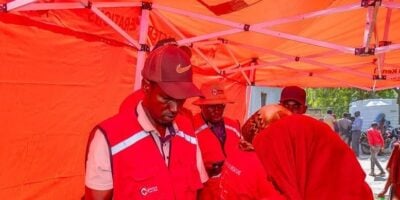
The government also commended emergency responders, medical personnel and security officers who participated in rescue efforts following the Kanga collision.
The injured victims were taken to Mtito Andei Sub-County Hospital and Kambu Level 4 Hospital for treatment.
Chirchir extended condolences to the bereaved families, friends and the affected church community, as investigations continued into one of the latest deadly crashes on the Nairobi–Mombasa Highway.
The government said sustained collaboration among public institutions and transport stakeholders would be necessary to reduce road deaths and improve safety across the country’s road network.