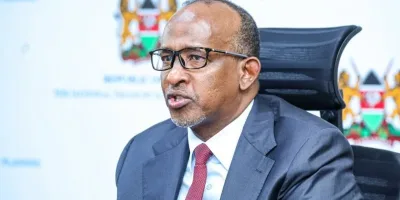
NAIROBI, Kenya, Apr 12 – Public service Cabinet Secretary Moses Kuria has vowed to enact sweeping reforms within the public sector to reduce the wage bill to revenue ratio to 35 percent by 2028, down from the current 43 percent.
Kuria asserted that the government is keen on reviewing the wage bill which is currently bloated.
He highlighted that Kenya’s approximately one million civil servants currently consume a disproportionate 43 percent of the country’s revenue, despite the total population standing at about 54 million.
“We will do something because it is the right thing to do,” Kuria said Friday during the briefing ahead of the National Wage Bill conference slated for April 15-17 at the Bomas of Kenya.
“We will do something to cut on our expenditure, we will undertake serious process re-engineering across government and review the way we manage our consumption.”
Labeling the current situation as “immoral, unethical, and unfair,” Kuria stressed the moral imperative of ensuring equity and fiscal responsibility.
“This is not merely a theoretical discussion; It is a question of morality, ethics, fairness and the question of public expectations,” he added.
Kuria underlined the necessity of radical reforms within the public service, warning that without significant changes, Kenya will struggle to sustain itself financially.
The Public service CS added that he does not mind being “unpopular’ with the public servants in his pursuit to fight for the welfare of Kenyans.
He maintained that going forward he will be “more than audacious” in his bid to achieve the desired results.
“I want to assure you that I am not in pursuit of being popular. The Head of Public service and myself are going to come up with radical strategies to fight for the 53 million people,” he said.
Lyn Mengich, Chairperson of the Salaries and Remuneration Commission, echoed Kuria’s concerns, emphasizing the fiscal unsustainability of the current wage bill.
She underscored the crucial role of a fiscally sustainable public wage bill in expanding public services and driving economic development agendas.
Mengich highlighted the urgent need for corrective measures, emphasizing the importance of a comprehensive, multi-sectoral approach to wage bill management.
She also called for collaboration between the national government and devolved units to achieve the targeted 35 percent wage bill ratio.