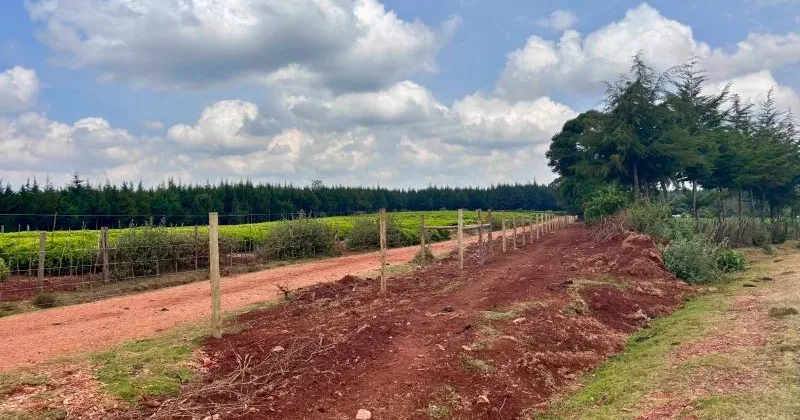
NAIROBI, Kenya, July 9 – Community members and forest users in Kaptagat, Elgeyo Marakwet County, have dismissed fears that fencing the forest will lock them out, saying the initiative is aimed at regulating access and protecting the ecosystem for future generations.
Residents and members of Community Forest Associations (CFAs) say the fencing exercise is intended to regulate access rather than exclude communities from resources they depend on.Livestock farmer Hosea Rotich said protecting the forest through fencing was a necessary step towards ensuring sustainable use of the ecosystem.
“A farm that is not fenced is not a farm,” he said.
According to Rotich, controlled access will help preserve the forest while allowing communities to continue benefiting from resources such as honey production and eco-tourism opportunities.
“Fencing does not mean people will not enter the forest. There are gates and access points. If I need to check on my beehives, I can still go in and harvest my honey,” he said.
He added that a well-protected forest would attract visitors and create additional economic opportunities for local communities.
“People who want to buy honey will come. Others who want to see a well-conserved forest will visit and that will bring tourists to this area,” he said.
Brian Kipkosgei, a member of the Community Forest Association, said local communities had received assurances that existing user rights would remain in place after the fencing exercise.

He noted that communities currently enjoy several user rights, including access to medicinal plants, water, firewood collection, grazing and beekeeping activities.
“The fencing will not stop us from exercising these rights. We have been assured that it will only help control access and improve management of the forest,” he said.
Kipkosgei said designated entry points would ensure communities continue accessing resources in an orderly and sustainable manner.
The support from local communities reflects the broader approach adopted under the Kaptagat Integrated Conservation Programme (KICP), which focuses on addressing the root causes of forest degradation while improving livelihoods.
Launched in 2017, the programme introduced interventions in environmental restoration, clean water access, clean energy and income generation to reduce pressure on the forest.
The model has contributed to reduced dependence on forest resources by promoting alternatives such as zero-grazing, fodder production, biogas and climate-smart enterprises.
Kaptagat Forest, which spans six forest blocks, is one of Kenya’s critical water towers and supports thousands of households that depend on its ecosystem services for their livelihoods.