The global economic order is entering a period of change. For decades, the institutions governing international finance, trade and development have reflected the priorities of established economic powers. Yet emerging economies are creating pressure for a system that gives developing countries greater influence over decisions affecting their future.
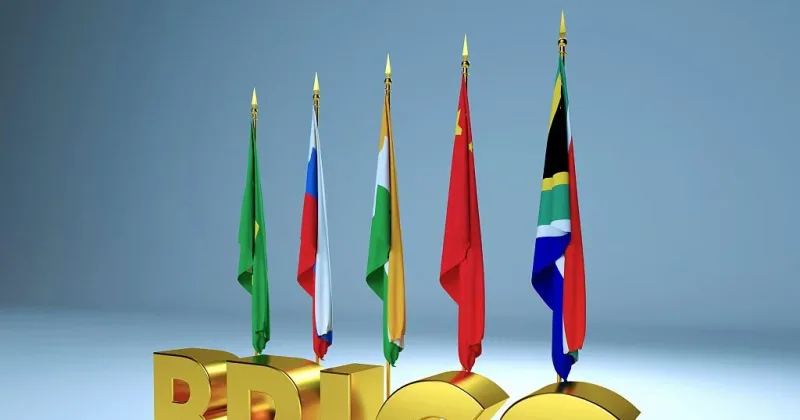
What began as an informal grouping of Brazil, Russia, India and China has evolved into a broader platform for cooperation among emerging economies. Its expansion has strengthened its presence across Africa, Asia, the Middle East and other parts of the Global South, turning BRICS into an important forum for countries seeking greater economic and diplomatic space.
China is central to this evolution, not simply because of the size of its economy, but because of its capacity to translate economic strength into practical cooperation. With enormous manufacturing capabilities, extensive trade networks, technological expertise and substantial financial resources, China possesses assets that can give BRICS economic weight.
Beijing has also supported stronger South-South cooperation, reform of global institutions and greater use of national currencies in international trade. These priorities resonate with developing countries that have long argued that the global financial system does not adequately reflect the changing distribution of economic power.
The discussion around cross-border payments illustrates the direction in which BRICS is moving. Member states are exploring closer links between their payment systems and central bank digital currencies. If developed, such cooperation could make transactions faster, cheaper and more efficient, while giving businesses additional options for conducting international trade.
For Africa, the continent requires investment in roads, railways, ports, electricity, water systems and digital infrastructure. Financing gaps remain a major obstacle to industrialisation, and traditional development institutions have not always provided resources at the scale or speed required.
Africa should view BRICS through an economic rather than purely geopolitical lens.
African countries need markets, investment, technology, affordable financing and opportunities to create jobs. They should use their participation in BRICS to pursue these interests. The objective should not be to exchange one dependency for another, but to build stronger and more diversified economic relationships.
Africa cannot achieve prosperity if it remains primarily an exporter of raw materials while importing finished products. Engagement with China and other BRICS members should encourage local processing, manufacturing, skills development and technology transfer. African economies must seek partnerships that strengthen domestic productive capacity rather than simply increase the volume of commodity exports.
China has much to offer in this regard. Its own economic transformation demonstrates the importance of infrastructure, manufacturing, technology and access to large markets. Its experience and industrial capabilities could support African countries seeking to develop value chains and participate more effectively in global production.
Because of its economic size, China carries influence. That influence should be used to strengthen cooperation without overshadowing the interests of smaller members. The credibility of BRICS will depend on whether its major economies can demonstrate that the grouping is based on mutual benefit, consultation and results.
BRICS should not be reduced to an attempt to construct an alternative Western bloc. Its greater value may lie in making the international system more representative and competitive. A stronger Global South does not necessarily require the displacement of existing institutions. It requires greater choice, stronger representation and the ability of developing countries to pursue their interests with greater confidence.
The continent should engage BRICS with clear priorities: expanded market access, investment in productive sectors, infrastructure financing, technology partnerships and employment creation. Membership or cooperation should be measured by outcomes that improve economies and livelihoods, not by diplomatic symbolism.
China will remain indispensable to that conversation. Its economic capacity gives BRICS a powerful engine, while its emphasis on South-South cooperation provides an important development dimension.
Yet China’s role alone will not determine BRICS’ success. Other members must contribute their own strengths, while African countries must negotiate strategically and protect their long-term interests.
The future of BRICS will therefore depend less on declarations about a changing world and more on whether it can build institutions that deliver benefits.
If it can make trade easier, expand development finance, encourage technological cooperation and open new economic opportunities, BRICS will demonstrate that a multipolar world can produce more than geopolitical competition.
It can produce greater economic choice.
China has a central role in making that possible. Africa, however, must decide how effectively to use the opportunity.
The writer is a Journalist and Communications Consultant