I once or twice shared a television talk show with Hon. Kaguchia, either in the run-up to the 2022 General Election or shortly thereafter. I sympathise with the political storm that has since engulfed him following his shocking remarks that appeared to threaten the very people he seeks to represent. Back then, however, his unwavering support for President William Ruto was unmistakable. Even when facts and data seemed to weaken his arguments, his conviction carried him through.
Kaguchia belonged to a group of political lieutenants who shepherded Mt Kenya into President Ruto’s camp despite the open opposition of then-President Uhuru Kenyatta. Whether they were the architects of that political shift or simply rode an irresistible wave of Ruto’s popularity is a question worth reflecting upon.
Indeed, President Ruto’s victory in 2022 is itself worthy of rigorous academic inquiry. It presents a fascinating case study for political scientists, communication scholars and electoral strategists alike. Elections are rarely decided by a single factor. They are won through the interaction of several powerful forces.
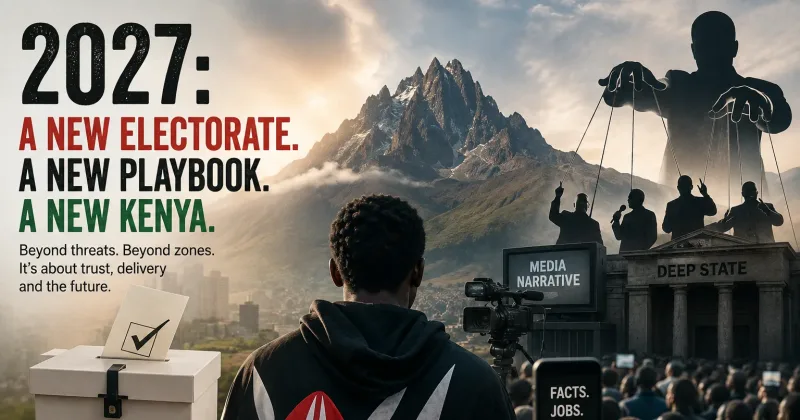
The first is the state itself—or what is often described as the “deep state.” Ideally, the state should serve as a neutral arbiter, ensuring that electoral institutions operate freely, fairly and transparently so that the will of the people prevails.
Yet, as in many democracies, the perception of neutrality often exists alongside allegations of unseen political influence. Beneath the visible institutions, many believe there are bureaucratic and political actors working behind the scenes to shape outcomes in favour of preferred candidates. Whether one accepts this characterisation or not, the idea of a “deep state” remains a recurring feature of Kenya’s political discourse.
Such debates certainly surrounded the 2022 election. Some argued that entrenched state interests sought to block President Ruto’s ascent, while others contended that elements within the establishment quietly supported him against the political order of the day. Whatever one’s perspective, one fact remains difficult to dispute: President Ruto’s victory defied many conventional expectations and deserves careful empirical study rather than retrospective folklore.
Even COTU Secretary General Francis Atwoli, then an outspoken supporter of Azimio, publicly conceded after the election that William Ruto had outmanoeuvred them politically.
The second pillar is the media.
Few candidates win national elections if the media is overtly hostile to them or if the broader information environment consistently frames them negatively. Political communication scholar Noam Chomsky argued that mass communication can shape public consent through agenda-setting and framing. Whether or not one subscribes fully to his thesis, media narratives undoubtedly influence public perception.
Many Kenyans maintain that during the 2022 campaigns, there was a prevailing narrative that cast then-Deputy President Ruto in an unfavourable light. This is not to suggest he lacked coverage—far from it. His campaign dominated headlines and television screens. Rather, critics argue that much of the framing encouraged voters to question his suitability for office.
Yet despite these headwinds, President Ruto built one of the most formidable grassroots political machines Kenya has witnessed. That organisational achievement also deserves scholarly examination. How did a candidate who many believed faced institutional and media disadvantages ultimately prevail?
This brings us back to the Kaguchias and the Riggy Gs of Kenya’s politics.
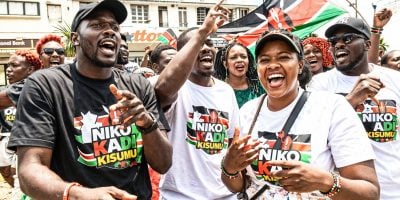
What made 2022 remarkable was not simply that Mt Kenya voted for President Ruto. The region overwhelmingly rejected many leaders who opposed him, producing an almost complete sweep for UDA candidates—from Members of Parliament to governors.
Today, many of those same politicians argue that the mountain has abandoned President Ruto. Perhaps it has. The Ol Kalou by-election has certainly fuelled that narrative.
But then one hears inflammatory rhetoric from some leaders, including Kaguchia, and is reminded of the politics associated with Rigathi Gachagua’s more combative style. If the electorate has genuinely shifted, why resort to threats, intimidation or divisive language to persuade voters? Democratic support is earned through persuasion, not coercion.
That is why 2027 presents an entirely different political landscape.
The next election will not simply be decided by state influence or media narratives. It will hinge on who best understands the psychographics of Kenya’s emerging voter.
This voter is fundamentally different from previous generations. They are less interested in ethnic mobilisation and “our zone” politics. They live on TikTok, organise discussions through WhatsApp groups, consume information across multiple digital platforms and verify political claims in real time.
Their priorities are practical rather than tribal. They care about the cost of living, food prices, rent, employment, taxation, healthcare, housing and whether leaders have consistently shown up long before campaign season. They value financial security, opportunity and a life free from unnecessary political drama. Loyalty to personalities matters less than performance.
Against that backdrop, declarations about “our zones,” political zoning or traditional strongholds increasingly sound disconnected from reality. Equally, political threats delivered at village rallies appear to belong to another era.
Kenyan politics may well be approaching an inflection point. Politicians continue to speak confidently of “our bases,” “our people,” and “our mountain.” But the electorate itself is changing faster than many political elites seem willing to acknowledge.
The politicians who succeed in 2027 will not necessarily be those who generate the loudest rallies or the most incendiary speeches. They will be those who understand that public anger may fill a stadium, but it is credible policy, disciplined organisation, digital engagement and a convincing vision for the future that ultimately win State House.
That is the lesson many leaders risk learning too late.