NAIROBI, Kenya, Nov 20 – Deputy President Kithure Kindiki has reaffirmed the government’s commitment to protecting the independence of the Judiciary, saying a strong and effective justice system is critical to constitutional democracy, economic growth and social progress.
Kindiki said the administration recognises the Judiciary’s central role in protecting fundamental rights, resolving disputes, upholding the rule of law and ensuring that government authority is exercised within constitutional limits.
“The Government recognizes that a strong, independent and effective Judiciary is indispensable to constitutional democracy, economic development and social progress,” he said.
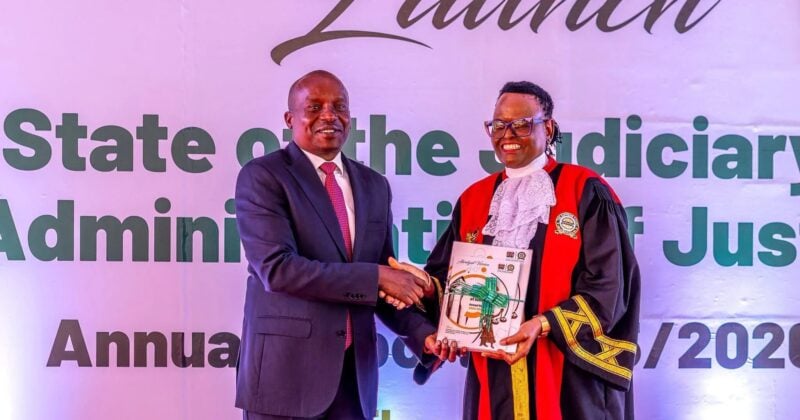
Speaking on Friday in Nairobi during the launch of the State of the Judiciary and the Administration of Justice Annual Report for the 2025/2026 Financial Year, the Deputy President said the government’s commitment was reflected in increased budgetary allocations and institutional reforms since President William Ruto assumed office in 2022.
He disclosed that the Judiciary’s budget had increased to Sh30.4 billion in the 2026/2027 financial year, up from Sh27.15 billion in the previous financial year.
Kindiki said the government had also supported the appointment of an additional 53 judges to strengthen the courts’ capacity, address case backlogs and improve the efficiency of justice delivery.
The Deputy President further cited the enactment of the Judges’ Retirement Benefits Act, 2026, which he said addressed longstanding concerns over judges’ retirement welfare and strengthened the independence of the institution.
He noted that President Ruto had also acted on requests by the Judicial Service Commission, including improving judges’ retirement benefits and expediting the issuance of title deeds for court premises.
On Friday, Lands Cabinet Secretary Alice Wahome presented two title deeds covering the Supreme Court precincts and its parking area, ending years of uncertainty over ownership of the land housing the country’s highest court. She also handed over a title deed for a proposed court in Kapsabet town.
“I am glad that we have covered a lot of ground on the promises by the President, including presentation today of title deeds for Supreme Court precincts and the parking area,” Kindiki said.
The Deputy President also pointed to the Judiciary’s improved case clearance rate, noting that for the second consecutive financial year, courts had resolved more cases than were filed.
According to the report, the Judiciary disposed of 576,702 cases against 561,580 new filings during the period, translating to a case clearance rate of 103 per cent.
Of the cases resolved, 190,779 had been pending for more than one year, including 37,757 that had remained unresolved for more than five years.
However, Kindiki challenged the Judiciary to intensify efforts to clear the more than 341,000 cases that have been pending for over a year, warning that delays in the administration of justice undermine public confidence and economic activity.
“The Judiciary must continue playing its rightful role by reducing delays, strengthening commercial dispute resolution and ensuring that justice delivery supports economic and social progress,” he said.
He also announced progress in the implementation of the Judicial Performance Improvement Project Phase II, a Sh26 billion infrastructure programme approved by Cabinet in June in partnership with the World Bank.
The project targets the modernisation of the Supreme Court and Court of Appeal, consolidation of infrastructure for tribunals and Judiciary administration, as well as the establishment of a permanent home for the Kenya Judiciary Academy.
Kindiki said the investments would address infrastructure gaps, improve working conditions and strengthen the Judiciary’s institutional capacity.
He further assured that outstanding legislative proposals, including the Tribunals Bill and the Kenya Judiciary Academy Bill, as well as the review of the Small Claims Court Act, were being fast-tracked.
The Deputy President maintained that investment in the justice system should receive the same attention as infrastructure development, arguing that an efficient Judiciary provides the legal certainty needed to attract investment and support enterprise.
“Just as we invest in roads, energy and digital connectivity to support economic activity, we must invest in a justice system that provides legal certainty, protects rights and facilitates investment and enterprise,” he said.