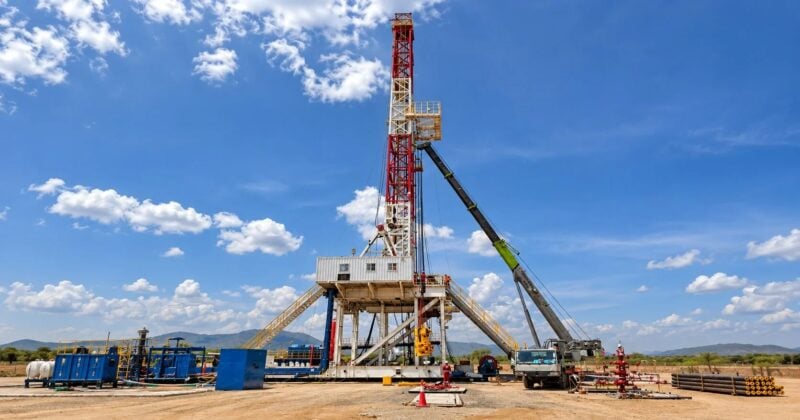
NAIROBI, Kenya, Nov 20 – Kenya’s countdown to producing crude oil from its South Lokichar sub-basin oil fields has begun in earnest, following the official spudding of the Gulf Energy E&P BV SEZ Amosing 1 well pad.
In Oil and Gas operations, spudding is the first step in drilling a well and marks the official start of operations.
Following the recent rigging, levelling and commissioning of GW70, an onshore drilling rig leased from Great Wall Drilling Company (GWDC) at the Amosing 1&2 Oil Fields in Turkana County, the Ministry of Energy and Petroleum Cabinet Secretary Opiyo Wandayi presided over the spudding ceremony, effectively kicking off the first phase of the Gulf Energy E&P BV SEZ US$ 6 billion drilling and crude oil production efforts.
Speaking at the spudding ceremony, CS Wandayi, flanked by Ministry of Roads and Transport Cabinet Secretary Davis Chirchir and Ministry of East African Community (EAC) Beatrice Askul among other government officials, confirmed that Kenya’s oil fields development efforts are running on schedule, with 1st December set as the official first oil production day.
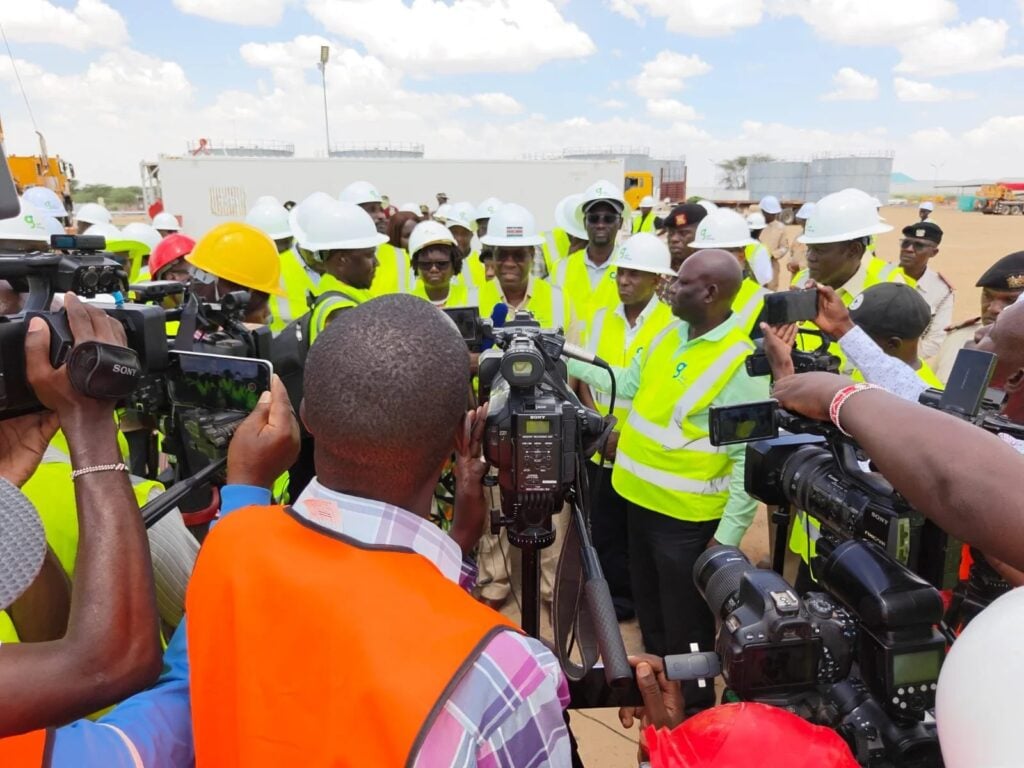
On his part, CS Chirchir confirmed that the government is investing more than KShs 24 billion in the development of quality infrastructure projects such as roads in the oil fields region. The development of such infrastructure, he noted will elevate the regions social economic standing.
Describing Kenya’s first oil production agenda as a historical milestone, CS Wandayi said the government is supporting efforts to accelerate development of the oil fields in Blocks T6 and T7, as per the parliamentary-ratified Field Development Plan (FDP).
CS Wandayi stated that in the first phase, as set out in the FDP, Gulf Energy E&P BV SEZ is expected to focus development on the Ngamia, Amosing, Twiga and Ekales fields, together referred to as NEAT, to produce more than 20,000 barrels per day. The six discoveries have a best-estimate recovery of 326 million stock-tank barrels over a 25-year contract period.
“This spudding event by the Government of Kenya’s contractor, Gulf Energy E&P BV SEZ, marks a historical milestone ahead of first oil production,” CS Opiyo said. He added, “I am impressed by the sense of professionalism and patriotism of Gulf Energy E&P BV SEZ and its contractors who are working flat out to meet targets set out in the Field Development Plan.”
The spudding and scheduled first oil production effectively marks Kenya’s entry into commercial crude oil production and is the culmination of the development programme in Turkana County. Gulf Energy E&P BV SEZ will operate the project oil fields under Production Sharing Contracts (PSCs) with the National Government, under the oversight of the State Department of Petroleum and the Energy and Petroleum Regulatory Authority (EPRA).
Gulf Energy E&P BV SEZ Managing Director Paul Limoh, while confirming the firm’s system readiness, said the first phase of 20,000 barrels per day production will be transported by road to Mombasa for stockpiling at the Kenya Petroleum Refineries Limited tank farms from 1st December. Beyond the first phase, the company plans to increase production to 50,000 bpd in the project’s second phase,
“At Gulf Energy, we are maintaining a tight delivery and project management schedule with the support of all our stakeholders, with a pledge to deliver against the FDP to world-class standards,” Limoh said. He added, “Overall, we are targeting six discoveries within Blocks T6 and T7. And the six discoveries have a best-estimate recovery of 326 million stock-tank barrels over a 25-year contract period.”
For this first phase, Gulf Energy E&P BV SEZ has contracted Baker Hughes, a leading global Oilfield Services and Equipment (OFSE) solutions provider, to deliver Integrated Well Services. The firm has also engaged SLB, a leading energy technology and services company, to deliver the Early Production Facility (EPF).
Kenya’s crude oil is low in sulphur, asphaltene, and aromatics but moderately high in wax content, with a high wax appearance temperature (WAT) and pour point above ambient conditions. The associated gas is rich and sweet with some localised high carbon dioxide content. The crude oil is expected to be an intermediate, paraffinic, sweet oil with an API gravity of 30.5⁰ and will be indexed to Dated Brent.
Overall, Kenya stands to gain significant fiscal and economic benefits from the South Lokichar Basin oil fields development, which will position the country as a major East African oil producer. The Government of Kenya projects potential lifetime earnings of more than USD 2.9 billion (KES 371 billion), depending on prevailing global oil prices and production volumes over the life of the project.