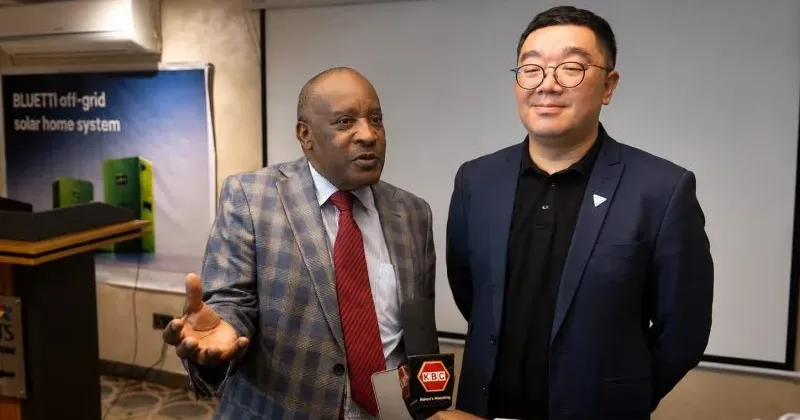
NAIROBI, Kenya, Jul 18 – Global clean energy technology firm BLUETTI is stepping up its push into Kenya’s growing off-grid power market with the launch of a buy-now-pay-later (BNPL) financing model aimed at making solar energy storage systems more accessible to households and small and medium-sized enterprises (SMEs).
The company has introduced its Home Star 2, Home Star 3 and GM Home Star 5 energy storage systems under a pay-as-you-go model, allowing customers to spread payments over time rather than making an upfront purchase.
The move comes as Kenyan businesses continue to grapple with rising electricity costs and intermittent power supply, increasing demand for alternative and backup energy solutions.
SMEs, which account for the majority of businesses in the country, have increasingly turned to solar power to reduce operating costs and improve energy reliability.
Speaking during the launch, BLUETTI Kenya Business Manager Barry Yang said the financing model is designed to lower the cost barrier that has slowed adoption of solar storage technologies.
“We are launching the pay-as-you-go model to support customers and make it easier for them to access our products. It allows more people to have the capacity to use the products without the burden of paying everything upfront.”
“We are also interested in working more closely with distributors in Kenya and building partnerships that will expand access to these products across the country.”
Beyond financing, Yang said the company intends to work with distributors by providing technical support, training and financial backing where necessary to accelerate market penetration.
He said Kenya presents significant growth opportunities due to increasing electricity demand from households and small industries.
The company said its strategy includes expanding distributor networks, offering technical training on solar products and supporting community initiatives to build awareness around renewable energy technologies.
Affordability remains one of the biggest obstacles to widespread adoption of solar energy systems despite Kenya’s abundant solar resources.
Financing models that spread the cost of acquisition have increasingly been viewed as a practical way of accelerating uptake, particularly among SMEs and rural households.
According to Abel Meru, Professor of Entrepreneurship and Business Management and Head of the China Research Centre, Kenya’s high mobile money penetration and increasing digital economy are creating favourable conditions for off-grid energy adoption.
“The adoption level has already gone much higher because of mobile penetration. What we now need are the accessories that support this digital economy, and solar becomes very important.”
“Once people begin seeing the benefits, especially in rural areas, adoption will accelerate much faster than many imagine.”
Meru argued that greater use of solar energy could help businesses reduce dependence on grid electricity and shield themselves from recurring electricity bills.
“Once you’ve invested in the equipment, no one comes knocking on your door every month looking for electricity payments. It gives businesses peace of mind over a reasonable period,” he said.
Kenya has one of Africa’s highest shares of renewable electricity generation, but solar remains underutilised relative to its potential despite receiving strong sunshine throughout the year.