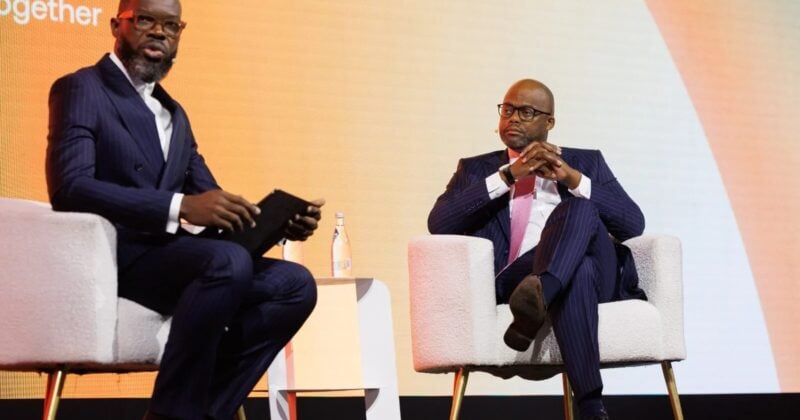
NAIROBI, Kenya, Sept 25 – Africa needs to strengthen cross-border payment systems, customs processes and infrastructure if businesses are to fully benefit from the African Continental Free Trade Area (AfCFTA), the trade bloc’s Secretary-General Wamkele Mene has said.
Mene said fragmented systems across African markets continue to increase the cost and complexity of doing business, despite the creation of a single continental market intended to expand opportunities for African companies.
“We all have a contribution to creating a single integrated market,” Mene said.
He cited cross-border payments as one of the practical challenges facing businesses trading within Africa, noting that companies in countries such as Ghana and Kenya can still rely on a third currency, typically the US dollar, to settle transactions.
Mene estimated that currency conversion costs linked to intra-African trade amount to about $5 billion annually.
The Pan-African Payment and Settlement System (PAPSS), developed by Afreximbank in collaboration with the AfCFTA Secretariat, is designed to address part of the problem by allowing participating businesses to make cross-border payments using local currencies.
For Kenyan exporters and importers, smoother payment mechanisms could reduce transaction costs and simplify trade with other African markets, although the benefits depend on wider adoption and the alignment of national financial and regulatory systems.
The AfCFTA Secretariat has also identified customs modernization and policy alignment as important components of making the agreement work for businesses.
PMI Managing Director for Sub-Saharan Africa George Asamani said implementation would require professionals capable of coordinating projects involving governments, regulators and private-sector players across different countries.
“A continental agreement becomes meaningful when a business can use it,” Asamani said.
“That depends on people who can coordinate institutions, manage risk, deliver reliable systems and keep the intended benefit in view.”
Mene also acknowledged concerns that opening markets could expose some domestic industries to increased competition. He said the agreement contains safeguards for vulnerable sectors, including provisions intended to protect infant industries.
He called for countries to combine continental integration with domestic reforms and support for businesses that may face disruption as markets become more competitive.
Infrastructure development remains another constraint, particularly where transport, digital systems and customs infrastructure do not operate as an integrated network.
Mene pointed to the AfCFTA Digital Trade Protocol as part of efforts to create a framework for digital commerce and investment in areas such as emerging technologies and data centers.