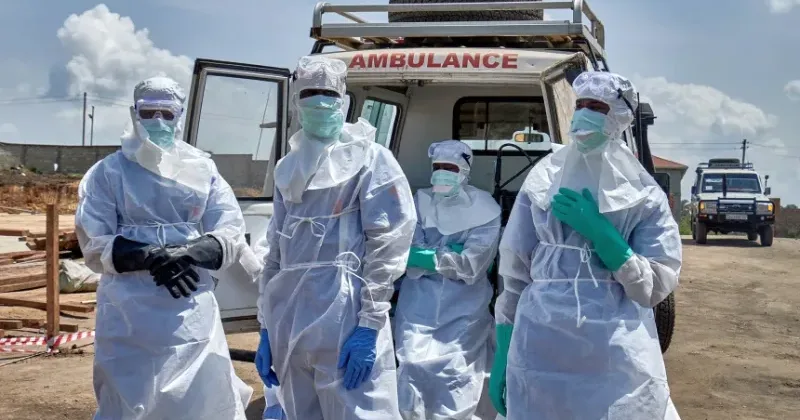
A United States citizen working for a humanitarian organisation in the Democratic Republic of Congo (DRC) has tested positive for the Bundibugyo strain of the Ebola virus, a development likely to reignite debate over the proposed American quarantine facility in Nanyuki.
The US Centers for Disease Control and Prevention (CDC) confirmed the case on Friday, saying it was working with the patient’s employer, federal agencies and health authorities in the DRC to trace contacts and prevent further transmission.
The latest infection comes months after plans to establish an Ebola quarantine and observation facility at Laikipia Air Base in Nanyuki triggered public protests and political opposition in Kenya.
Supporters of the facility argued that the centre would play a critical role in isolating and monitoring American citizens, aid workers and military personnel exposed to the virus while operating in Central and East Africa.
Critics, however, raised concerns over transparency, public health risks and Kenya’s role in hosting a facility linked to outbreaks originating outside its borders.
The proposed centre later became the subject of legal proceedings, with the High Court temporarily halting its establishment pending the hearing of petitions challenging the project.
The latest case appears to validate concerns among health experts about the risks faced by humanitarian workers operating in Ebola-affected regions.
The CDC said the infected American was working in the DRC, where the ongoing outbreak has now recorded 1,830 confirmed cases and 648 deaths according to Congolese government data.
Health authorities maintain that the outbreak remains concentrated in remote parts of eastern DRC and neighbouring Uganda and that the risk of transmission to the United States and other countries remains low.
The Bundibugyo strain of Ebola, first identified in Uganda in 2007, causes severe haemorrhagic fever and has a lower fatality rate than the Zaire strain responsible for some of the deadliest Ebola outbreaks in history.
The latest case is not the first involving an American citizen during the current outbreak.
Earlier this year, American missionary doctor Peter Stafford contracted Ebola while serving in the DRC before being evacuated to Germany for treatment, where he later recovered.
Last month, France confirmed the first Ebola infection outside Africa linked to the current outbreak after a humanitarian worker tested positive upon returning from the DRC.
The emergence of additional international cases is expected to intensify discussions over preparedness measures and regional response mechanisms, including the role Kenya could play in supporting containment efforts for future outbreaks.