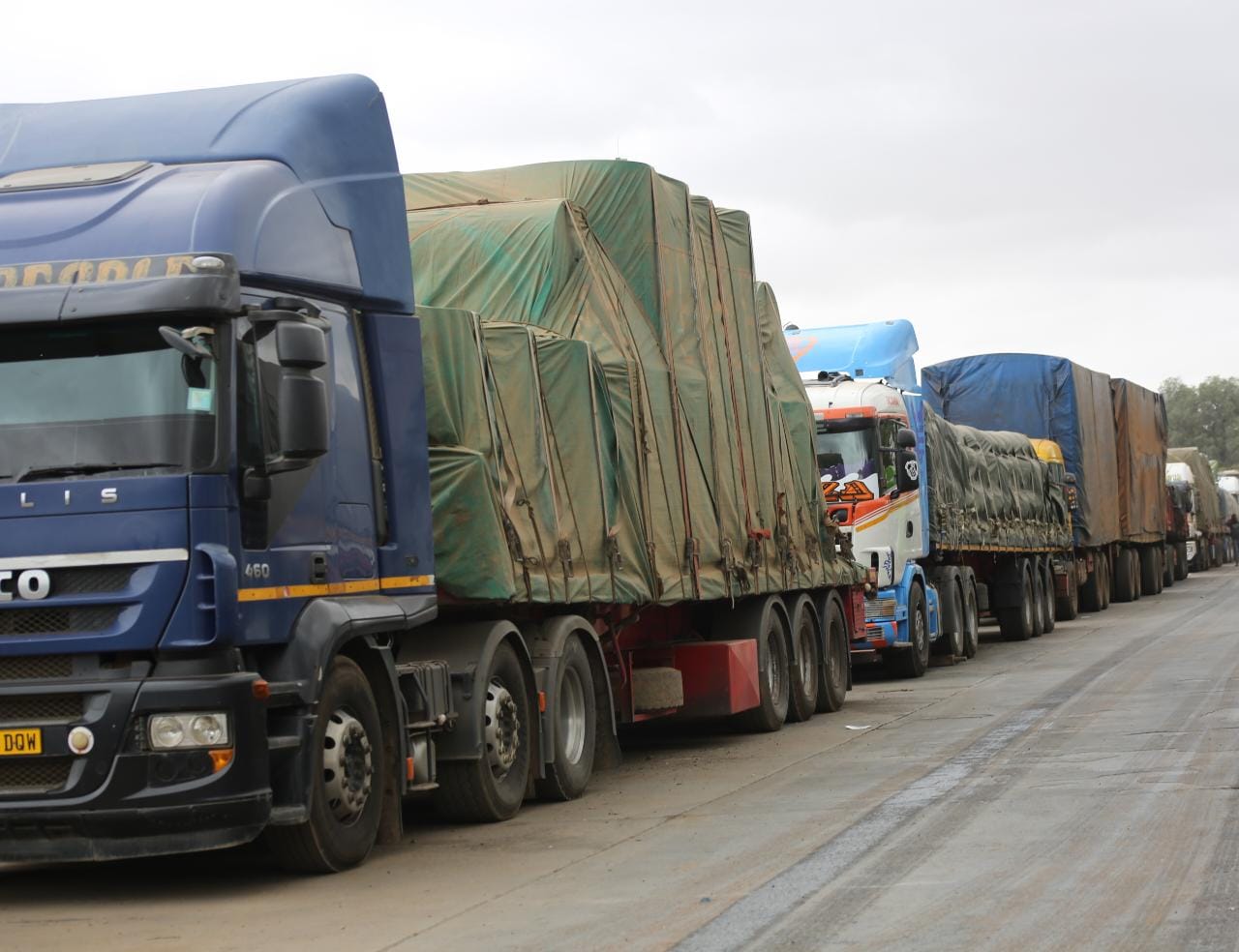
MOMBASA, Kenya, Feb 28– The Kenya Transporters Association (KTA) has urged the government to immediately introduce on-the-spot traffic fines payable through mobile money, arguing that the reform would ease court congestion, curb corruption and improve revenue collection.
In a memorandum addressed to President William Ruto, the Chief Justice, the Inspector-General of Police and other senior officials, the lobby said the current system—where most traffic offences are processed through courts—has become inefficient and costly for both the State and road users.
Courts Overwhelmed by Minor Cases
KTA noted that traffic offences account for a significant portion of cases before magistrates’ courts. It argued that many of these are minor, administrative violations that do not require lengthy judicial processes.
According to the association, introducing instant fines payable electronically would free up magistrates and prosecutors to focus on serious criminal and civil matters, while reducing adjournments and case backlogs.
The proposal would require coordination between the National Transport and Safety Authority (NTSA), the National Police Service and the Judiciary to operationalise the system for prescribed offences.
Curbing Bribery on the Roads
The lobby group also linked the current enforcement model to corruption risks.
Under the existing framework, motorists may face arrest, vehicle impoundment and repeated court appearances.
KTA argues that this creates incentives for informal settlements between offenders and enforcement officers.
A mobile money-based system, it says, would ensure fines are paid directly to government accounts, with digital records reducing discretionary cash handling and opportunities for bribery.
“An instant, transparent and digitally recorded payment system would restore public confidence in traffic enforcement,” the association said.
Boost to Government Revenue
Beyond enforcement, KTA sees fiscal benefits.
By channelling payments directly to official accounts, the government would minimise revenue leakage and access real-time data on traffic offences and collections. This, the association argues, would strengthen policy planning while ensuring penalties serve as both deterrents and a legitimate source of public revenue.
Aligning with Digital Agenda
The proposal is also framed as consistent with Kenya’s digital transformation drive.
Kenya is widely regarded as a leader in mobile money innovation, yet several regional peers have already implemented instant traffic fine systems. KTA described it as paradoxical that such a system has not been fully rolled out locally despite years of discussion.
The association said the reform aligns with the administration’s priorities on digital government, anti-corruption and ease of doing business.
Road Safety Impact
KTA maintains that immediate penalties would enhance compliance by creating certainty and swiftness in enforcement.
“When enforcement is predictable and fair, behavioural correction happens faster,” the association noted, adding that improved compliance would contribute to safer roads and fewer accidents.
The proposal, which has reportedly been under consideration for nearly eight years, now awaits executive direction to relevant agencies for implementation.