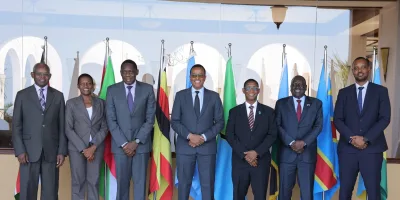
NAIROBI, Kenya, Aug 8 – African ministers, aviation regulators, airline executives and continental institutions have called for urgent implementation of open skies policies, saying the continent must move beyond commitments and deliver seamless air connectivity to unlock trade, investment and economic integration.
The call was made during a high-level virtual working session ahead of the Africa Mindset Reset Forum, scheduled for August 25-26 at the Kigali Convention Centre.
Held under the theme “Accelerating African Economic Integration Through Open Skies,” the meeting brought together representatives from the African Continental Free Trade Area (AfCFTA) Secretariat, the African Development Bank (AfDB), the African Civil Aviation Commission (AFCAC), RwandAir, the African Airlines Association (AFRAA), the African School of Governance (ASG) and Africa’s entrepreneurship ecosystem.
Participants agreed that while Africa already has the legal and policy frameworks needed to liberalise air transport, including the Single African Air Transport Market (SAATM) and the Yamoussoukro Decision, implementation has remained slow.
Rwanda’s Minister for Trade and Industry, Antoine Kajangwe, said affordable, reliable and frequent air connectivity is critical to unlocking the full potential of the African Continental Free Trade Area.
“We must work towards affordable, frequent and reliable air connectivity that allows a manufacturer in Kigali to ship cargo across Africa without excessive costs, unnecessary delays or complicated routes,” he said.
AfCFTA Secretariat Director of Coordination and Programmes Dr Tsotetsi Makong said African countries must now translate agreements into tangible benefits for businesses and citizens.
“Those rules must be domesticated, brought to life and translated into practical benefits for African people and businesses,” he said.
Assistant Professor at the African School of Governance Prof. TK Pooe said the business case for liberalised air travel had already been made, arguing that Africa now requires political commitment to implementation.
He warned against creating what he termed a “closed-wallet system,” where open skies exist on paper but remain inaccessible because of high operating costs and restrictive policies.
Officials also stressed that aviation reforms should be accompanied by the implementation of Africa’s Free Movement Protocol to facilitate the movement of people alongside goods and services.
Gambia Civil Aviation Authority Legal Services Manager Ellen Manga said the two initiatives were inseparable.
“We cannot discuss the Single African Air Transport Market while leaving the Free Movement Protocol behind. The two initiatives must advance together,” she said.
The meeting also highlighted financing constraints facing the aviation sector.
African Development Bank transport expert Dr Lufeyo Banda said open skies would require significant investment in aircraft fleets, airport infrastructure, institutional capacity and connectivity.
Meanwhile, African Airlines Association consultant Raphael Kuuchi revealed that nearly $800 million in airline revenues remains blocked in about 14 African countries, affecting carriers’ financial sustainability.
“We cannot expect airlines to continue serving these markets while financing operations from revenues earned elsewhere,” he said.
African Civil Aviation Commission Director of Air Transport Getachew Mengistie Alemayehu said Africa’s aviation connectivity index stands at just 23 percent, describing affordability as one of the continent’s biggest barriers to air travel.
RwandAir Chief Executive Officer Yvonne Manzi Makolo noted that travelling within Africa often costs more than flying to destinations outside the continent because taxes, charges and other costs account for nearly half the price of many tickets.
Representing Africa’s innovation ecosystem, Arnold Kwizera of Norrsken East Africa urged governments to move beyond declarations and begin implementing practical reforms that produce measurable results.
Participants also backed a proposal by Dr Joy Kategekwa, Strategy Advisor on Africa at the United Nations Development Programme and Director of the Regional Integration Coordination Office at the African Development Bank Group, to establish an “Africa Zone” of countries offering visa-free or visa-on-arrival access to promote business and tourism.
Closing the session, Dr Makong called on African countries to adopt a “coalition of the willing” approach, encouraging early adopters to demonstrate the benefits of liberalised air transport before wider implementation across the continent.
The recommendations are expected to inform discussions at the Africa Mindset Reset Forum, where policymakers, regulators and industry leaders will explore practical measures to accelerate aviation liberalisation and regional economic integration.