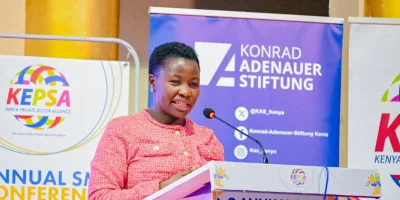
By Fred Ouko
NAIROBI, Kenya, Sep 1 – Risk and reward are inseparable in any financial market, forming a pair of trade-offs that every business leader must navigate. From the outset, you must decide how much risk you’re willing to take (your appetite), as the loss is just as high as the expected reward. The less risk you are willing to accept, the lower your potential rewards will be.
It is a delicate dance that determines just how resilient a business is in the face of shocks and turbulence. For markets perceived as high risk, the objective of any business leader is to maximise the potential upside while simultaneously minimising possible downside.
Several steps can be taken to manage the risk. The first step is to understand the operating environment. These economies apart from facing high levels of economic volatility, they tend to experience political instability, limited institutional capacity and conflict. You need to gain a thorough understanding of the operating environment in which you’re running your business. Without this, then any decisions you make may be unsound.
There is a need to identify the key drivers of the economy together with the attendant risks. In Angola and South Sudan, for instance, considerable risks arise from a single resource economy, as both economies are heavily reliant on oil with more than 45% of GDP in these economies, and 90% of export revenue, driven by the oil sector, either directly or indirectly.
These economies thrive or flounder based on the developments in the oil sector. If oil prices rise, this means a significant fortune for the country. On the other hand, if oil prices trend downwards, this isn’t good for investors in such economies. Further volatility arises from the levels of oil production.
If you look at South Sudan, one of the factors that adversely affected the economy in the last year is the fact that the country’s oil exports are channelled through Port Sudan, in Sudan. The economy suffered a significant setback after the main pipeline that transports oil to Sudan was shuttered in February last year. The pipeline exports 70% of the oil production, it effectively means the government lost 70% of its export revenues.
The World Bank’s latest report on South Sudan projects a 30% contraction in the country’s GDP FY24/25, primarily due to disruptions in oil production and exports. The economic downturn has severely impacted public finances, resulting in salary arrears and reduced spending on essential services. But things are changing for the better with resumption in oil exports in April this year.
The approach to managing risk in high-risk countries must be multi-layered applying multiple strategies to reduce your downside risk. Notwithstanding the fact these economies are almost single-resource economies, the Bank has looked at opportunities for diversification. It has in place a robust risk management process that has been developed over the years doing business in extremely challenging environments.
Despite the high-risk associate with South Sudan, the country also presents significant opportunities with huge potential in agriculture and infrastructure development, that is roads, water and power generation and distribution.
If you run a business here, you must be prepared for volatility and constant change. For legacy banks such as Stanbic Bank South Sudan, where I am privileged to serve as head, we take a long-term view of the economy, aligning with our vision to drive Africa’s growth.
Through continued partnership with our clients as well as players in the public and private sector, we continue to drive growth through offering relevant solutions, while supporting key sectors such as Oil and International Development Organizations, which are the backbone of the economy.
The writer is Head of Business at Stanbic Bank South Sudan