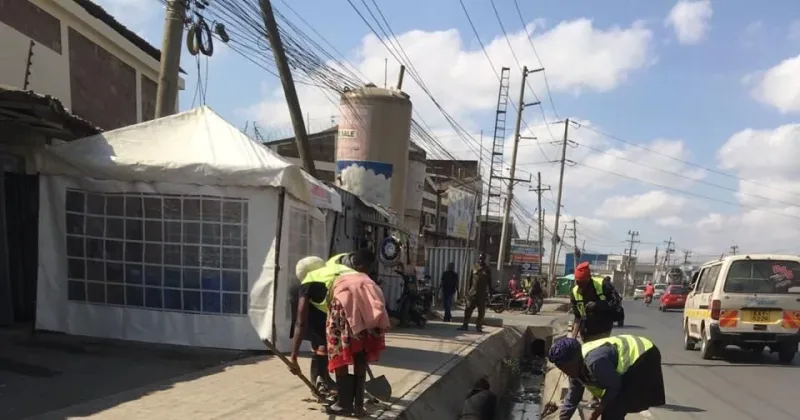
NAIROBI, Kenya, August 31 – Nairobi is racing against time to clear tonnes of garbage from its drainage system and waterways before the rains return, exposing the scale of the city’s waste management crisis and the threat it poses to flood-prone neighbourhoods.
The county government says it is collecting about 3,000 tonnes of garbage every day, triple the roughly 1,000 tonnes previously collected, as it steps up efforts to clear blocked drains, river channels and illegal dumping sites.
But the sheer volume of waste being removed points to a deeper problem: Nairobi is generating and dumping rubbish faster than the city’s waste management system can contain it.
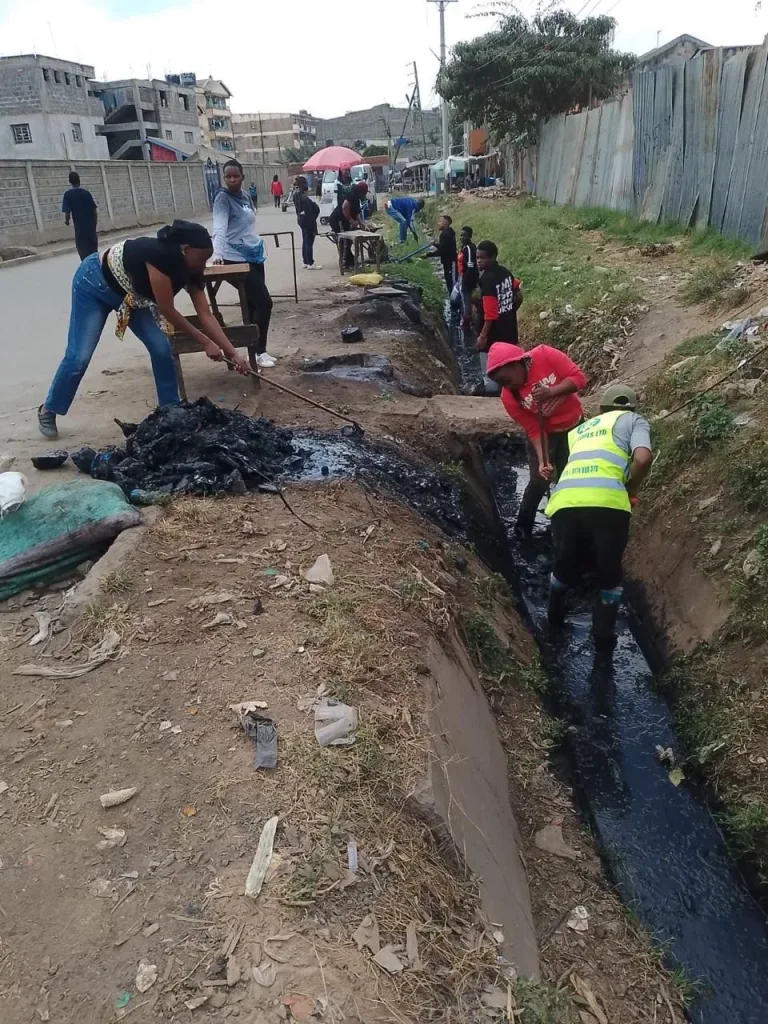
In some of the areas most vulnerable to flooding, garbage has accumulated in huge quantities along waterways and drainage corridors.
Embakasi South alone has recorded more than 4,500 loads of waste removed since April, according to figures provided by County Executive Committee Member for Green Nairobi Maureen Njeri.
At Kware Bridge, 1,538 loads have been cleared, while another 2,970 loads have been removed from English Press in Mukuru Kwa Reuben.
The county has also been clearing waste collection points along the Ngong River, where rubbish poses the risk of being washed downstream and blocking already strained drainage infrastructure.
The problem is not confined to the city’s eastern suburbs.
Along the Nairobi River, 216 loads of waste have been removed from Motherland in Eastleigh South Ward, while another 20 loads have been cleared from Kinyago Slums in California Ward.
In other parts of the city, 64 loads have been removed from Area 3 Sokoni in Mathare North, 54 from Korogocho Market, 27 from Kingston in Utalii Ward and 10 from Gumba Bridge in Babadogo.
More than 40 major waste collection points and illegal dumping sites have been cleared since the countywide campaign began in April.
Yet the clean-up comes against the backdrop of a persistent problem that has repeatedly turned Nairobi’s rains into a flood emergency garbage dumped in drainage channels, settlements built near waterways and inadequate waste collection.
The county is now turning its attention to the city’s drainage network before the October rains, with teams deployed across all 17 sub-counties to remove waste, desilt drains and clear vegetation.
The weekly operation, running from August 31 to September 6, is targeting some of the city’s busiest and most congested areas, including Gikomba, Muthurwa, Wakulima, Korogocho, Kangemi and Toi markets.
Drainage works are also being undertaken in Dandora, Ruai, Langata, Mathare, Kibra and Dagoretti North.
In Parklands, environment officials and the Parklands Association have been clearing garbage and silt from drains, waterways and river channels.
The county has sought to strengthen its response by recruiting 4,000 Green Army workers on permanent and pensionable terms and proposing material recovery and waste transfer facilities.
In Mukuru Kwa Reuben, county teams have been working with public health officials, administrators and community organisations to clear illegal dumps and drainage channels while educating residents on waste disposal.
But Nairobi’s flood problem is not simply a question of clearing drains when the rains are approaching.
Every tonne of garbage removed from a drainage channel represents waste that was collected, transported or dumped elsewhere highlighting the pressure on the city’s collection, disposal and recycling infrastructure.