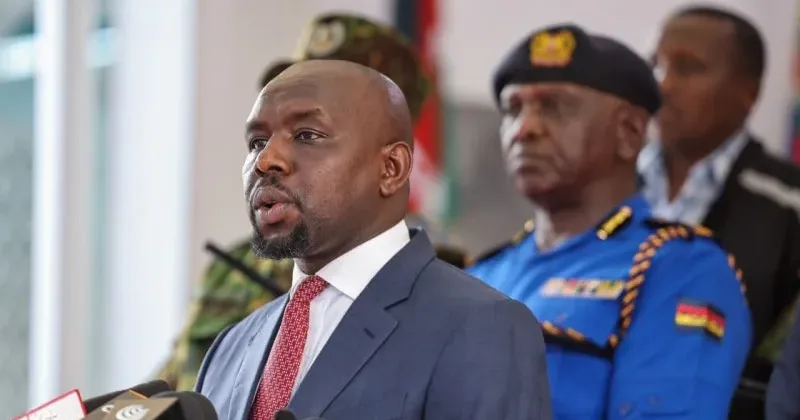
NAIROBI, Kenya, Jun 25 — Interior Cabinet Secretary Kipchumba Murkomen has defended the deployment of plain-clothes police officers and undercover investigators during the June 25 Gen Z memorial protests, revealing that DCI agents were embedded among demonstrators as part of a nationwide surveillance operation.
Speaking after the largely peaceful commemorations marking the second anniversary of the 2024 anti-Finance Bill protests, Murkomen said covert policing measures played a key role in maintaining order and enabling security agencies to swiftly identify and arrest suspects involved in criminal activity.
The revelation comes amid public scrutiny over the presence of plain-clothes officers and unmarked vehicles during the demonstrations, which unfolded under heightened security deployments in Nairobi and other towns.
According to the Interior CS, the use of undercover officers is a standard policing tactic aimed at protecting security personnel and enhancing operational effectiveness.
“In the security sector there are many measures that are put in place to protect both security officers and security operations,” Murkomen said.
“Sometimes that includes different number plates, sometimes hiding them, and in some cases officers wear uniforms while in others they do not. These measures are applied here and elsewhere for the purpose of protecting our officers.”
Murkomen disclosed that dozens of DCI officers were deployed among members of the public throughout the demonstrations to monitor developments in real time and respond quickly to criminal activity.
“There were many DCI officers mingling with citizens across the country to ensure that if they saw anybody committing an offence, they could quickly arrest them and bring them before the law,” he said.
The Cabinet Secretary linked the covert deployments to a broader intelligence-led security operation that authorities credit with preventing widespread unrest during the anniversary commemorations.
He said security agencies acted on intelligence reports indicating that groups of suspected troublemakers were being mobilised and ferried into Nairobi to infiltrate the protests and trigger disorder.
As part of the operation, police mounted security screening points along major highways leading into the capital, causing significant transport disruptions but, according to the government, helping maintain calm in the city.
The demonstrations, held in memory of victims of the June 2024 protests, were largely peaceful despite a heavy police presence and strict movement controls in parts of Nairobi.
For much of the day, the Central Business District remained unusually quiet, with reduced traffic, limited public transport access and many businesses remaining closed.
While small groups of demonstrators marched through sections of the city carrying placards, blowing whistles and chanting slogans, the Interior Ministry reported no widespread incidents of looting, vandalism or major clashes.
Authorities, however, arrested 355 people nationwide for offences including robbery, vandalism, road obstruction and attempted theft. Nairobi recorded the highest number of arrests at 161, followed by Kajiado with 123 and Kiambu with 36.
Murkomen said the combination of intelligence gathering, undercover surveillance and visible police deployment contributed significantly to maintaining peace during the demonstrations.
He praised security officers for what he described as professionalism and effective coordination, arguing that the operation demonstrated the value of combining overt and covert policing methods in managing large public gatherings.