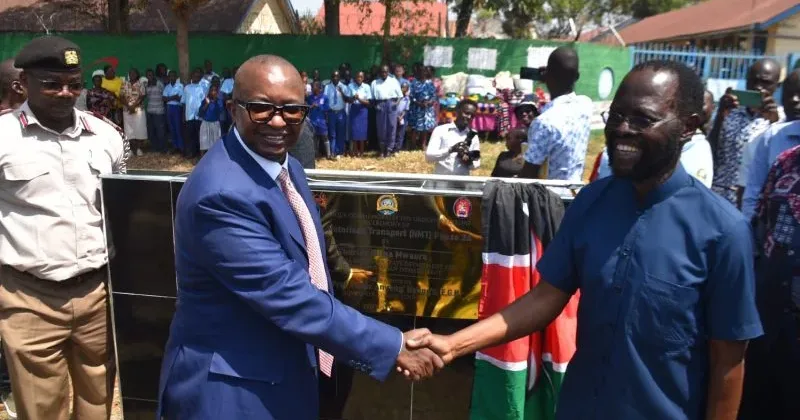
KISUMU, Kenya Jul 9 – The national and county governments have launched a Sh306 million Non-Motorised Transport (NMT) Phase IIIA project in Kisumu under the Kenya Urban Support Programme II (KUSP II), marking another milestone in efforts to improve urban mobility, public spaces and climate-resilient infrastructure.
The launch event also saw the official opening of the Baby Pendo Botanical Park, a public green space established on the site of the former Kachok dumpsite, symbolising the city’s ongoing urban renewal efforts.
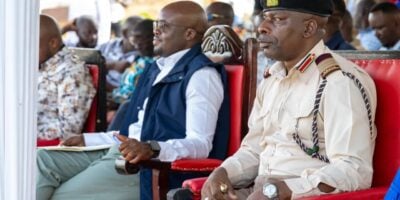
Speaking during the ceremony, Housing Principal Secretary Charles Hinga said the project would expand safe infrastructure for pedestrians and cyclists while building on investments already made through the World Bank-supported KUSP programme.
“The Non-Motorised Transport Project Phase IIIA will cost Sh306 million and will comprise 4.8 kilometres of block-paved walkways, asphalt concrete cycle tracks and green spaces. We expect it to be completed by February 2027,” Hinga said.
The project will cover Ondiek Highway, Nyerere Road and Gumbi Road within Kisumu’s central business district and is intended to reduce conflicts between pedestrians, cyclists and motorists while improving accessibility and recreation spaces.
Hinga noted that the first phase of KUSP transformed Kisumu through investments in transport infrastructure, markets, public spaces, emergency services and urban governance.
“The first phase of KUSP enabled Kisumu City to undertake major infrastructure investments, including two phases of the Non-Motorised Transport network, the Rotary Youth Innovation Centre, the Fire Station, Kibuye Market, Nyamasaria Bus Park and improvements to public parks and sports facilities,” he said.
According to the Principal Secretary, KUSP II has already disbursed Sh389.8 million in Urban Development Grants to Kisumu City and Sh21.8 million to Ahero Municipality to finance additional infrastructure projects.
“There is a need to maintain this momentum by identifying additional sources of urban financing while strengthening compliance with the Public Finance Management Act. I am optimistic that we can make our urban areas better through integrated planning and development,” Hinga said.
Governor Anyang’ Nyong’o described the opening of Baby Pendo Botanical Park as a powerful symbol of Kisumu’s transformation, noting that the site once served as the city’s main dumpsite.
“Baby Pendo Botanical Park is more than a park. It is evidence that decline need not be permanent. Today we stand on reclaimed ground, not through miracle, but through method, commitment and the determination of the people of Kisumu,” the governor said.
Nyong’o said continued investment in parks, walkways, cycling lanes and public spaces was aimed at creating a healthier, more resilient and competitive city rather than simply beautifying urban areas.
“The majority of our residents walk, cycle, trade along our streets and use public transport. Development must therefore reflect the lives people actually live. Kisumu is no longer planning just to manage urban growth; we are planning to shape it,” he said.
The governor also urged residents to protect public infrastructure from vandalism, noting that investments in street lighting, parks and transport facilities would only deliver long-term benefits if safeguarded by the community.
The NMT Phase IIIA project is being financed under KUSP II, a Sh45 billion programme supported by the World Bank aimed at strengthening urban management and improving infrastructure and service delivery in 79 cities and municipalities across Kenya.