NAIROBI, Kenya, Jul 30 – Kenya is seeking to narrow its Sh1.14 trillion trade deficit with China as exporters move to capitalize on China’s new zero-tariff policy for goods from 53 African countries, including Kenya.
The policy, which took effect on May 1, 2026, was the focus of the “Zero Tariffs, Infinite Opportunities” symposium in Nairobi, where government officials, business leaders and exporters discussed strategies to boost Kenyan exports to the Chinese market.
Speaking at the forum, Chinese Ambassador to Kenya Guo Haiyan said the initiative marks a new phase in China-Africa economic cooperation and is expected to deepen trade, industrialization and investment while creating greater opportunities for African exporters.
The policy removes import duties on qualifying Kenyan products entering China, improving the competitiveness of locally produced goods in one of the world’s largest consumer markets.
Kenya National Chamber of Commerce and Industry (KNCCI) President Dr. Eric Rutto said Kenya currently exports goods worth $237 million (about Sh30 billion) to China annually, compared to imports valued at $8.8 billion (about Sh1.14 trillion).
“We are very much excited on zero tariff market access to China,” Rutto said.
“As you know, currently, our statistics in terms of trade stands at US$237 million exports to China… What we are currently importing from China is US$8.8 billion.”
He said the figures illustrate a significant trade imbalance between the two countries.
“That brings us to a trading balance of around 37 times,” he said.
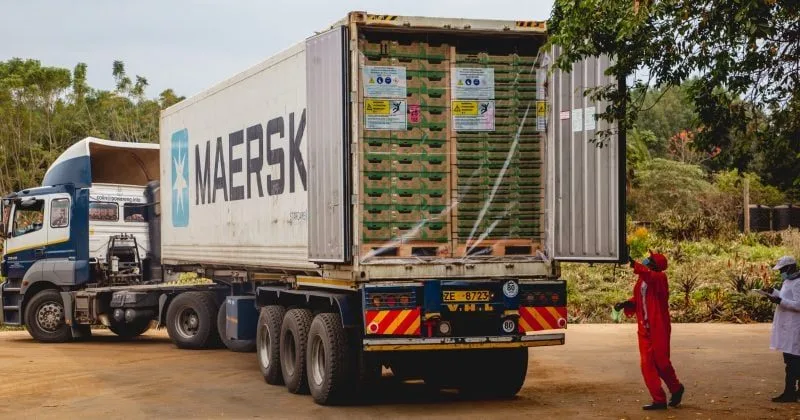
Rutto has previously noted that for every container Kenya exports to China, about 37 containers are imported from China.
He expressed confidence that duty-free access will help close the trade gap by making Kenyan products more competitive.
“So this opportunity, first of all, will be able to make our products very competitive in the China market. With this coming into being, definitely we are going to close the gap between the US$237 million to US$8.8 billion,” he said.
To support exporters, KNCCI has established an office in China to provide market intelligence on demand, pricing, logistics and buyer requirements.
According to the Chamber, it has facilitated exports worth approximately Sh765 million over the past two years, including macadamia, avocados, coffee, tea and leather products.
However, KNCCI noted that Kenyan exporters must continue meeting China’s quality and regulatory requirements while expanding production capacity and improving logistics to fully benefit from the preferential market access.
Beyond trade, Rutto said the policy is already encouraging investment in local manufacturing and value addition.
He disclosed that eight Chinese companies have invested a combined Sh3 billion in Kenya, including a textile manufacturer operating in an Export Processing Zone (EPZ) that has created about 1,000 jobs.
“I would like to urge members of the Kenya National Chamber of Commerce and the private sector at large to take this opportunity so that we can be able to industrialize Kenya,” he said.
“This trade and economic partnership between Kenya and China presents a big opportunity to lift Kenya’s economy to the next level.”
China is one of Kenya’s largest trading partners. Kenya mainly exports agricultural products including tea, coffee, avocados, macadamia and leather, while importing machinery, electronics, manufactured goods and industrial equipment.