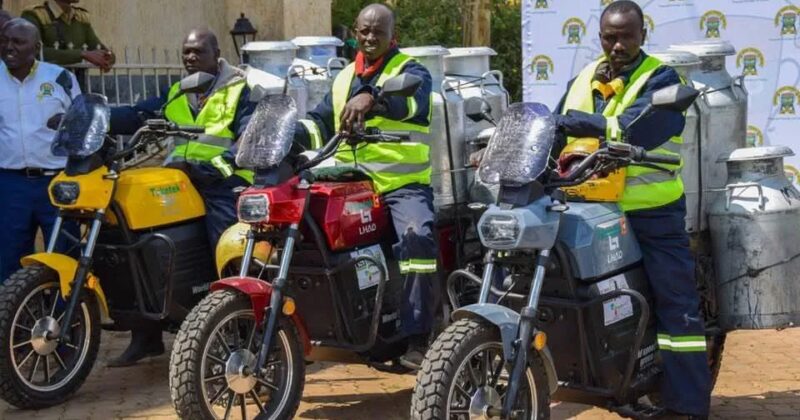
NAIROBI, Kenya, Oct 19 – Kenyan electric mobility firm Teketeke E-Mobility is seeking tax exemptions for locally assembled electric motorcycles and three-wheelers used in agriculture, arguing that lower transport costs could improve farmers’ margins.
The company assembles electric motorcycles, cargo tricycles and lithium-ion batteries, targeting farmers who transport milk and other agricultural produce to collection centers, processors and markets.
Managing Director Richard Chesebeh said the company’s electric motorcycles could reduce daily milk transportation costs from Sh1,000 to about Sh200, although the figures were not independently verified.
“Initially, the cost of production for milk was about, in terms of the transportation, using the other bikes there. A client could use about a 1,000 shillings per day, but right now we have reduced the cost, they are doing it at 200 shillings a day,” Chesebeh said.
He said the company wanted the government to consider tax exemptions for locally assembled electric agricultural transport equipment, similar to incentives available for other farm machinery, to lower purchase costs.
Teketeke’s LHP1 motorcycle has a stated carrying capacity of 500 kilograms, while its electric tricycle can transport between 1.5 and two tonnes of cargo.
Chesebeh said the motorcycle could cover 100 to 120 kilometers on a charge, while the tricycle had a range of up to 150 kilometers.
The company also converts petrol-powered motorcycles to electric operation, offering farmers an alternative to replacing existing vehicles.
However, the cost of conversion, battery replacement and maintenance was not disclosed.
John Mutunga, chairman of the National Assembly’s Departmental Committee on Agriculture and Livestock, said electric motorcycles could help dairy cooperatives reduce the cost of moving milk from collection centers to processing plants.
He urged organized farmer groups to consider the technology, citing its potential to reduce fuel expenditure and emissions. Mutunga said four units had been presented to the Ministry of Agriculture for consideration for distribution to farmer groups.
“Comparing the electric vehicles, or electric motorbikes, and electric tuk-tuks with motor vehicles, which are using petroleum, the ratio is such that it is one to five,” Mutunga said, referring to the claimed difference in operating costs.