NAIROBI, Kenya Jul 1 – The ongoing Ebola outbreak in the Democratic Republic of the Congo (DRC) could push nearly one million more people into extreme poverty, eliminate thousands of jobs and reverse years of development gains unless countries respond with measures that go beyond containing the virus, according to a new United Nations Development Programme (UNDP) assessment.
The report, Rapid Socioeconomic Assessment of the Ebola Outbreak in the DRC, released on Tuesday, states that the outbreak has evolved beyond a public health emergency into a broader development challenge affecting livelihoods, education, food security and regional trade.
“This 17th Ebola virus disease outbreak in the Democratic Republic of the Congo signals a complex development emergency in the sub-region, one that cannot be addressed by exclusively focusing on the health sector,” the report says. “It requires a concerted, coordinated and sustained effort to address the multifaceted challenges the region now faces.”
UNDP estimates that 985,000 people could fall into extreme poverty in the DRC as quarantines, transport disruptions and restrictions on cross-border trade reduce household incomes and disrupt informal markets on which millions rely for survival.
The assessment describes the outbreak as “a highly regressive poverty shock,” warning that its economic impact falls disproportionately on poorer households with limited financial buffers.
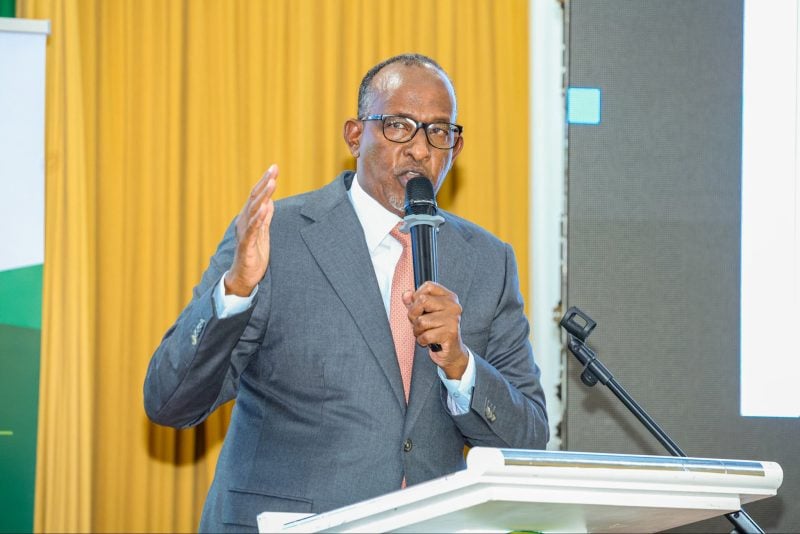
“Ebola does not stop at the hospital gate,” said Ahunna Eziakonwa, United Nations Assistant Secretary-General and UNDP Regional Director for Africa. “It affects livelihoods, education, food security, trade, public finances and trust. If we treat this Ebola outbreak solely as a health challenge, we risk missing the much larger development emergency unfolding around it.”
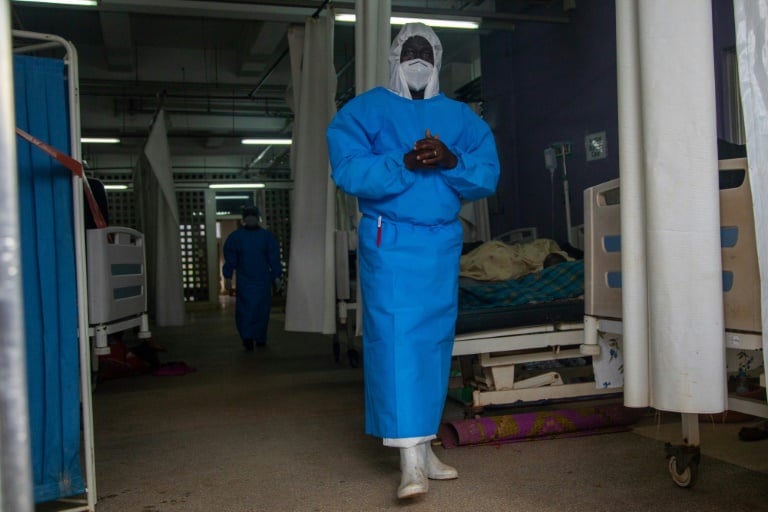
The assessment comes as the DRC battles its 17th Ebola outbreak, caused by the Bundibugyo strain, for which there is currently no licensed vaccine. As of June 30, the outbreak had reached 1,274 confirmed cases in the DRC, including 360 deaths. Neighboring Uganda has reported 20 confirmed cases and two deaths.
Unlike previous outbreaks, the report says the epidemic is unfolding in one of Africa’s most fragile regions, where armed conflict, mass displacement and extensive cross-border trade make disease control significantly more difficult while magnifying the economic consequences of movement restrictions.
“The outbreak is highly concentrated in the DRC’s northeastern Ituri Province,” the report says, noting that the region is also grappling with armed conflict involving more than 260 armed groups and millions of internally displaced people—conditions that undermine disease surveillance and community trust.
Even if transmission remains largely contained within the DRC and Uganda, the report projects that the DRC’s economy could lose more than $1 billion in output and around 55,000 jobs.
Across Africa, precautionary border restrictions, transport delays and weakening business confidence could reduce continental economic output by $2.37 billion and eliminate approximately 90,000 formal jobs.
Should the outbreak coincide with wider global shocks, including rising energy prices and supply chain disruptions, losses could increase to $3.6 billion, while the number of jobs lost could climb to 328,000, according to the assessment.
The report also highlights the unequal impact of the outbreak on women, describing Ebola as “a deeply gendered phenomenon.”
It says women dominate informal cross-border trade, account for much of the frontline health workforce and shoulder the greatest burden of unpaid caregiving during outbreaks, exposing them to greater economic hardship and a higher risk of infection.
“Women bear a disproportionate burden across three distinct structural axes,” the report says, citing higher exposure to infection, greater livelihood disruptions and increased unpaid care responsibilities.
It adds that border closures and market disruptions “curtail these daily cash-flow activities,” threatening the incomes of women traders while increasing their vulnerability.
Beyond the immediate impact of Ebola infections, the diversion of health resources to outbreak response could trigger a secondary health crisis. The assessment estimates that disruptions to routine healthcare services could result in 2,520 additional infant deaths from preventable, non-Ebola illnesses in the DRC.
Financial hardship and school absenteeism could also force between 34,000 and 36,000 children out of primary school.
UNDP warns that the socioeconomic costs could persist long after the outbreak is brought under control unless governments strengthen social protection systems and safeguard essential public services.
“To prevent this localized health shock from fully developing into a regional development crisis,” the report recommends replacing blanket border closures with “smart” border screening that keeps trade moving safely, expanding direct cash support for vulnerable households, protecting maternal and child healthcare services, and investing in stronger health systems and economic resilience.
UNDP also calls on governments, development partners and international financial institutions to move beyond traditional outbreak response models by investing simultaneously in healthcare, livelihoods and social protection, arguing that the long-term cost of inaction would far exceed the immediate expense of containing the disease.