Several emerging dynamics are making the road to the 2027 General Election increasingly intriguing. Beyond the often inflammatory rhetoric from sections of the political class, Kenya’s political landscape is no longer defined by neatly aligned ethnic blocs. Politicians from the country’s traditionally influential voting regions are now spread across both the government and opposition camps.
This realignment could fundamentally reshape electoral politics. If the government succeeds in curbing political violence and addressing the use of unemployed youth by politicians to disrupt public order, the country could witness a fiercely contested election driven more by ideas and performance than by ethnicity and intimidation. The likelihood of widespread post-election violence may also diminish if major communities find themselves represented on both sides of the political divide.
Issue-based politics would certainly serve Kenya better. It would compel voters to assess the record of the Kenya Kwanza administration, weighing both the costs of its disruptive reforms and the benefits they may have delivered, while equally scrutinising the alternatives presented by the opposition.
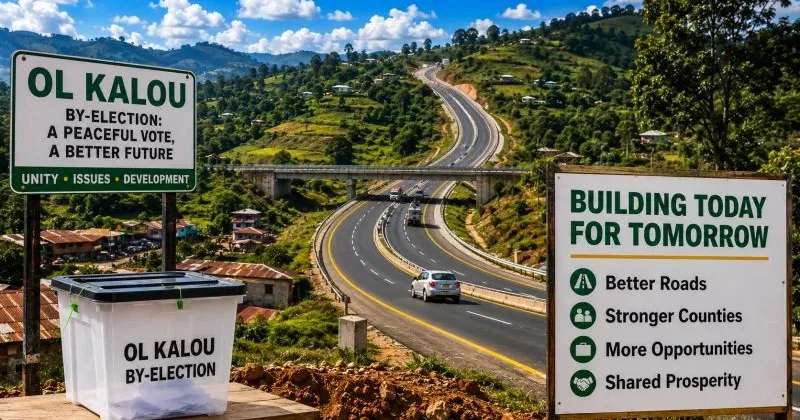
The recent Ol Kalou by-election offers some encouragement. Despite heightened political tensions, the election was largely peaceful, suggesting that competitive contests need not be defined by fear, intimidation, bribery or inflammatory rhetoric.
President William Ruto has undoubtedly pursued an unconventional governing approach. His administration has embarked on reforms that have disrupted long-established systems, often at considerable political cost. Many Kenyans have experienced higher living costs, reduced disposable incomes and other economic pressures that will inevitably influence voting decisions in 2027.
At the same time, others have begun experiencing the benefits of some of these reforms, particularly through infrastructure development and economic inclusion programmes.
One of the administration’s most notable policy shifts has been the redistribution of public infrastructure investment to regions that have historically lagged behind. In Western Kenya, residents increasingly point to expanded road networks as evidence of more equitable development. The ongoing Rironi-Mau Summit highway project is similarly viewed as a strategic investment that could significantly improve connectivity along the Northern Corridor.
In parts of Nyanza and Western Kenya, new intra-county and inter-county roads are becoming tangible symbols of government investment. While previous administrations delivered transformative projects such as the Thika Superhighway and the Standard Gauge Railway, many residents in these regions argue that current investments are beginning to address long-standing infrastructure disparities.
Whether this perception translates into political support remains to be seen, but it reflects a broader argument advanced by supporters of the administration—that development has become more geographically balanced.
A similar dynamic is evident in parts of the former Western Province. Although political competition remains intense, government supporters argue that reforms in the sugar sector, alongside grassroots mobilisation and economic empowerment initiatives, could shape political attitudes ahead of the next election.
Among these initiatives, the NYOTA Fund may prove particularly significant.
Unlike traditional political empowerment programmes, which often revolve around one-off cash donations, the NYOTA Fund has been designed as a structured youth enterprise programme. It combines access to capital with entrepreneurship training, mentorship and a savings component aimed at helping beneficiaries build sustainable businesses.
As the programme expands, thousands of young entrepreneurs are expected to receive financial support that could improve their economic prospects. Equally important is its emphasis on developing business skills and encouraging long-term enterprise growth rather than short-term financial assistance.
Principal Secretary for Micro, Small and Medium Enterprises Development Susan Mang’eni has consistently argued that the programme is intended to build sustainable livelihoods rather than create dependency. If successfully implemented, the initiative could become one of the administration’s most consequential youth empowerment programmes.
Its political implications should not be overlooked.
Young people remain one of Kenya’s most influential voting blocs. Research conducted by Aga Khan University’s Graduate School of Media and Communications found that financial security and wealth creation rank among the highest priorities for Generation Z and Millennials. To the extent that NYOTA responds to these aspirations, it has the potential to shape political perceptions among beneficiaries and their communities.
Critics view the programme as a political tool. Supporters see it as a practical intervention addressing youth unemployment and limited access to capital. Ultimately, its long-term political impact will depend less on government messaging than on whether beneficiaries experience measurable improvements in their livelihoods.
The 2027 election is therefore likely to be fought on more than campaign slogans. Voters will judge the government on whether its disruptive reforms have produced tangible benefits in their daily lives while also evaluating whether the opposition offers a more compelling alternative.
In the end, elections are rarely won on promises alone. They are won when voters believe their lives are better than they were before—and when they are convinced that the future being offered is more credible than the past they seek to leave behind.