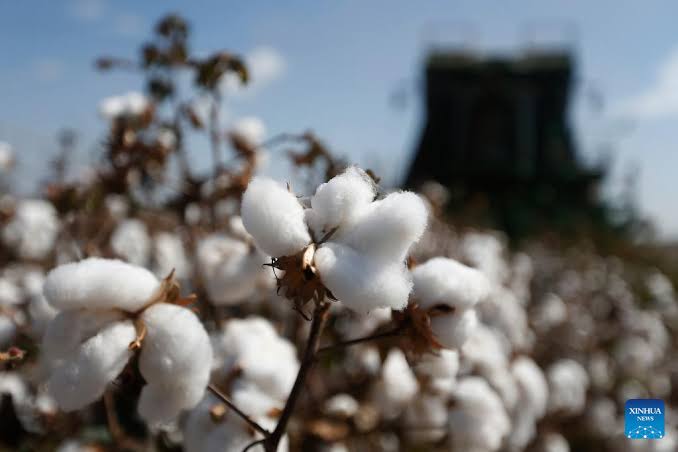
RIO DE JANEIRO, Sept. 23 (Xinhua) — Brazil is poised to become the world’s largest cotton exporter, overtaking the United States, as the main U.S. producing region, Texas, is suffering from droughts and heatwaves, a Brazilian cotton industry leader has said.
“If the U.S. crop continues to deteriorate, Brazil can easily overtake the United States,” Gustavo Vigano, vice president of the Brazilian Cotton Producers Association, told Xinhua.
“The two countries are already equal in basic statistics. It is conceivable that Brazil will become the world’s largest exporter this season,” Vigano added.
The United States and Brazil are the world’s largest cotton exporters, accounting for more than half of the global supply.
The United States is expected to export 12.5 million bales in the 2023-24 season.
However, due to the drought in Texas, the figure may be reduced.
As a result, Brazil, with an export forecast of 11.25 million bales this season, could become the world’s largest exporter.
Moreover, U.S. cotton quality “has not been as good” in recent years due to droughts, while Brazil has “very good quality” because of its rainfall pattern, according to Vigano.
The U.S. cotton crop is only one grade above its worst level on record, as about 40 percent of its production is coming from drought-stricken areas, including nearly all of Texas, which had the second-hottest summer on record this year.
“Many (Brazilian) farmers want to increase the area planted for cotton for next year,” Vigano added. “Since we cannot absorb all the supply, we will export more.”