KATHMANDU, Nepal, Aug 26 — At least 384 tourists and travellers, including 291 foreign nationals, have been reported missing after a devastating flash flood swept through Nepal’s northern Rasuwa district near the Tibet border.
The Nepal Tourism Board said the preliminary list comprises 291 foreign nationals and 93 Nepali citizens. The whereabouts and safety of those listed are still being verified with travel agencies, guides, local authorities and security agencies.
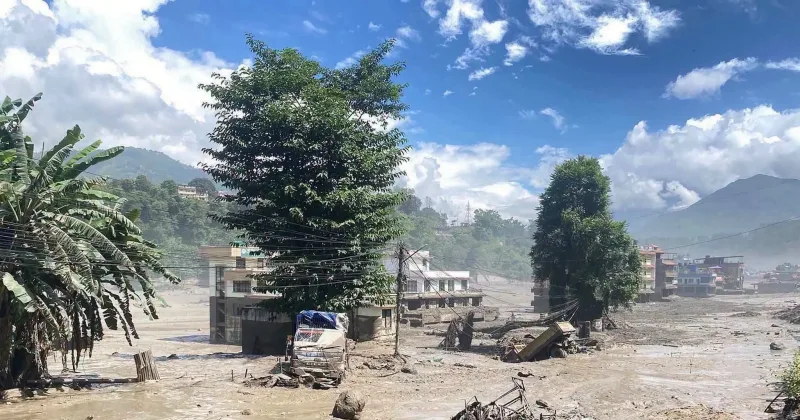
At least 17 people have been reported dead as the disaster caused widespread destruction along the Bhote Koshi River. Earlier reports had put the death toll lower as rescue teams continued reaching affected areas and recovering bodies.
Among the foreign nationals reported missing are 105 Indians, as well as travellers from Australia, the Netherlands, the United States, Malaysia, the United Kingdom and South Africa.
The flash flood struck the Bhote Koshi River in Rasuwa on Wednesday morning, sweeping through settlements and damaging roads, bridges, vehicles and hydropower infrastructure. The areas around Timure and Syabrubesi were among those severely affected.
Authorities have warned residents living along the Bhote Koshi, Trishuli and Narayani rivers to remain vigilant amid concerns over further flooding.
The disaster has also disrupted access to affected areas, making rescue and recovery operations difficult. Security agencies, the military and other emergency teams are involved in efforts to locate those missing and assess the full extent of the damage.
The cause of the flooding is still being assessed. Preliminary reports indicate that an ice-and-rock avalanche may have triggered the sudden surge, while the region’s difficult Himalayan terrain has complicated rescue operations.
The Tourism Board has stressed that the list of 384 missing travellers is preliminary and subject to verification, meaning some of those listed could be safe but remain out of contact because of damaged roads and communications.
Authorities in Nepal and neighbouring countries are coordinating efforts to locate missing people as the death toll and scale of destruction continue to emerge.