NAIROBI, Kenya, Aug 25- Africa is turning to its staple crops in a renewed push for food security, with governments and policymakers calling for greater investment in rice, cassava, maize and other locally consumed foods while building industries around them to cut dependence on imports.
Agriculture and science officials say the continent must move beyond measuring food security by how much is harvested and instead build value chains that connect farmers to quality seed, processors, research institutions, regulators and consumers.
The shift would see staple crops treated not only as food sources but also as raw materials for manufacturing and other value-added industries.
Sierra Leone offers one example of the approach placing rice and cassava at the centre of its Feed Salone strategy, while supporting farmers, processors and markets in bid to create reliable demand for locally produced food.
Dr. Isata Kamanda, Sierra Leone’s Deputy Minister for Agriculture and Food Security, said countries should concentrate investment on crops that form the foundation of their food systems.
“I think the way to go is to invest on your major staples,” Kamanda said, citing rice, cassava and vegetables.

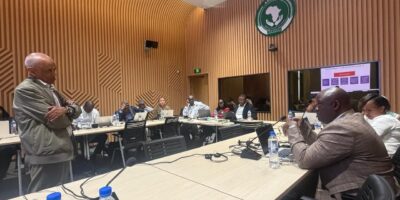
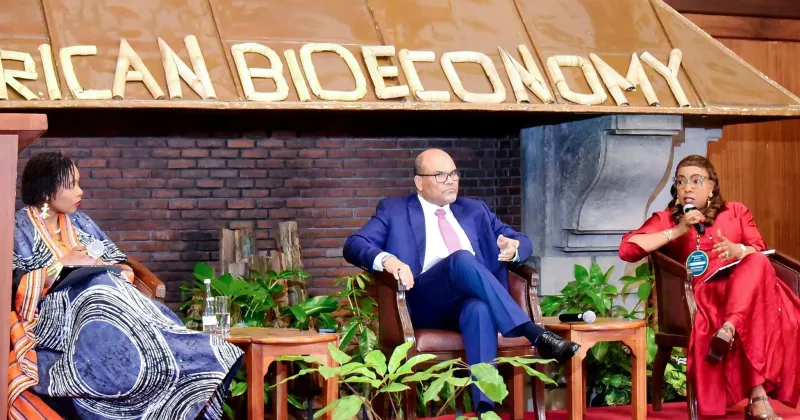
She was speaking on the first day of the Africa Bioeconomy Workshop in Nairobi which has brough together policymakers, scientists, investors, entrepreneurs and development partners to explore ways of accelerating the commercialisation of Africa’s biological resources and scientific capabilities.
Sierraleone’s case study
Kamanda said Sierra Leone had raised average rice yields from about 1.5 metric tonnes per hectare to 2.7 tonnes, helped by farmer support and improvements to the country’s seed system.
Under the strategy, farmers are being connected to processors that collect, add value to and package their produce. Locally produced rice is also being incorporated into school-feeding programmes to create a dependable market for domestic farmers.
Cassava is similarly being positioned for industrialisation, including the production of flour that can substitute wheat in products such as bread.
For Kenya, Principal Secretary for Science, Research and Innovation Prof. Shaukat Abdulrazak said increasing food production must be accompanied by efforts to diversify consumption and strengthen domestic value chains.
He cited initiatives including Galana-Kulalu and the use of technology to support agricultural production, while calling for greater production and consumption of traditional crops such as millet and sorghum.
The challenge, he said, is not only what Africa produces but also what consumers demand, particularly as farmers respond to international markets.
Both officials stressed that higher production would have limited impact without reliable seed systems, certification and regulatory standards.
Seed quality and standards
Kamanda said Sierra Leone’s experience showed that food-security programmes could not succeed without a functional seed system.
The country has since developed a seven-year seed roadmap, introduced seed certification mechanisms and deployed seed inspectors.
Private investment has also entered the sector, with Kamanda saying one company had invested about $1 million in seed cleaning.
“You can’t do a business without certification,” she said, calling for standards covering the entire food chain from production and processing to packaging and the consumer.
The officials also identified the commercialisation of agricultural research as a missing link between Africa’s scientific capacity and its food-security needs.
Kamanda called for universities and research institutions to establish commercial arms capable of working with private companies to take innovations from laboratories to the market.
“We need to earn royalty from it,” she said, arguing that commercial returns could allow research institutions to reinvest in further innovation.
Kenya is pursuing a similar approach through the Kenya National Innovation Agency, innovation academies, university innovation clubs and science parks.
Abdulrazak said 25 universities were being supported to develop a more entrepreneurial approach, including training university leaders to focus more strongly on commercialisation.
“It is easier said than done,” he said, noting that universities must balance teaching, research and extension responsibilities.
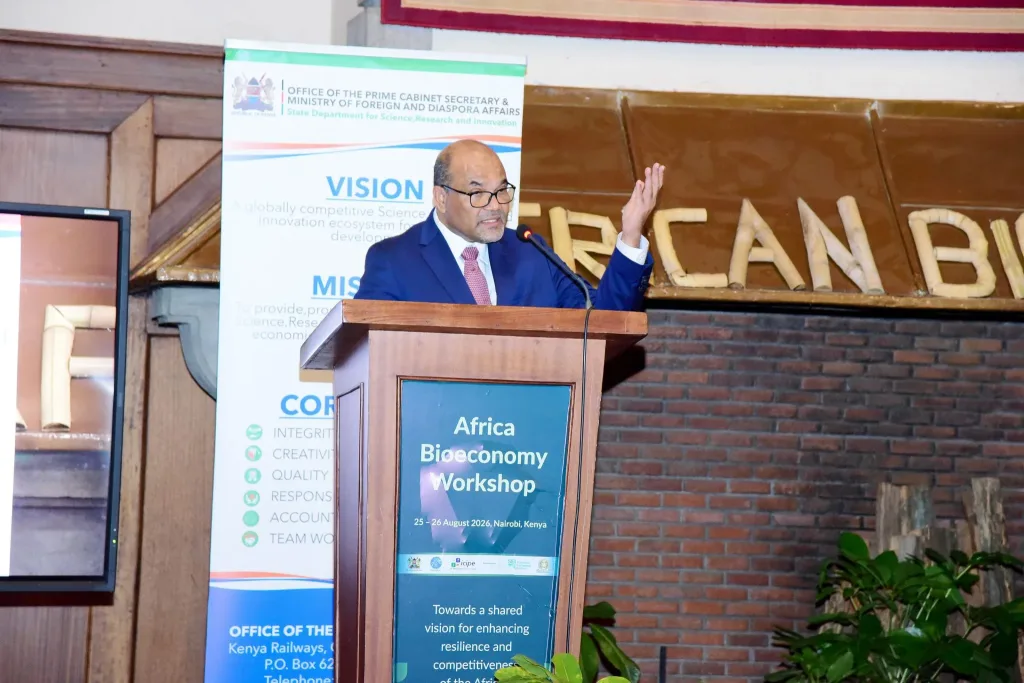
He said industry needed to be involved earlier so that research responds to market demand and has a clear route to commercialisation.
Kenya is also working to strengthen intellectual property systems, including dedicated offices in universities and research institutions to help protect innovations and train researchers on intellectual property rights.
The two-day workshop is co-organised by the International Centre of Insect Physiology and Ecology (icipe), Biolnnovate Africa, the East African Science and Technology Commission EASTECO), the Stockholm Environment Institute Africa Centre and AKADEMIYA2063.
Among the high-level participants in the event was Kenya’s Prime Cabinet Secretary Musalia Mudavadi, East African Community Deputy Secretary General Andrea Ariik Malueth and British High Commissioner to Kenya Matt Baugh.
The discussions are expected to contribute to a broader African narrative on bioeconomy development, investment and international cooperation ahead of the Global Bioeconomy Summit scheduled for October 20-21 in Dublin
Ireland.