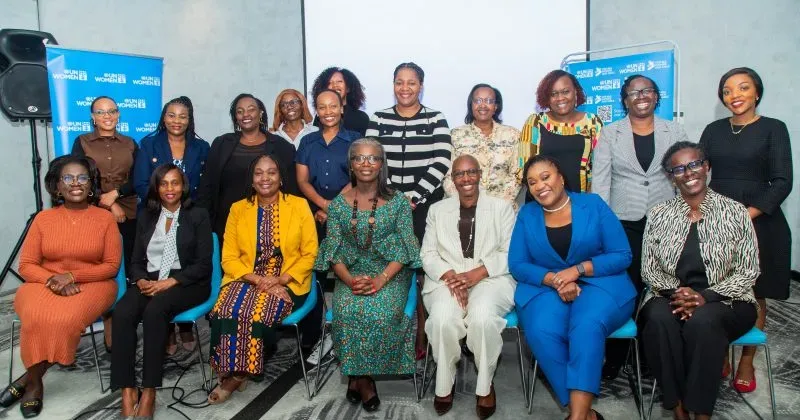
NAIROBI, Kenya, July 8 – Kenya risks undermining its ambitions to become a regional innovation and investment hub if women continue to be excluded from senior corporate leadership and emerging sectors such as artificial intelligence (AI) and technology, business leaders have warned.
Speaking during a high-level roundtable convened by UN Women Kenya on Tuesday, senior executives said despite significant progress in education, entrepreneurship and workforce participation, women remain underrepresented in executive decision-making, boardrooms and fast-growing digital industries that are expected to drive the country’s future economic growth.
The leaders argued that the exclusion of women from sectors shaping the next wave of economic transformation; including AI, digital technologies and innovation; could widen income inequalities and limit Kenya’s competitiveness as businesses increasingly adopt technology-led business models.
Isuzu East Africa Managing Director Rita Kavashe said Kenya has developed a strong pipeline of talented women professionals, but many struggle to transition into executive leadership because of limited mentorship, visibility and access to opportunities.
“There are many capable women already occupying middle and senior management positions. What is lacking is how we intentionally identify them and support their growth,” Kavashe said.
“They are already good enough. Sometimes all they need is someone to tell them they are ready and to coach them into the next level.”
She challenged boards and executive recruiters to widen the leadership talent pool beyond former chief executives, saying many experienced women with strong technical expertise are routinely overlooked despite being qualified for board and executive appointments.
UN Women Kenya Representative Antonia Sodonon said while Kenya has made considerable progress through constitutional reforms and policies promoting gender inclusion, structural barriers continue to prevent women from accessing top leadership positions and high-growth economic sectors.
“Kenya has made significant progress, supported by constitutional provisions and policies that encourage women’s participation. However, patriarchal attitudes remain one of the biggest barriers to women accessing top leadership positions,” Sodonon said.
“We have highly qualified women. The challenge is no longer capability it is access to opportunities, access to finance and ensuring that supportive policies translate into real economic empowerment.”
She said there is an urgent need to ensure women are not left behind as economies become increasingly driven by artificial intelligence, digital innovation and emerging technologies, noting that equal participation would be critical to inclusive economic growth.
Beyond leadership, participants identified access to finance, productive assets and land ownership as persistent constraints, particularly for women entrepreneurs and those working in agriculture.
Salary and Remuneration Commission Vice Chair Gilda Odera said political stability, strong institutions and inclusive leadership remain fundamental to sustaining investor confidence and protecting Kenya’s position as East Africa’s largest economy.
“Business thrives in a stable environment. What is at stake is much bigger than politics it is Kenya’s future and the country’s position as the region’s anchor economy,” Odera said.
“We need dialogue across sectors, and women have an important role to play in building consensus and ensuring the country remains on its development path.”
The leaders called for stronger investment in mentorship, digital skills, AI capacity building and leadership development for women, arguing that expanding female participation in high-value sectors would not only narrow gender gaps but also strengthen innovation, productivity and long-term economic growth.