NAIROBI, Kenya Oct 8 – Former President Uhuru Kenyatta is in Rwanda as part of renewed African Union-led diplomatic efforts to end the conflict in eastern Democratic Republic of Congo.
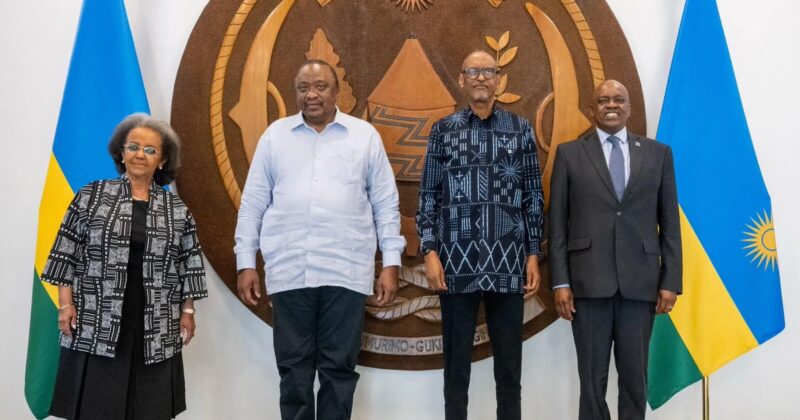
Kenyatta was received by Rwandan President Paul Kagame at Urugwiro Village in Kigali alongside other members of the AU Panel of Facilitators, as the continental body stepped up consultations with key players in the conflict.
The delegation included former Ethiopian president Sahle-Work Zewde, former Botswana president Mokgweetsi Masisi and Togolese Deputy Minister of Foreign Affairs Yackoley Kokou Johnson, who represents the AU mediator, President Faure Gnassingbé of Togo.
The meeting focused on the AU-led peace process and the next steps towards achieving lasting peace and stability in eastern DRC, with particular attention to the root causes of the conflict.
The Kigali talks came shortly after the panel held consultations in Goma with representatives of the Alliance Fleuve Congo/March 23 Movement (AFC/M23), the armed group at the centre of the conflict in eastern DRC.
On October 5, Kenyatta, Ms Sahle-Work and Masisi met AFC/M23 political leaders, including its coordinator Corneille Nangaa, as part of efforts to gather views from the parties directly involved in the conflict. The delegation also consulted officials from the UN peacekeeping mission MONUSCO, the UN Office for the Coordination of Humanitarian Affairs, the International Committee of the Red Cross and the Expanded Joint Verification Mechanism Plus.
The facilitators also visited areas in Nyiragongo that had previously hosted displaced people, giving the delegation an opportunity to assess the humanitarian consequences of the conflict and population movements on the ground.
The mission comes as several diplomatic initiatives seek to find a political settlement to the crisis, including the AU-led process, the Doha talks between Kinshasa and AFC/M23 and a separate Washington-backed process involving Rwanda and the DRC. The AU has called for greater coordination between the different initiatives to avoid competing mediation tracks.
Kenyatta’s involvement is particularly significant given his previous role in trying to broker peace between the Congolese government and armed groups in eastern DRC.
The former Kenyan president previously led the Nairobi Process, which sought to bring armed groups operating in eastern DRC into a political dialogue with Kinshasa. The initiative formed part of wider regional efforts to address insecurity in the Great Lakes region.
The AU has now consolidated its mediation architecture around an African-led process. In December 2025, the continental body endorsed the appointment of President Gnassingbé as AU mediator and established a five-member Panel of Facilitators comprising Kenyatta, Masisi, Ms Sahle-Work, former Nigerian president Olusegun Obasanjo and former Central African Republic president Catherine Samba-Panza.
In July, the panel agreed on a six-month roadmap and operational action plan running from July to December 2026 to advance the peace process in eastern DRC.
The latest consultations therefore represent an effort to move beyond ceasefire arrangements and address the deeper political, security and humanitarian grievances that have fuelled instability in the region.
The AU facilitators have also urged parties to respect ceasefire commitments, continue political engagement and protect civilians as efforts continue to establish conditions for a durable settlement.
The eastern DRC conflict has destabilised the Great Lakes region for decades, with armed groups, regional security concerns, political disputes and competition over resources complicating efforts to secure a lasting settlement.
For Kenya, Kenyatta’s continued role in the mediation gives Nairobi a presence in one of Africa’s most persistent security crises, even after his departure from State House in 2022.
The Kigali meeting is part of the panel’s wider regional consultations and is expected to inform the next phase of the AU-led mediation as facilitators seek to bring the positions of Kinshasa, Kigali and armed groups closer together.