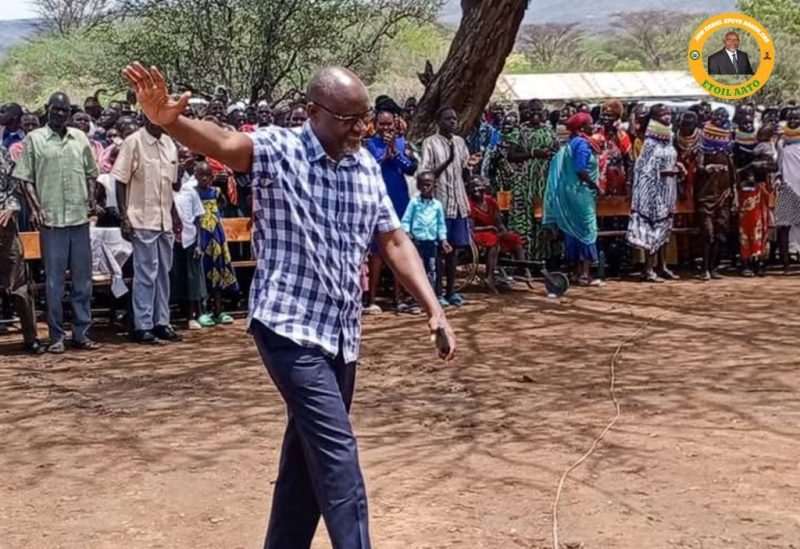
TURKANA, Apr 1 (Xinhua) —The elders from the Turkana community in northern Kenya have opposed a plan unveiled by President William Ruto on Friday, which aims to integrate refugees from neighbouring countries into local communities.
Turkana West MP Daneil Epuyo, led local leaders in rejecting the Shirika Plan, citing inadequate consultations.
Shirika means cooperation in the Swahili language.
“Our community has not been consulted. How can the government push for the integration of foreigners when the host community lacks essential services?” Epuyo said on Sunday,
He urged the government to follow the Constitution and seek public participation before fully implementing the plan. Turkana County hosts Kakuma and Kalobeyei refugee camps, located near the border with South Sudan.
Local leaders have warned that the refugee integration plan could lead to conflicts with host communities already grappling with a food and water crisis.
According to Ruto, the Shirika Plan is the “bold, home-grown solution which amplifies the African Union’s call for African solutions to Africa’s problems as well as global challenges.”
The program is expected to improve the lives of over 830,000 refugees, asylum-seekers and their generous hosts by transforming the country’s refugee camps into integrated settlements.
The East African nation, which has maintained an open-door asylum policy, is hosting more than 700,000 refugees and asylum seekers, mainly from Somalia, South Sudan, Burundi and the Democratic Republic of the Congo, due to ongoing regional conflicts.
“We are here as refugees and not as citizens. We want the government and other organizations to help us find a permanent solution and not to force us into integrating with the host community,” said Abdi Mohammed, a Somali refugee at Kakuma camp.
Members of the Turkana community said the influx of refugees has strained limited natural resources such as water, arable land and firewood, while basic amenities like schools and health centers are also overstretched.