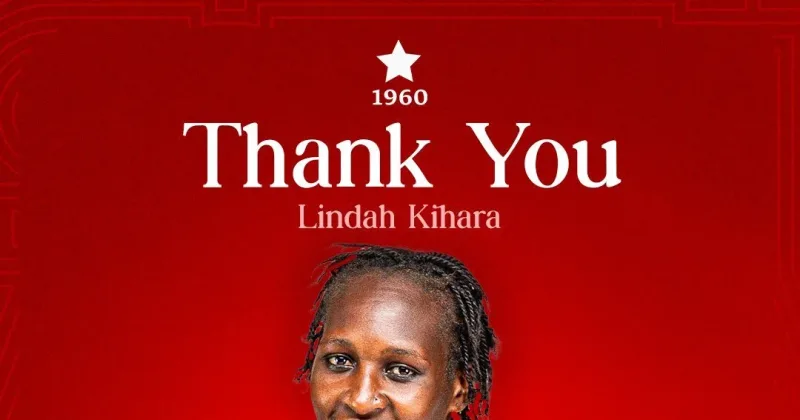
NAIROBI, Kenya, August 26, 2026 – Kayole Starlets striker Lindah Kihara has just finalized her permanent transfer to Turkish outfit Son Zafer Spor.
However, this move signals far more than a personal milestone for a player who made history by scoring in five consecutive FKF Women’s Premier League (KWPL) matches.
Her departure highlights a broader structural shift in East African football, Turkey has become the primary destination for Kenya’s top female talent, exposing a widening gap between local operational realities and continental ambitions.
The financial and professional drivers behind the Turkish exodus are clear.
The KWPL has long wrestled with severe financial constraints, unpredictable match calendars, low pay, and a lack of consistent corporate sponsorship.
In contrast, Turkish clubs, spanning the Women’s Super League down through competitive lower divisions, offer guaranteed professional salaries, structured training environments, and legal contracts.
Beyond immediate financial security, Turkey serves as a strategic springboard into the broader European football ecosystem.
Active recruitment from Turkish clubs has created a well-trodden pipeline for Harambee Starlets stars like Cynthia Shilwatso, Vivian Nasaka, Jentrix Shikangwa, and recent departures including Lavine Achola and Lindah Kihara.
Clubs like Beşiktaş JK, ALG Spor, and Galatasaray regularly compete in the preliminary and knockout stages of the UEFA Women’s Champions League (UWCL).
For ambitious African players, playing in these competitions provides visibility before elite European scouts that domestic or regional qualifiers simply cannot offer.
This stepping-stone effect has allowed players across the region to adapt to European tactical demands, with figures like Cynthia Shilwatso earning valuable UWCL minutes at Ukraine’s FC Kryvbas before securing her move to Beşiktaş.
The thriving neighbour
While Kenyan talent flees to Eastern Europe for basic financial stability, the Tanzanian Women’s Premier League (TWPL) has transformed into a self-sustaining regional powerhouse.
Structurally, the TWPL benefits from full institutional integration under multi-sport giants like Simba SC and Yanga SC, whereas the KWPL relies heavily on self-funded, independent community sides that constantly struggle to keep afloat.
Financially, Tanzanian clubs command significant independent corporate backing.
Simba Queens exemplify this commercial success, securing a landmark five-year sponsorship deal worth TSh 1 Billion (429,000 USD) with gaming firm M-Bet.
Combined with title sponsorship from Serengeti Breweries Limited across the league, Tanzanian clubs offer professional contracts, structured medical care, and performance bonuses that rival lower-tier European offers, vastly outmatching the KWPL, which relies on minimal corporate backing and small federation grants.
From a media and continental perspective, the contrast is equally sharp.
The TWPL enjoys heavy matchday live television broadcasting, passionate fan culture, and aggressive social media monetization that turns players into household names and drives gate revenues.
In comparison, the KWPL suffers from extremely low visibility, with match highlights rarely recorded or broadcasted.
This structural stability enables Tanzanian teams to make regular CAF Women’s Champions League group and semi-final appearances, while Kenyan sides frequently face early exits or financial withdrawals from continental qualifiers.
What gives?
To prevent the KWPL from functioning strictly as a feeder league and stem the flow of talent leaving for basic stability, the Football Kenya Federation (FKF) must introduce decisive structural overhauls.
Transitioning KWPL management away from direct federation oversight to an independent commercial entity would allow a dedicated board to focus entirely on securing broadcasting rights and corporate sponsorships.
At the club level, strict licensing regulations must be enforced to ensure all 12 WPL teams provide legally binding player contracts guaranteeing a minimum living wage, basic health insurance, and structured welfare policies.
Taking inspiration from modern standards, the FKF should also require established men’s premier league sides (such as Gor Mahia, AFC Leopards, and Bandari) to fully adopt and finance women’s teams, replicating the successful infrastructure model of Kenya Police Bullets FC.
To protect long-term financial stability, clubs must establish structured U15 and U17 youth academies to create a homegrown pipeline, while the FKF integrates local matches into digital scouting platforms like Wyscout and InStat.
Digitally tracking player performance data will ensure local clubs receive fair market transfer fees rather than losing top stars for nothing.
Unless Kenya builds a sustainable, commercialized domestic structure, its top talent will continue seeking professional dignity abroad, leaving local clubs to rebuild from scratch year after year.