NAIROBI, Kenya, Sept 7 – In 2019, Gathoni Kimuyu and her colleagues at Story Zetu were facing a problem familiar to many creative businesses in Kenya. They had the ideas. They had an audience. They had already shown that Kenyans were willing to pay to watch their work.
What they did not have was enough capital to match their ambitions.
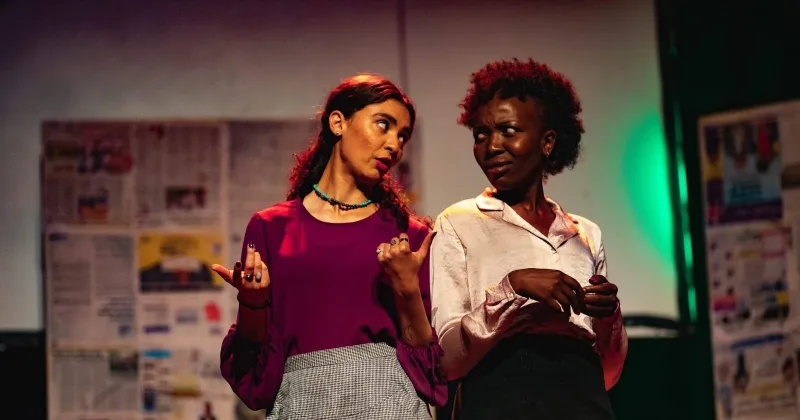
The company was preparing to stage Tom Mboya, a major theatrical production inspired by the Rusinga Festival. The proposed production budget was about Sh4.8 million, but the festival could contribute only Sh50,000, leaving the team to find money for rehearsal space, cast and crew pay, pre-production and marketing on their own.
Then came an intervention from HEVA Fund. Through its support for creative enterprises, including the Sanara Programme, Story Zetu accessed a facility that combined a grant with a zero-rated financing component.
For Ms Kimuyu, the impact went beyond the money.
“It felt like a load off our shoulders,” she recalls.It was a turning point for a company that had started out with little more than a determination to tell Kenyan stories differently.
From rejected television show to theatre
The Story Zetu journey began in 2017, when Ms Kimuyu, then working at a television station, was approached by Abu and Ngatia, who were working in advertising. They had written a television show and wanted her to produce it.
The team completed the production and spent about four months pitching it to television stations — with discouraging results. Broadcasters questioned whether the stories were suitable for the “common mwananchi”, with some suggesting that audiences would not understand or watch them.
Instead of abandoning the project, the team took it to the theatre. The first performance at the Kenya National Theatre sold out in less than two weeks.
That experience convinced the team there was an appetite for Kenyan stories — provided audiences were given the chance to experience them. For Ms Kimuyu, it also marked the beginning of a career in theatre production.
In 2018, she produced Brazen, a show centred on women in Kenyan history whose stories had often been overlooked. It was a success, but it also exposed the financial realities of producing theatre.
The business behind the curtain
Theatre, Ms Kimuyu says, is not simply about actors walking onto a stage. There are months of rehearsals, production design, costumes, technical crews, food, transport, marketing, legal services and administrative costs to account for.
At one point, she was using her own money to finance production costs, hoping ticket sales would eventually reimburse her — an approach that might work for a small production, but becomes much harder when a company wants to move into larger venues and stage more ambitious shows.
This was the challenge HEVA Fund’s financing helped Story Zetu confront. The facility gave the company room to plan. Instead of constantly worrying about the next production expense, the team could invest in rehearsal space and pre-production, and think about how to reach larger audiences.
It also allowed Story Zetu to move from a 350-seat auditorium to a venue with capacity for about 640 people. The bigger venue came with greater risk: the financial calculations only made sense if the company could fill the seats.
It did.
HEVA support helped unlock growth
The results of the investment became increasingly visible. Story Zetu went on to stage Tom Mboya 22 times, with the performances selling out, according to Ms Kimuyu.
The production employed about 40 crew members, including interns, caterers, first-aid personnel and a counsellor or therapist. When actors were included, the number rose to about 51 people. The company also brought in interns from institutions such as Kenyatta University, KCA University and the Kenya Institute of Mass Communication.
For Ms Kimuyu, this was evidence that investment in one creative business can have a multiplier effect — creating work for people who may never appear on stage but whose skills are essential to making a production happen.
The HEVA facility also enabled Story Zetu to professionalise its operations. The company was able to hire an administrator, obtain legal support and strengthen functions around contracts and marketing. The support, therefore, did not simply finance a theatre show. It helped build a business.
“This money didn’t just get us better as artists. It also created a space for us to hire people who are going to support the process.”
Changing what artists are paid
Perhaps one of the most significant effects was on remuneration. When Ms Kimuyu began producing theatre, she researched the rates being paid to actors and crew members. She found them discouraging.
The problem, she argues, is partly rooted in the way society has traditionally viewed creative careers. For decades, careers such as medicine, teaching and engineering were considered “real” professions, while artists were often asked what else they did.
That perception has also influenced access to finance. According to Ms Kimuyu, banks have traditionally been reluctant to lend to artists because creative businesses do not always fit conventional lending models. HEVA’s willingness to finance the company therefore represented more than access to cash — it was also a vote of confidence in the creative business model.
As Story Zetu’s finances improved, it was able to increase what it paid its practitioners. By 2025 and 2026, Ms Kimuyu says, the company was paying about three times what it had paid in 2019.
“By last year and this year actually, we paid triple what we were paying in 2019.”
For an industry where low and inconsistent pay remains a concern, that represents an important shift.
Marketing becomes a competitive advantage
HEVA’s support also helped Story Zetu develop one of its strongest competitive advantages — marketing. Several members of the founding team had backgrounds in advertising and media, and understood that a good production could still fail commercially if audiences did not know about it.
Story Zetu therefore adopted a rule that no production would proceed without a marketing strategy. Ms Kimuyu estimates that marketing should account for roughly 10 per cent of a production budget, and the financing facility gave the company the resources to execute that strategy — investing in digital content and media buying rather than simply designing posters.
The approach was different enough that other theatre producers began approaching Story Zetu to understand how it was attracting audiences — evidence, for Ms Kimuyu, that the company’s influence was extending beyond its own productions.
Then came Covid-19
Just as the HEVA-backed growth story was gathering momentum, the pandemic brought live entertainment to a standstill. Story Zetu was developing Beats, a major production involving several writers. An office had been rented. Writers were working. Production plans were taking shape.
Then Kenya reported its first Covid-19 case, and the production was postponed. Suddenly, the company had no immediate revenue but still had financial obligations — and had already sold tickets.
Rather than simply cancel them, the company gave customers the option of receiving refunds or retaining their tickets until the show could eventually be staged. Only about 20 per cent requested refunds; the majority chose to wait.
The company also spoke to HEVA about its financing obligations. The response was not to demand immediate repayment — HEVA allowed the company time to recover. That patience proved critical during a period when the creative economy was among the sectors hardest hit by restrictions on public gatherings.
For Story Zetu, the relationship became a test of whether creative financing could accommodate the unpredictable nature of the industry. The company eventually returned to production and, according to Ms Kimuyu, completed repayment of the facility in 2026.
The confidence to dream bigger
Looking back, Ms Kimuyu believes the greatest impact of HEVA’s support was not any single production. It was the confidence it created. The team began thinking beyond survival and started planning for growth.
After staging productions in smaller venues, Story Zetu moved into spaces accommodating 640 people and has since begun thinking about venues with capacity for 800. The company’s individual directors have also expanded their creative careers — some producing their own shows, others establishing independent ventures.
That is perhaps the clearest measure of the investment’s impact: the money did not remain within one production. It helped create a pipeline of businesses, jobs and creative careers.
For HEVA Fund and its partners, including the Sanara Programme, the Story Zetu experience illustrates the argument for financing models designed specifically for the creative economy. Creative businesses do not necessarily grow the way conventional enterprises do. Their assets may be intellectual rather than physical. Their revenues can be seasonal. Their biggest investments may come months before audiences buy a ticket — and traditional lending can struggle to capture that potential.
Story Zetu’s experience suggests that when capital is combined with patience and an understanding of the sector, the results can extend well beyond the original borrower.
A bigger stage for the creative economy
Kenya’s creative economy is increasingly producing businesses that can employ people, generate income and build intellectual property. But talent alone does not create sustainable enterprises. Artists need access to capital, markets, business skills and institutions willing to take calculated risks on their ideas.
For Story Zetu, the HEVA Fund facility arrived at precisely that intersection. It helped transform an ambitious group of storytellers into a more structured creative enterprise — helping them hire more people, reach larger audiences, pay better rates and survive an unprecedented crisis. Most importantly, it changed the size of their ambitions.
Ms Kimuyu’s message to other creatives is simple.
“You don’t have to start small.”
For Story Zetu, the decision to think bigger began with a few rejected television scripts. The next chapter was written on stage — with the help of a financier willing to bet on the business behind the art.