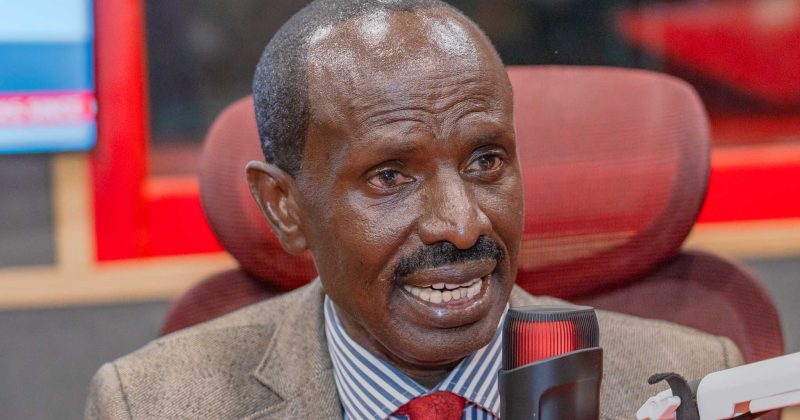
NAIROBI, Kenya Jan 6- Former Kenya National Union of Teachers (KNUT) Secretary General Wilson Sossion has warned that Kenya’s Grade 10 learners may be facing a critical mismatch between career pathways under the Competency-Based Curriculum (CBC) and the opportunities available in the country.
Speaking in a Capital FM interview, Sossion said that while the CBC allows students to choose one of three pathways – STEM, Social Sciences, or Arts & Sports Science – many schools lack the trained teachers, specialized facilities, and infrastructure needed to support these choices.
“A curriculum is as good as the teacher preparation… that teacher preparation is still a challenge today,” he said.
The Former KNUT Boss recalled studies he directed in 2017 on teacher readiness and the CBC pilot phase. He noted that the pilot had been conducted without proper timing or comprehensive reporting, predicting a lot of challenges for the rollout.
Sossion described the pathways as a big win of the new curriculum because they allow learners to specialize and focus on their strengths.
“Those who opt for STEM are still open to extensive and rigorous learning… Every learner must be developed, ultimately, and transited to a specific training,” he said.
But he cautioned that choosing paths like Sports or Arts could leave students without viable career prospects.
“If I have a child who’s good in sports and arts and decides to go down that career path… Where do you go? Where are the opportunities?” he asked, pointing to the lack of professional leagues, theaters, and training facilities in Kenya.
Sossion also called for continuous professional training of teachers, expanded infrastructure, and greater involvement of universities in research and evaluation.
“Theory and practice are two different things… The government must invest in the pathways, continue reviewing this curriculum so that it is fit for purpose,” he said.
His warnings underline the central tension of Kenya’s CBC rollout,while the curriculum promises individualized learning and career-focused pathways, the country must still invest in teachers, resources, and opportunities to make those pathways meaningful.
The Veteran trade unionist called for a continuous review of the Competency Based Education (CBE) curriculum to ensure they remain relevant to learners and aligned with the country’s socio-economic needs.
Sossion who is also an educator pointed out that education systems must evolve with changing realities, warning that rigid pathways risk locking learners into tracks that may not respond to emerging skills demands or individual talents.
“The Competency Based Education framework should not be treated as static. It must be reviewed continuously to ensure its pathways are relevant, flexible and responsive to the needs of learners and the job market,” he said.
He noted that while the CBE system was designed to nurture talents, competencies and practical skills, its success depends largely on how effectively the pathways are implemented and adjusted over time.
Sossion also emphasized the importance of adequate infrastructure, trained teachers and proper career guidance to support learners as they transition through the different stages of the curriculum.
“Without sufficient investment in teacher training, learning resources and clear transition mechanisms, the pathways risk becoming theoretical rather than practical,” he said.
The former union leader urged the Ministry of Education to engage teachers, parents, learners and education experts more actively in reviewing the system, saying inclusive dialogue would help address emerging gaps and public concerns.
Kenya’s Competency Based Education system has sparked wide debate since its rollout, with critics citing challenges such as inadequate facilities, teacher workload and uncertainty around senior school pathways.
Supporters, however, argue that the model better equips learners with practical skills and competencies needed in the modern economy.
Sossion said ongoing assessment and reform would help strengthen public confidence in the system and ensure that education remains a tool for empowerment rather than exclusion.