NAIROBI, Kenya, Aug 7 – When Nairobi’s traffic nightmare is told, motorbike riders are often overlooked.
Yet, navigating the stretch near Junction Mall on Ngong Road can be a real challenge, especially for boda boda riders competing for a small loop to weave through or escape the traffic, often squeezing between cars and risking collisions just to keep moving.
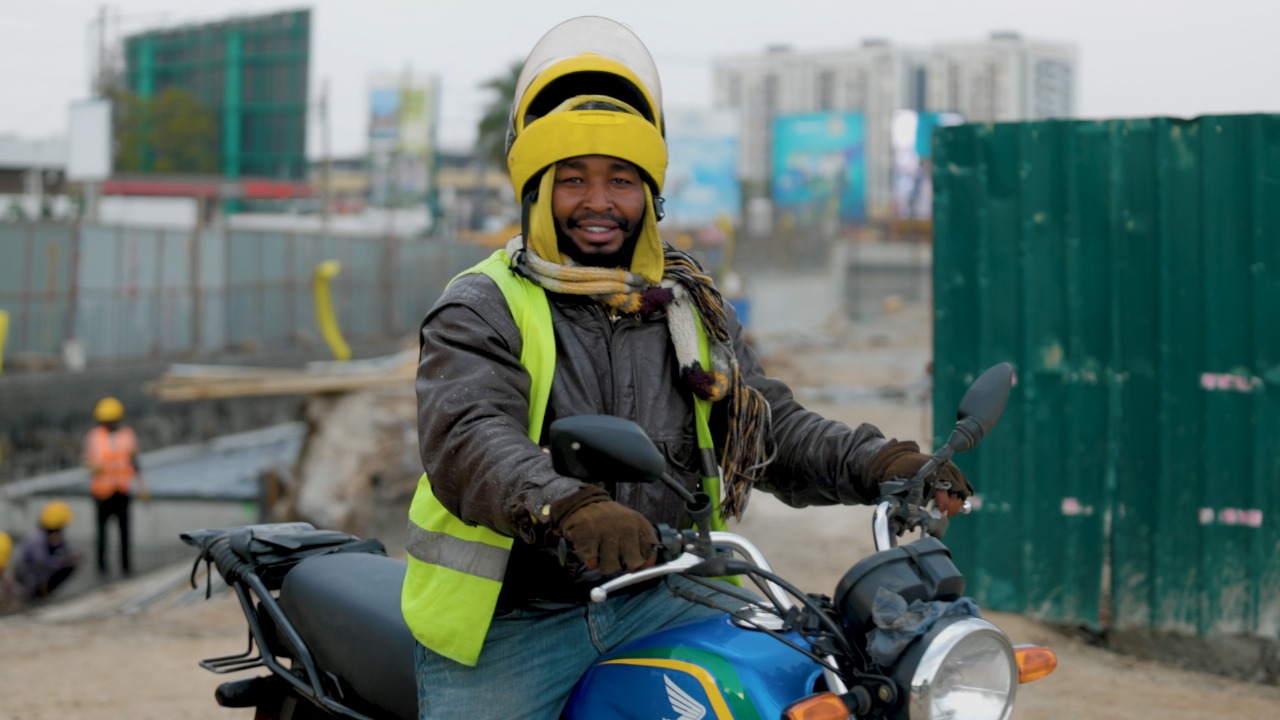
“It becomes a risky affair,” says Ezekiel Mumo, a boda boda rider who operates along the Junction – Lenana stretch of Ngong Road. “But all that is about to change,” he avers.
Mumo, like many other road users, has witnessed firsthand the chaos that grips the busy Kingara–Ngong Road junction.
“If you live around here, you know that getting from Ngong to town used to take over 30 minutes if your are driving, just to cross this section. Now, with the road expansion progress we are seeing, that journey could soon take just 10 minutes,” he says gleefully.
The project in question is the Junction Mall Flyover Viaduct, spearheaded by the Kenya Urban Roads Authority (KURA) as part of the broader Ngong Road Corridor development initiative. A corridor that has long been earmarked for redevelopment to improve mobility within Nairobi.
“By elevating the road, it prevents direct interaction between local and through traffic. The elevated structure, which we are referring to as a viaduct, is essentially a flyover,” the Director of Roads Planning and Design at the Kenya Urban Roads Authority, Engineer Wilfred Oginga said, highlighting the expansion plan.
Ngong Road redevelopment began with Phase I, stretching from the National Library Services to Prestige Plaza, while Phase II extended from Prestige to Dagoretti Corner.
The current flyover, which falls under Phase III, runs from Dagoretti Corner to Karen Shopping Centre and is funded by the Government of Kenya.
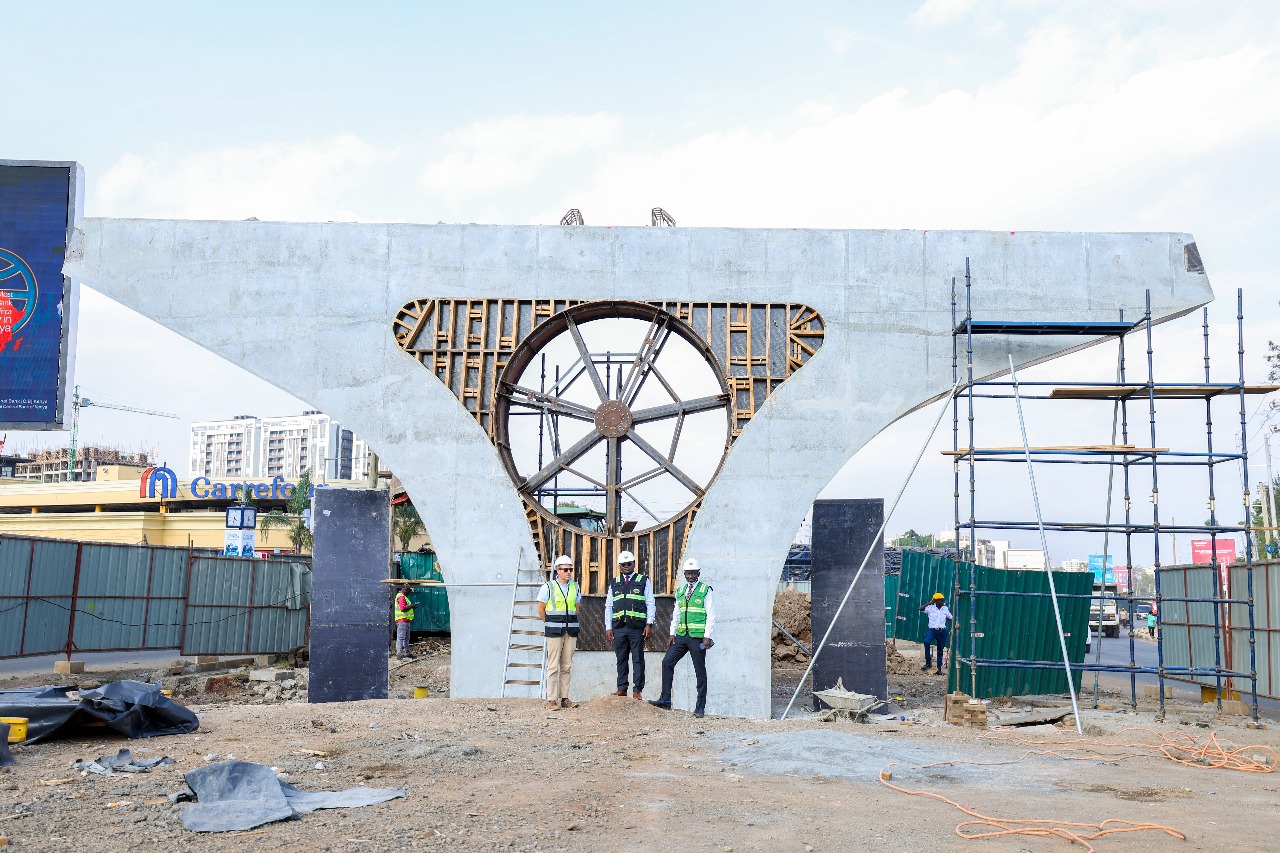
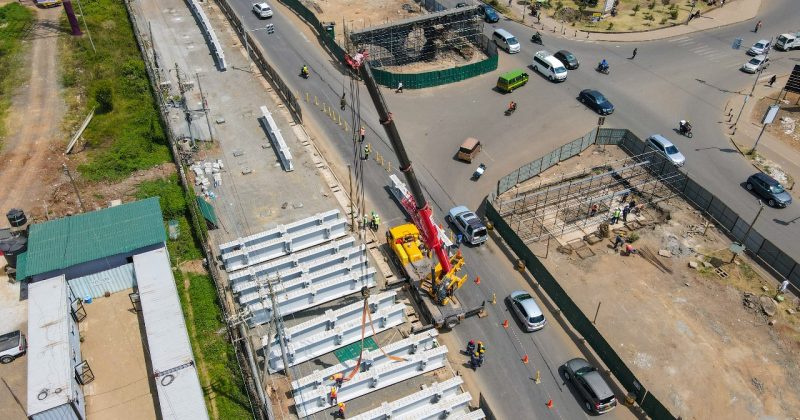
According to project Engineer, Wilfred Oginga, the flyover will consist of a 450-metre-long viaduct, forming a dual carriageway with two lanes in each direction. The total bridge coverage, including approaches, will stretch approximately 820 metres.
The design also includes non-motorised transport (NMT) facilities: circulating lanes, footpaths, and cycle tracks.
“We want to assure all pedestrians, cyclists that you are now well covered. As a policy, all new roads must include walkways, crossings, and cycle paths. Previously, the focus was solely on motorised traffic, but that philosophy has now shifted to embrace all road users. There was a huge backlog in NMT infrastructure, but that is changing,” said Engineer Oginga.
“According to the programme we are supposed to finish this project sometime in July of 2027 but we are so much ahead in terms of progress and we are now expecting to finish this project around June 2026.
The project is expected to take 36 months for construction, followed by a 12-month defect liability period, maintenance phase to ensure quality and functionality,” he added.
The Ngong Road corridor expansion is part of a strategy by Government to complete all stalled road projects across the country In April 2025, the Cabinet approved the use of securitisation to revive stalled projects the current admisntration inherited.
The financing model is a debt-free mechanism that allowed the Kenya Roads Board to access funds by leveraging predictable future revenues from the Road Maintenance Levy Fund.
This innovative approach provided immediate cash flow without adding to the national debt.
With Sh175 billion earmarked for phased payments to contractors, the Government began reviving stalled infrastructure projects.
For years, many road contractors some unpaid for as long as nine years, had been forced to abandon project sites.
As a result, businesses collapsed, thousands of workers lost their jobs, and roads intended to connect Kenyans to essential services like schools, hospitals, farms, and workplaces were left incomplete.
The nation was facing a silent but full-blown road infrastructure crisis.
By July 2025, the Government’s intervention had enabled over 393 out of 580 previously stalled road projects to resume, breathing life back into local economies, restoring jobs, and reconnecting communities across the country.