NAIROBI, Kenya, July 8 – The National Environment Management Authority (NEMA) has been given seven days to explain why it has not released compensation to victims of the Owino Uhuru lead poisoning disaster and to present a payment plan.
Justice Bellinda Akoth Akello of the Environment and Land Court (ELC) in Mombasa warned that failure to comply would leave the court with no option but to order the release of funds held by third parties, including banks, to compensate the victims.
The court directed NEMA’s Director General, as the authority’s accounting officer, to file a sworn affidavit outlining the administrative or budgetary steps taken to satisfy the decree issued on June 11, 2026, any structural obstacles preventing immediate payment, and a clear, verifiable and legally binding payment plan.
“Let it be known to the 4th respondent and its leadership that this deferment is not an acquittal, nor is it an indulgence of bureaucratic lethargy. It is a transitional accommodation. This serves as the absolute final warning,” Justice Akello ruled.
The judge further warned: “Should the Director General fail to file the mandated Affidavit, or should the parties fail to present a mutually agreed payment structure on the next date, the application to make the Garnishee Order Nisi absolute shall be granted automatically on the return date without further hearing, and the funds held by the Garnishee bank shall be attached and released to the Applicant forthwith.”
Last month, the Centre for Justice Governance and Environmental Action criticized a court decision granting NEMA a stay of execution on garnishee orders freezing its accounts, arguing that the move risked further delaying compensation for the victims.
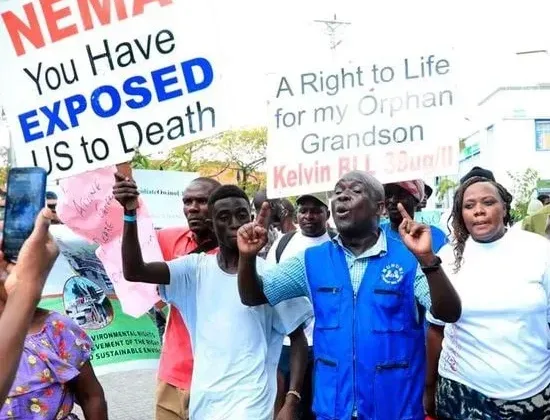
The case stems from one of Kenya’s worst environmental pollution disasters, in which residents of the Owino Uhuru settlement in Mombasa were exposed to lead contamination linked to a battery recycling factory that operated between 2007 and 2014.
Residents sued state agencies, including NEMA, accusing them of failing to properly regulate the facility and protect nearby communities from hazardous lead exposure.
In 2020, ELC ordered compensation for the victims and directed authorities to undertake environmental remediation measures.
The compensation award was later upheld by the Supreme Court, which ordered the payment of about Sh2 billion to affected residents for losses arising from the lead poisoning.