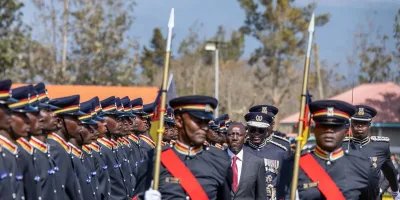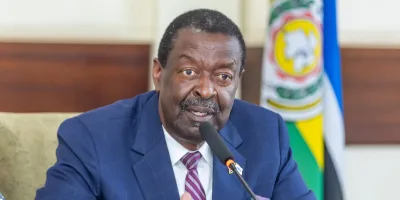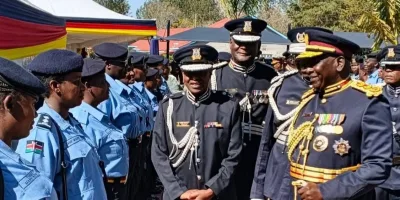
NAIROBI, Kenya, Aug 28 — Interior Cabinet Secretary Kipchumba Murkomen has pushed back against criticism of Kenya’s redesigned police uniform, saying the new attire was selected through public participation and will be introduced gradually rather than replacing existing uniforms overnight.
Murkomen, speaking during the passing-out parade of more than 6,000 police recruits at the National Police College in Kiganjo on Friday, said critics were wrongly reducing the government’s broader police reform programme to a change of uniform.
He said the redesigned attire was recommended by the presidential task force on police welfare and working conditions and followed consultations with police officers and members of the public.
“Thank you for also looking at even their uniform, Your Excellency. The task force you established recommended that the national police uniform needs to be changed,” Murkomen said.
“The uniform that you unveiled today is as a result of rigorous public participation, and the police officers themselves chose their uniform,” he added.
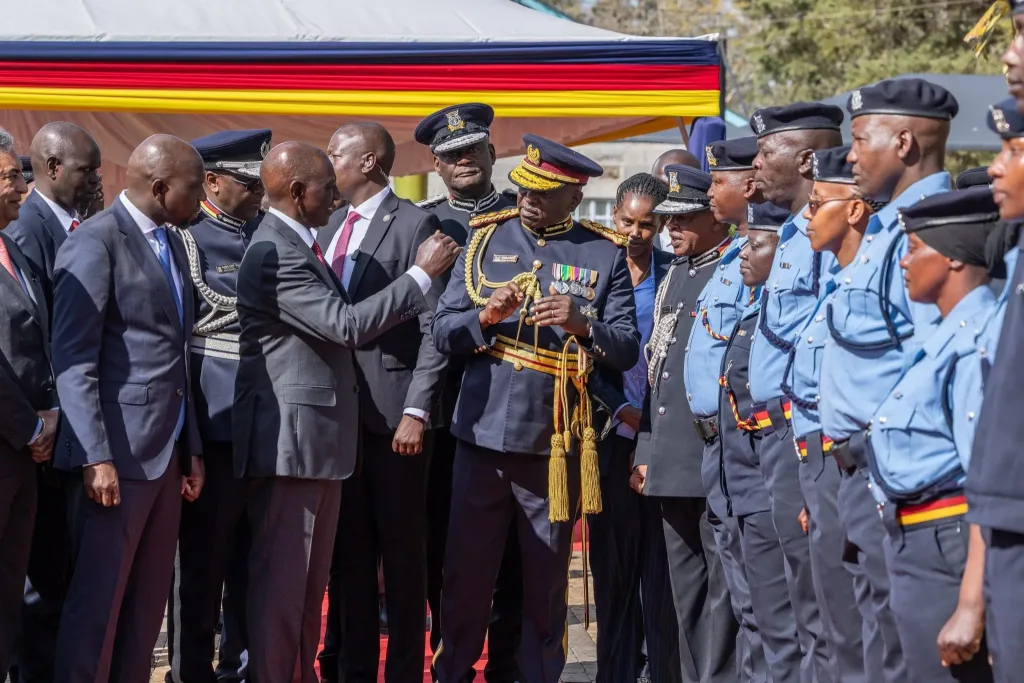
Murkomen said the uniform was intended to reflect the professional image police officers wanted to project and dismissed what he described as propaganda surrounding the transition.
“I know I have seen some people equate the national police reforms to only the uniform,” he said, adding that the wider reforms were too extensive to be reduced to the change of attire.
The new uniform was unveiled by President William Ruto during the ceremony and will initially be worn by the more than 6,000 recruits graduating after nine months of training.
Murkomen clarified that the change would not require the immediate disposal of uniforms currently in use by serving officers.
“Contrary to the propaganda out there, the uniform is not an exchange of the uniform that the officers are wearing now and throw away the uniform they are wearing,” he said.
Instead, he said, the new attire would be introduced progressively as officers replace their uniforms in the normal course of service.
The rollout will begin with the 10,000 police officers recruited under the current administration and gradually extend to other officers until the new uniform is adopted across the Kenya Police Service.
Ruto said the redesign followed consultations with police officers and the public in 2023, as well as recommendations by the presidential task force.
“Today we are also unveiling a new uniform for general duty officers of the Kenya Police Service,” Ruto said.
“The graduating officers will be the first to wear the new uniform. It will then be progressively rolled out to general duty officers throughout the country,” he added.
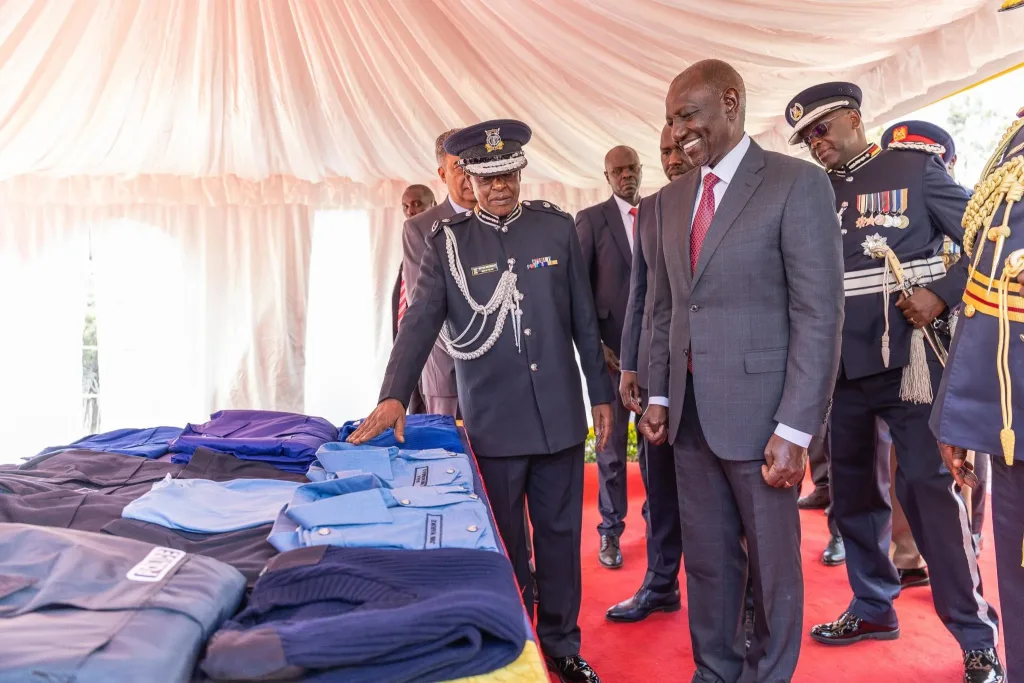
The President said officers had raised concerns about the quality, suitability and effect of the previous uniform on their professional identity.
He, however, cautioned against viewing the new attire as a substitute for broader reforms within the police service.
“We appreciate that a uniform does not necessarily create professionalism. Character, discipline, training and conduct do,” Ruto said.
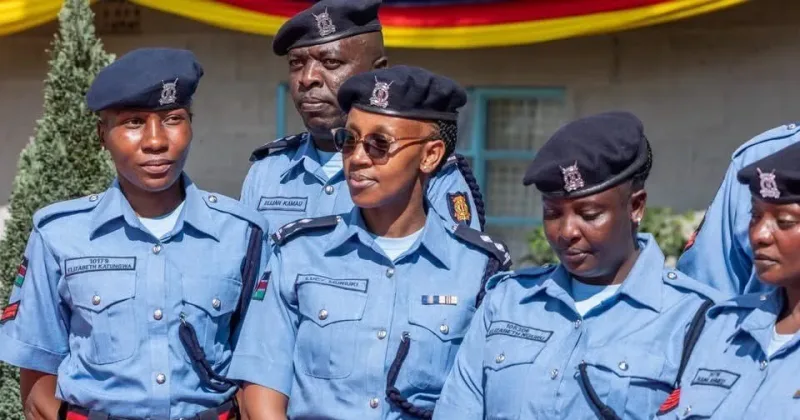
The redesigned General Duty uniform features a light sky-blue shirt paired with deep navy-blue trousers, replacing the previous all-deep-blue appearance. It is complemented by a navy-blue beret or peak cap bearing the police insignia.
The outfit also features a Kenyan flag patch on the upper sleeve, National Police Service markings, shoulder epaulettes, lanyard attachment loops and dual chest pockets with buttoned flaps.
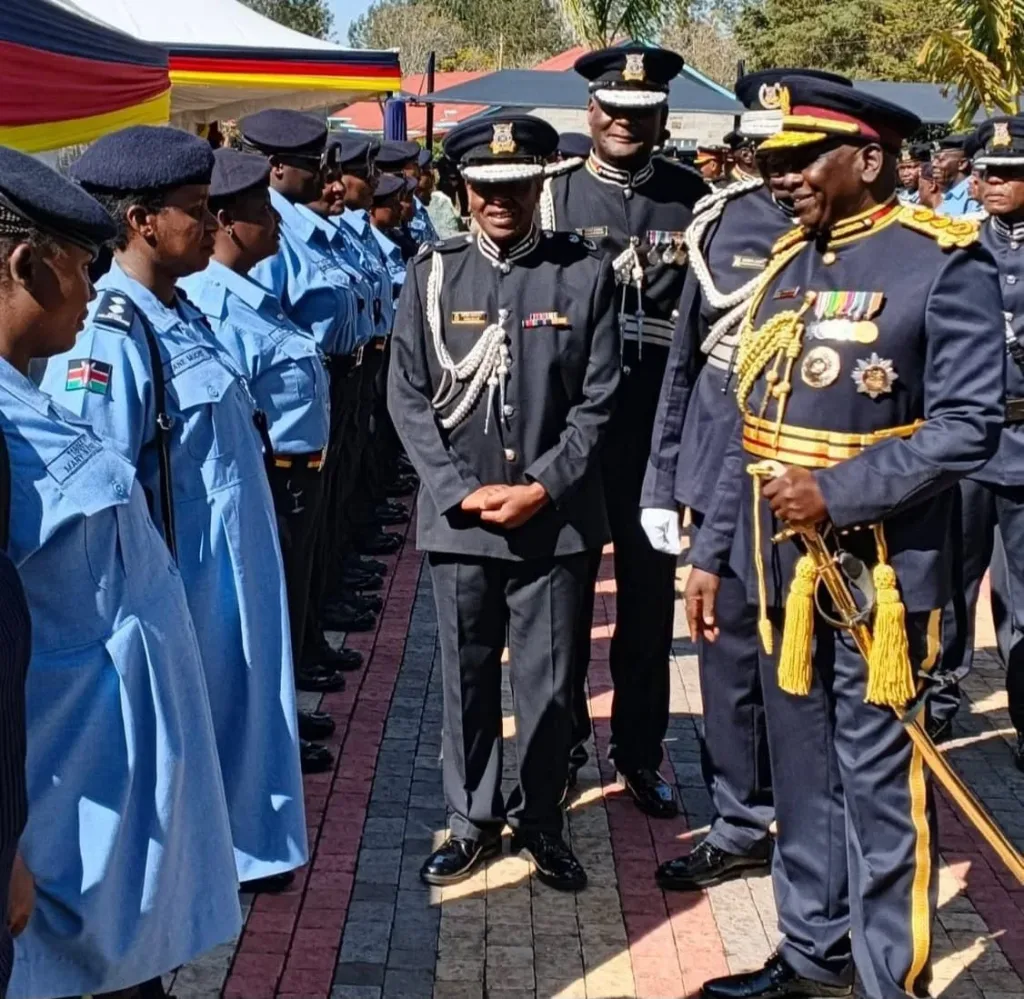
The new design also provides for women officers, including arrangements for expectant policewomen.
Inspector-General of Police Douglas Kanja said the uniform was part of wider efforts to improve officers’ morale and professional identity.
The new attire will be introduced to General Duty officers from Monday, August 31, while officers in the Administration Police Service and General Service Unit will retain their current operational uniforms.
The 6,000-plus recruits who passed out at Kiganjo on Friday are the first major group to enter service under the new uniform.
They joined the college on November 24, 2025, and underwent nine months of training covering legal studies, police procedures, tactics, criminal investigations, human rights, community policing and other areas of modern policing.