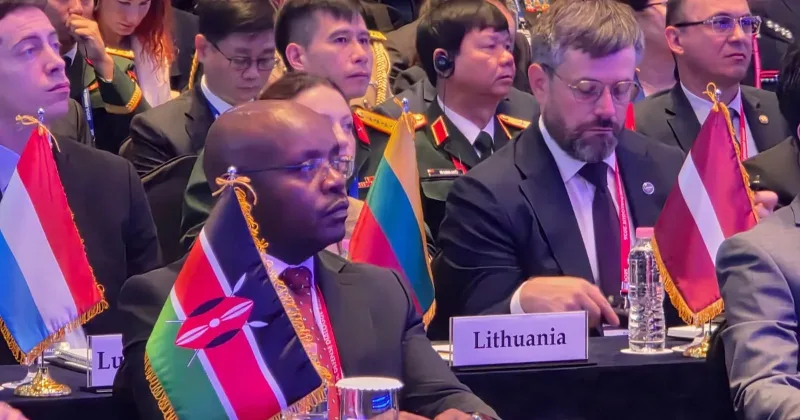
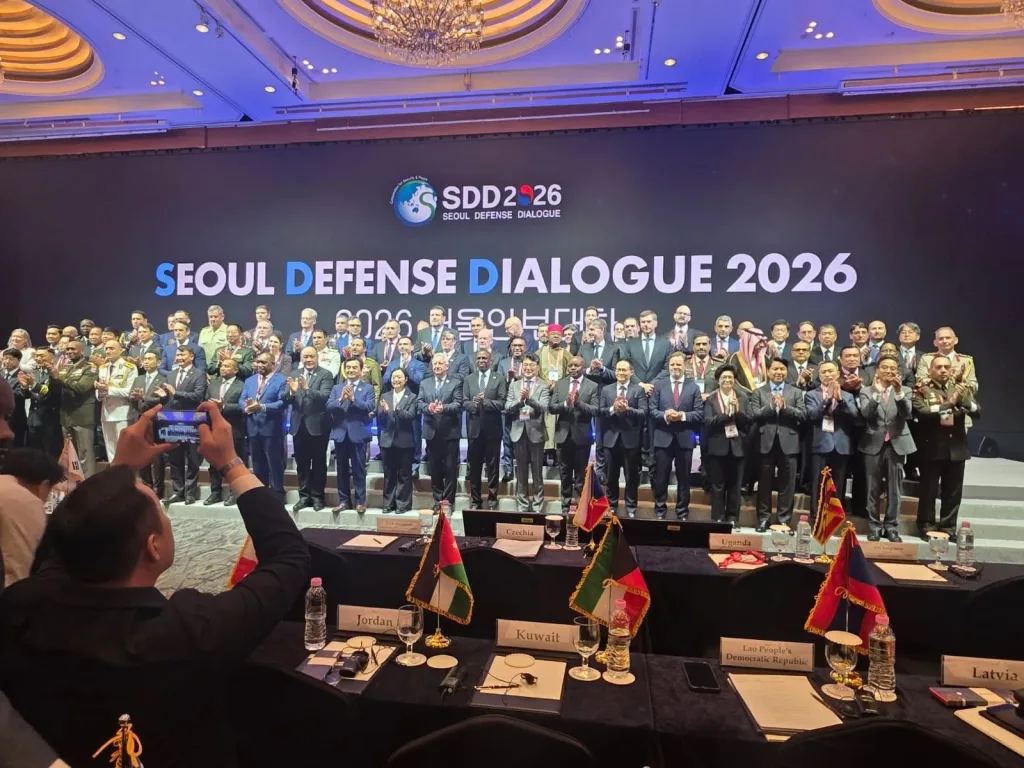
NAIROBI, Kenya, Sep 8 — Kenya has joined defence and security leaders from 67 countries at the 2026 Seoul Defence Dialogue, as nations seek to reshape international security cooperation around stronger partnerships, joint capabilities and shared responses to emerging threats.
Principal Secretary for Defence Patrick Mariru represented Kenya at the high-level forum in Seoul, which has brought together about 1,000 participants under the theme “Toward a New Coexistence in the Age of Turbulence.”
The dialogue comes amid a rapidly changing security environment in which traditional military alliances are increasingly being supplemented by cooperation on technology, economic security, crisis management, resilience, maritime security and counter-terrorism.
Mariru said the discussions underscored the importance of predictable roles and shared capabilities in building a more resilient security architecture.
“This year’s SDD brings together approximately 1,000 participants from 67 countries, with Kenya among the participating nations, providing an important platform for strategic dialogue on emerging security challenges, strengthening partnerships and advancing collective approaches to global peace and stability,” Mariru said.
Opening the dialogue, South Korean President Lee Jae Myung called for stronger international security cooperation to confront increasingly complex global challenges.
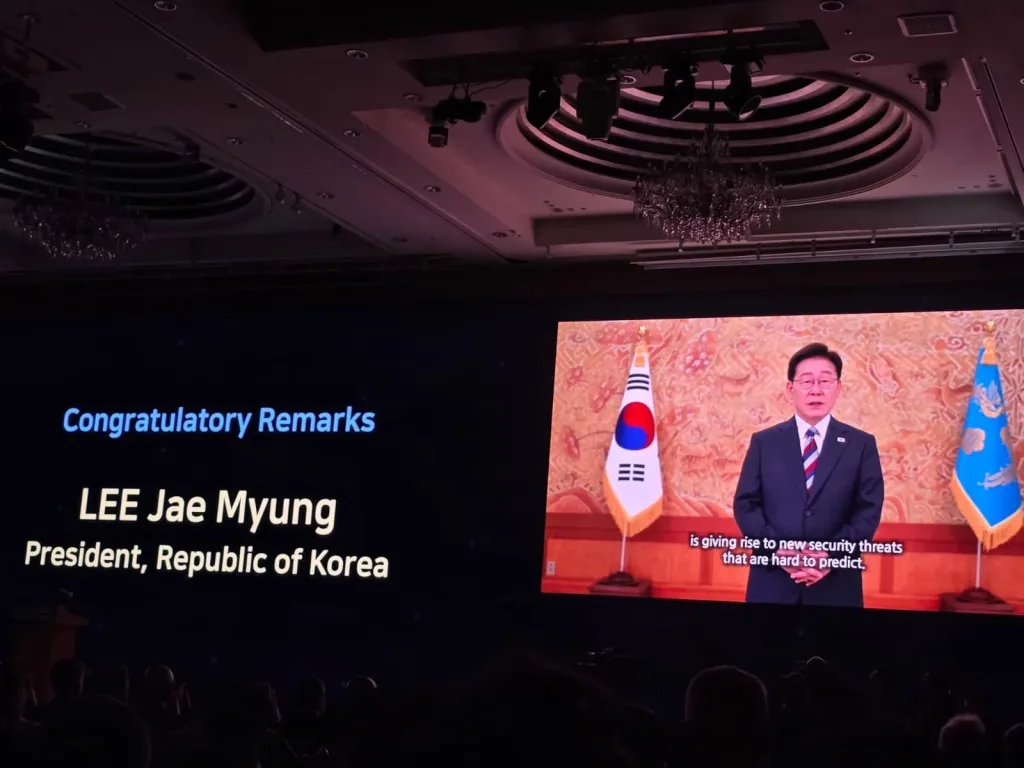
South Korean Prime Minister Han Seong-sook reaffirmed her country’s commitment to using its manufacturing and defence industry capabilities to contribute to global peace and security, while highlighting the need for humanitarian assistance and effective disaster response.
For Kenya, participation in the Seoul forum provides an opportunity to engage with countries seeking new approaches to defence cooperation and to strengthen partnerships beyond traditional security arrangements.
Mariru attended the plenary session on the “Evolution of Alliances and Partnerships,” which examined how countries can build a more connected and resilient global security architecture.
The session brought together South Korean Defence Minister Ahn Gyu-back, Czech Deputy Prime Minister and Defence Minister Jaromír Zůna, and Philippines Defence Secretary Gilberto C. Teodoro Jr.
A central message from the discussions was that future security cooperation should not be limited to choosing between bilateral, minilateral or multilateral arrangements.
Instead, the panelists argued for a networked approach in which different forms of partnerships complement each other and provide countries with greater capacity to respond collectively to security challenges.
The discussions highlighted joint capability development, co-development and co-production of defence technologies, technology-sharing and institutionalised burden-sharing as key elements of the emerging model.
Participants also emphasised intelligence-sharing, joint exercises, interoperability, logistics and resilient defence supply chains as increasingly important to maintaining collective security.
The dialogue further stressed that defence partnerships should extend beyond deterrence to areas that contribute to wider global public good, including humanitarian assistance, disaster response, maritime security and counter-terrorism.
The Seoul Defence Dialogue comes as countries face increasingly interconnected security threats that cut across conventional military challenges, terrorism, cyber threats, supply-chain vulnerabilities, technological competition and humanitarian crises.
The 2026 dialogue is expected to continue discussions on how countries can build an inclusive security architecture capable of responding to crises while upholding international law and supporting global peace.