NAIROBI, Kenya, Aug 21 – Kenya and Japan are deepening research and scientific cooperation, with policymakers and academic leaders calling for stronger partnerships that can translate research into practical technologies and solutions to the two countries’ development challenges.
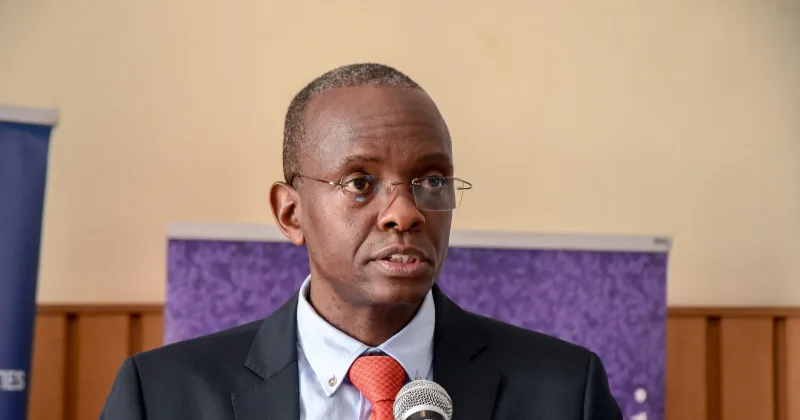
Speaking during the Kenya-Japan Co-Creation Workshop: Advancing Research and Interdisciplinary Cooperation, Principal Secretary for the State Department for Science, Research and Innovation PS Shaukat Abdulrazak said closer international research partnerships would be critical in moving Kenya from knowledge generation to innovation and technology transfer.
Abdulrazak said researchers should focus on challenges with direct economic and social impact, including agricultural post-harvest losses, healthcare, biotechnology and the development of personalized and preventive medicine.
“When countries and institutions come together through science diplomacy, they are able to generate discoveries and develop new ways of solving problems. Science and innovation go beyond borders, and partnerships allow us to combine the strengths that different countries have,” Abdulrazak said.
“Our research must respond to real problems. In agriculture, for example, we need to ask how research and technology can reduce post-harvest losses, while in health we should be looking at biotechnology, vaccines, personalized medicine and preventive measures.”
The PS challenged researchers to place greater emphasis on taking innovations from laboratories to the market, saying the value of research should ultimately be measured by its ability to deliver practical solutions.
Abdulrazak said Kenya also needed to expand its pool of highly trained researchers in strategic fields, including agriculture, health, semiconductors, nuclear science, biotechnology and other emerging technologies.
The workshop brought together researchers, innovators and academic leaders from Kenya and Japan to explore opportunities for interdisciplinary research and deeper institutional collaboration.
Godfrey Madigu, Dean of the Strathmore Institute of Mathematical Sciences, said the partnership with Japanese institutions had created opportunities for Kenyan researchers and students to access expertise and develop new programmes in science and engineering.
“We have been deliberately looking for international collaboration, and our engagement with Japan has grown into a very productive relationship. We see a strong opportunity to work together as we expand our programmes in engineering and applied sciences,” Madigu said.
Madigu said Strathmore University was expanding beyond its traditional focus on business education, with programmes in engineering and mathematical sciences, including actuarial science, data science, economics and financial engineering.
According to Madigu, collaboration with Japanese institutions could help strengthen the university’s technical capacity as it develops its science and engineering ecosystem.
Dr Yumi Yamane, Director of the Japan Society for the Promotion of Science (JSPS) Nairobi Research Station, also underscored the importance of collaboration in advancing research, particularly through stronger links between institutions and researchers in the two countries.
The JSPS has been a key institution in Kenya-Japan research cooperation, supporting researcher exchanges, joint research, conferences and other academic initiatives.
Dr. David Mbuthia, Deputy Director at the National Heroes Council, said Kenya-Japan cooperation had over the years expanded across education, research, infrastructure, industry and development, with research partnerships helping to facilitate the exchange of data, technology and innovation.
“These collaborations have enabled researchers to share information and data in areas such as agricultural development, environmental conservation and climate adaptation. This continuous exchange is important in developing solutions that remain relevant to a rapidly changing world,” Mbuthia said.
Mbuthia noted that the JSPS Nairobi Research Station, established in 1965, is the organization’s longest-standing overseas station and has served as a base for Japanese researchers working in sub-Saharan Africa.
He said the partnership could increasingly support the development of technologies suited to Kenya’s local context, including artificial intelligence systems designed around the country’s socio-economic realities.
Professor Emmanuel Mutisya, Council Chair at the Kenya Advanced Institute of Technology, said the focus of international research cooperation should shift from simply increasing academic publications and attracting research grants to creating knowledge with practical impact.
“International collaboration is not mainly about increasing the number of publications or grants. We need to move beyond those measures and focus on co-creating knowledge and building relevant, applicable and transformative partnerships,” Mutisya said.
Mutisya said Kenya could leverage Japan’s strengths in science and technology while contributing its own entrepreneurial ecosystem, energy and innovative capacity.
The discussions also highlighted the growing need for interdisciplinary research as countries grapple with challenges associated with artificial intelligence, digital transformation, climate change, healthcare and economic development.
Participants said stronger Kenya-Japan cooperation could therefore provide a platform for combining scientific expertise, local knowledge and technological capabilities to develop innovations that can move from research institutions into industry and public policy.