The Law Society of Kenya has today purported to advise President William Ruto on constitutionalism, and specifically the independence of the Judiciary. They need not.
The President has consistently championed upholding the rule of law and constitutional principles, with a particular emphasis on safeguarding the independence of the Judiciary. This commitment has been evident through his unwavering respect for and compliance with recent court orders, notably those pertaining to the Government’s Affordable Housing Program.
From the onset of his presidency, the President took deliberate measures to rectify past injustices by appointing judicial officers who, due to Executive impunity, had been unjustly denied their rightful appointments. In his steadfast belief in the autonomy of the Judiciary, the Head of State also purposefully increased the budget allocation to support the Judiciary’s operational needs.
We, however, agree with the Law Society of Kenya that Executive impunity is unacceptable. However, legislative impunity, by its own measure, is also unacceptable and so is judicial impunity.
As a believer in the Constitution, President Ruto recognises the imperative to lead by example in defending our constitutional values. This includes shielding innocent citizens from judicial misconduct perpetrated by corrupt officers colluding with vested interests. Corruption, whether within the Judiciary, the Executive or the Legislature and, indeed, among the general public must not find refuge behind the shield of judicial independence.
It is our duty to expose and hold accountable those who engage in corrupt practices whoever they maybe and wherever they are. Article 43 of the Constitution obligates the State, led by the President, to provide social and economic rights to Kenyans.
Pursuant to this clear obligation in the Constitution, the President put together a manifesto to provide affordable and decent housing, universal health coverage, ensure production of adequate food and provision of social security and education. This manifesto was prepared and organised in consultation with citizens at fora in all the 47 counties in Kenya during the election campaigns. In adherence to the rule of law, the President, in collaboration with relevant ministries, formulated various policies and legislation on affordable housing and universal healthcare, which were also approved by the Cabinet. Subsequently, Bills were transmitted to Parliament, subjected to public participation and passed into law.
Historically, Kenya has been held back by a few corrupt individuals and those with vested interests who impede inclusive national development. This is a moment in history when our country has a chance to break free from the chains of impunity and realise the transformation mandated by the people and legislated by Parliament. This can only be achieved by countering the influence of vested interests and corrupt judicial officials.
It would be a dereliction of the President’s oath of office, and a betrayal of the people’s mandate to allow their hopes and aspirations to be obstructed by corruption and impunity. Just last month, independent institutions were stopped from charging suspects of corruption. Should individuals investigated by the DCI and the EACC find refuge in courts to circumvent the criminal justice system? It is unacceptable that such suspects are now roaming free in our streets with impunity. No stretch of imagination can baptise this as judicial independence; it is, indeed, judicial impunity.Article 10 of the Constitution obliges all State Organs, State officers, public officers, and every individual involved in applying or interpreting the Constitution to be guided by national values and principles of governance, including public participation.
Just last month, a judicial official outrightly dismissed the relevance of public participation, a value expressly provided in the Constitution that gives citizens a premium place in law-making. Such actions from some judicial officials are signs of judicial tyranny and impunity perpetuated by compromised and corrupt judicial officers working with beneficiaries of the rot that had permeated our healthcare system.
The President cannot be expected to be a mere observer in the face of such injustices. He cannot remain mum. Shall we tolerate the plight of millions of young people languishing in unemployment?
Shall millions of Kenyans persist in enduring impoverishment due to exorbitant medical bills and the loss of loved ones, lacking access to universal health coverage?
Shall millions of our fellow citizens continue living in squalor, with 7 million Kenyans residing in slums?
We are back to the clamour for judiciary reforms last witnessed during President Mwaki Kibaki’s tenure when it was said: ‘Why pay for a lawyer’s services when you can pay a judge?’ We must never allow the return of such impunity in Kenya.
The executive is mandated to deliver to the people after an election. Should the President fulfill commitments to the people and their needs, or should the Executive seek concurrence from the Judiciary to deliver on what the people voted for?
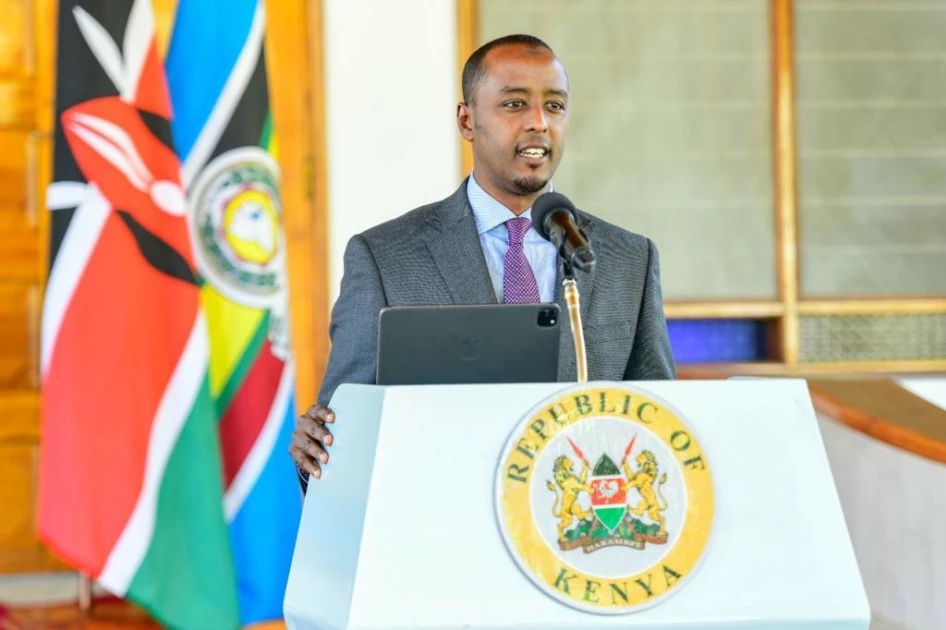
Hussein Mohamed is the State House Spokesperson