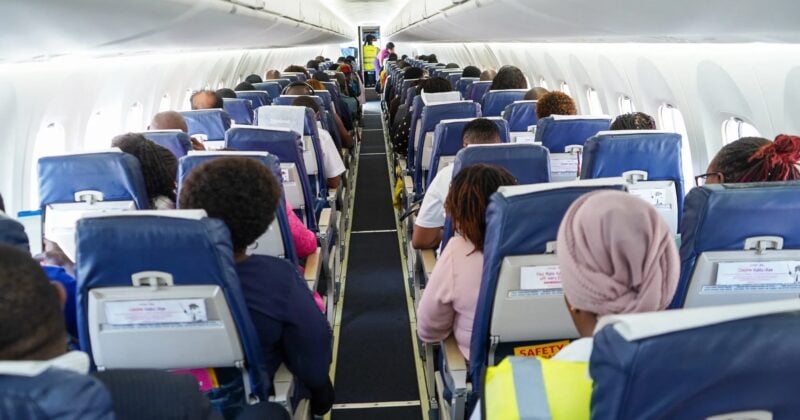
NAIROBI, Kenya, Oct 6 — Kenya has confirmed its first imported case of Bundibugyo Ebola virus disease after a Kenyan citizen who had been living in the Democratic Republic of Congo travelled by road to Kampala before boarding Jambojet flight JM8523 from Entebbe to Nairobi on October 3.
The patient later died after testing positive at both the National Virology Reference Laboratory and KEMRI.
Jambojet says it is working with the Ministry of Health, Port Health Services and other authorities to identify and manage passengers and crew who may have been in contact with the deceased passenger.
1. Authorities will identify the passengers and crew
The Ministry of Health says it has already identified twenty-eight contacts of the deceased, including family members and health workers, and is pursuing a further twenty-three passengers and four crew members who were on the same flight.
This is the immediate priority because Ebola is primarily spread through direct contact with the blood or other bodily fluids of an infected person, or contaminated surfaces and materials. It is not spread by someone who has been infected but has not yet developed symptoms.
Being on the same aircraft, therefore, does not by itself mean a passenger was infected. Health authorities need to establish whether individuals had an exposure that could put them at risk.
2. Identified contacts will be monitored for 21 days
WHO says Ebola’s incubation period is 2 to 21 days. People exposed to a confirmed case are therefore followed for 21 days from their last exposure, with authorities watching for symptoms.
This means the passengers and crew being traced are likely to be contacted by health authorities, have their exposure assessed and receive instructions on monitoring their health.
If symptoms develop, the person should immediately alert health authorities and be moved into appropriate care rather than continuing normal activities. WHO recommends rapid identification and isolation of symptomatic people to prevent further transmission.
3. What should passengers do?
People contacted by the health authorities should cooperate with contact-tracing teams, provide accurate information about their movements and monitor themselves for symptoms.
Early symptoms can include fever, fatigue, muscle pain, headache and sore throat, followed by symptoms such as vomiting, diarrhoea, abdominal pain and rash. Ebola can initially resemble illnesses such as malaria or typhoid, so laboratory testing is needed to confirm infection.
Anyone who believes they were on the affected flight and has not yet been contacted should follow official Ministry of Health guidance rather than attempting to self-diagnose.
4. Testing and isolation become critical if symptoms appear
The Ministry says it has already screened 652,584 travellers since maintaining heightened Ebola surveillance in May and tested 267 samples, with only the confirmed case turning positive as of October 6.
WHO says outbreak control depends on surveillance, laboratory services, contact tracing, infection prevention and control and rapid clinical care.
A person who develops symptoms while being monitored should be assessed and, where necessary, isolated and transferred to an appropriate treatment facility.
5. Why the next 21 days matter
The 21-day period is the maximum incubation window, not a prediction that someone exposed will develop Ebola. WHO notes that an infected person cannot transmit Ebola before symptoms develop.
The purpose of the monitoring period is therefore to detect any new symptomatic cases quickly, isolate them and prevent a potential chain of transmission.
6. What happens if another case is detected?
The response would expand beyond the original flight contacts. Health authorities would investigate the new case’s movements and identify additional contacts, while strengthening surveillance, laboratory testing, infection prevention and clinical care.
WHO describes this as a package of interventions rather than a single measure: case management, surveillance, contact tracing, laboratory services, infection prevention and control, safe and dignified burials, vaccination where applicable and community engagement.
For Bundibugyo virus disease specifically, WHO says there is currently no approved vaccine or specific treatment, making early detection, isolation, supportive care and contact tracing particularly important.
Bottom line
The immediate next step is not to isolate everyone who was on the Jambojet flight, but to identify and assess those who may have had an exposure, monitor them for 21 days and rapidly isolate and test anyone who develops symptoms.
The Ministry of Health says it has already begun that process, while Jambojet is supporting efforts to identify the remaining passengers and crew.