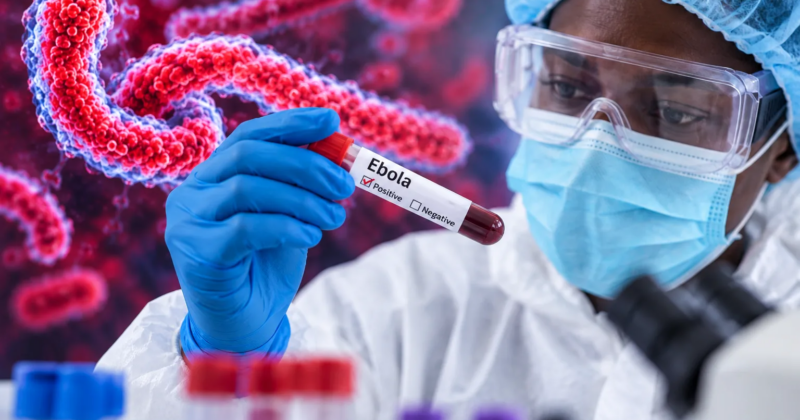
NAIROBI, Kenya, Oct 6 — The Ebola strain detected in Kenya is not the same species that caused the devastating 2014–2016 West Africa epidemic, although both belong to the same virus genus.
Kenya’s confirmed case involves Bundibugyo virus, a species first identified during an outbreak in Uganda’s Bundibugyo District in 2007.
The distinction matters because vaccines and treatments developed for the Ebola virus that caused the West Africa epidemic cannot automatically be assumed to work against Bundibugyo virus. WHO says there are currently no licensed vaccines or approved specific treatments for Bundibugyo virus disease.
Here is what Kenyans need to know about the strain now detected in the country.
Jambojet Ebola case: What passengers need to know
What is Bundibugyo Ebola?
Bundibugyo virus causes Bundibugyo virus disease (BVD), a severe form of Ebola disease.
It is one of four Orthoebolavirus species known to cause disease in humans: Ebola virus, Bundibugyo virus, Sudan virus and Taï Forest virus.
The virus has a zoonotic origin, with fruit bats suspected to be among its natural reservoirs, and can spread to humans following contact with infected animals.
Once introduced into the human population, transmission can occur between people through contact with infected bodily fluids or contaminated materials.
The current regional outbreak was first reported in the Democratic Republic of Congo in May 2026 and subsequently spread to Uganda. WHO reported 6,757 confirmed cases in the DRC and 20 in Uganda as of September 7, alongside one case diagnosed in France.
How does it spread?
Bundibugyo virus is not spread like respiratory viruses such as influenza or COVID-19.
It spreads primarily through direct contact with the blood, secretions, organs or other bodily fluids of an infected person.
Transmission can also occur through contaminated objects and materials.
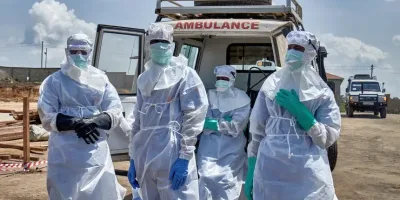
The risk is particularly significant in healthcare settings where infection-prevention measures are inadequate and during unsafe burials involving direct contact with the body of someone who has died from the disease. WHO identifies rapid case detection, isolation, contact tracing, laboratory testing and infection prevention as central to controlling outbreaks.
Foreign Affairs Principal Secretary Korir Sing’oei sought to reassure Kenyans following the death of the patient, saying ordinary contact alone does not mean a person has contracted Ebola.
“Ebola is not a respiratory disease. Spreads only where exchange of fluids happens. Mere contact does not lead to infection.”
The distinction is important: being in the same place as an infected person does not automatically mean infection has occurred. The nature of the exposure is what determines the risk.
What are the symptoms?
Early symptoms can resemble several more common illnesses, making Ebola difficult to identify from symptoms alone.
Bundibugyo virus disease can begin with:
- Fever
- Fatigue and weakness
- Muscle pain
- Headache
- Sore throat
- Abdominal pain
- Vomiting and diarrhoea
As the disease progresses, patients can develop more severe symptoms, including organ dysfunction and, in some cases, bleeding. WHO notes that haemorrhagic manifestations are not present in every patient.
The Kenyan patient presented with fever, chills, intense fatigue and weakness, muscle pain, painful swallowing, a sore throat and bleeding under the skin at an injection site, according to the Ministry of Health.
How long does it take for symptoms to appear?
The incubation period is two to twenty-one days.
Crucially, people infected with Ebola are generally not infectious before they develop symptoms.
This is why Kenyan health authorities are monitoring identified contacts for 21 days.
Acting Director-General for Health Dr Patrick Amoth said: “Ebola incubation is from 2-21 days and therefore isolation will take place up to 21 days.”
He said anyone who develops symptoms during the monitoring period would be transferred to an Ebola treatment unit for care.
How deadly is Bundibugyo Ebola?
Bundibugyo Ebola is serious, but its fatality rate has varied considerably between outbreaks.
WHO says the case-fatality rates recorded in the 2007 Uganda and 2012 DRC outbreaks were about 30 per cent and 50 per cent, respectively.
The current DRC outbreak has also recorded a high fatality rate.
As of September 7, WHO reported 3,269 deaths among 6,778 confirmed cases, although crude fatality ratios can change as patients’ outcomes become known.
These figures do not mean that every person infected with Bundibugyo virus will die.
WHO says rapid recognition, testing and optimised supportive care can reduce mortality.
Is there a treatment?
There is currently no approved specific treatment for Bundibugyo virus disease.
Treatment therefore focuses on intensive supportive care, including rehydration, management of symptoms, monitoring vital organ function and treating complications and other infections.
Researchers are testing potential treatments.
WHO experts have identified MBP134, maftivimab and remdesivir as candidates for evaluation in clinical trials, while the oral antiviral obeldesivir has been prioritised for research into post-exposure prophylaxis. These remain investigational and should not be confused with approved treatments.
What about a vaccine?
There is currently no licensed vaccine specifically for Bundibugyo virus disease.
The widely known Ebola vaccine Ervebo is licensed and WHO-prequalified for Ebola virus disease caused by the Ebola virus species responsible for the Zaire Ebola outbreaks.
However, WHO says there is currently insufficient evidence to establish whether Ervebo provides meaningful protection against Bundibugyo virus in humans.
WHO therefore recommends that Ervebo be used against Bundibugyo virus only within research protocols while evidence is generated.
BVD-specific vaccine candidates are also under development.
How is it different from the Ebola that hit West Africa in 2014?
The Ebola epidemic that devastated Guinea, Liberia and Sierra Leone between 2014 and 2016 was caused by Ebola virus, while the current outbreak involves Bundibugyo virus.
Both belong to the Orthoebolavirus genus but are different species.
That distinction matters because medical countermeasures developed for one species cannot automatically be assumed to work against another.
For Ebola virus disease, WHO recommends monoclonal antibody treatments including mAb114 (ansuvimab) and REGN-EB3 (Inmazeb), while Ervebo is licensed for prevention.
Those measures should not be assumed to provide the same protection against Bundibugyo virus.
Does this mean Kenya is facing the same situation as West Africa in 2014?
Not necessarily.
An imported case does not by itself mean community transmission will follow.
Kenyan authorities have identified contacts of the deceased patient and are tracing passengers and crew who travelled with him from Entebbe to Nairobi.
The 21-day monitoring period is intended to identify anyone who develops symptoms so they can be rapidly assessed, isolated and treated.
The public-health response therefore focuses on early detection, laboratory confirmation, contact tracing, isolation, infection prevention and supportive care rather than waiting for wider transmission to occur.
Uganda’s experience with the same virus also demonstrates the importance of this approach.
Uganda declared its 2026 Bundibugyo outbreak over in August after completing 42 consecutive days without a new confirmed case, twice the maximum 21-day incubation period. The country recorded 20 confirmed cases during the outbreak.
For Kenya, the immediate priority is therefore to identify and monitor people who may have been exposed, detect any illness early and prevent secondary transmission while authorities continue surveillance.