NAIROBI, Kenya Oct 6 – Kenya on Tuesday confirmed its first imported case of Bundibugyo Ebola virus, triggering public concern over how easily the deadly disease can spread.
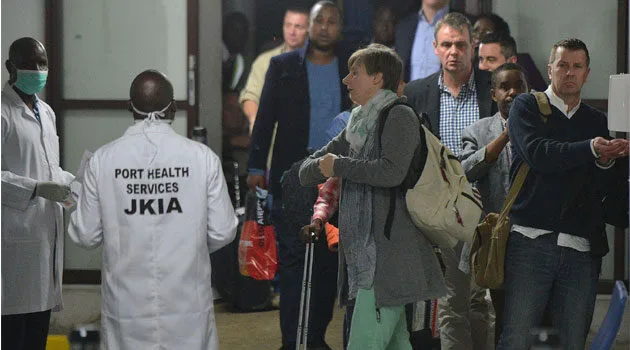
The Ministry of Health said the patient, a Kenyan who had lived in the Democratic Republic of Congo (DRC) for seven years, travelled by road from the DRC to Kampala before boarding Jambojet flight J8523 to Nairobi on Saturday, October 3.
He was taken directly from JKIA to Nairobi Hospital, where he was isolated and later transferred to an isolation facility. He died on Monday night.
The government has identified 28 contacts, including family members and healthcare workers, while efforts are underway to trace 23 passengers and four crew members who were on the same flight.
But as Kenyans worry about possible exposure, one question is dominating conversations: Can Ebola spread through ordinary contact?
Can I catch Ebola by sitting next to someone?
Not through ordinary proximity alone.
Ebola is not an airborne disease like flu or COVID-19. Simply sitting beside an infected person does not normally expose you to the virus. Transmission occurs when a person comes into direct contact with infected blood or other body fluids, or objects contaminated with such fluids. World Health Organization
What about shaking hands?
A normal handshake does not automatically mean you will catch Ebola.
The risk becomes serious if an infected person’s body fluids are involved and the virus enters through broken skin or the eyes, nose or mouth.
WHO advises people to avoid physical contact with people suspected or confirmed to have Ebola. World Health Organization
Can Ebola spread through shared food?
Ordinary sharing of food is not considered a typical route of transmission. The major concern is exposure to infected body fluids.
However, people should avoid sharing food or handling items belonging to someone who is seriously ill where there is a possibility of contamination with body fluids.
Can I catch Ebola on public transport?
Simply travelling in the same bus, matatu or train with an infected person does not mean you will catch Ebola.
The risk is linked to direct exposure to infected body fluids or contaminated surfaces and materials. WHO says the risk of Ebola transmission during air travel is low because Ebola is not spread through the air. WHO | Regional Office for Africa
What about touching money?
Handling ordinary money is not considered a normal route of Ebola transmission.
The concern would arise if money or another object were contaminated with infected body fluids and those fluids subsequently came into contact with broken skin or mucous membranes.
Can I catch Ebola on the same plane?
Being on the same aircraft does not automatically put passengers at risk.
This is particularly important following the Ministry of Health’s announcement that it is tracing 23 passengers and four crew members who travelled on the same Jambojet flight as the deceased.
WHO says Ebola is not airborne and the risk of transmission during air travel is generally low. However, passengers who had direct exposure to the patient’s body fluids could be considered at risk and should follow instructions from health authorities. World Health Organization
Can Ebola spread inside a hospital?
Yes. Hospitals can be high-risk environments if infection-control measures are not followed.
Healthcare workers and caregivers are among those at greatest risk because they may have close contact with a patient’s blood, vomit, faeces or other body fluids.
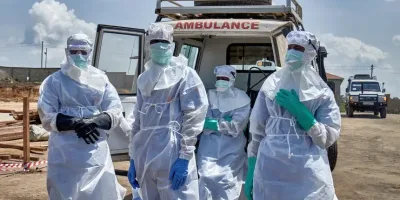
This is why suspected Ebola patients are isolated and healthcare workers are required to use strict infection-prevention measures. World Health Organization
What Kenyans should know now
The Ministry of Health said it has screened 652,584 travellers since heightened Ebola surveillance began in May and tested 267 samples in five laboratories.
Only one test has so far returned positive.
“I wish to reassure the public not to panic, as all systems are in place to mitigate the spread of the disease,” Health Cabinet Secretary Aden Duale said.
The Ministry has urged Kenyans to wash their hands frequently, use alcohol-based hand sanitiser and avoid close contact with sick people coming from countries reporting active Ebola transmission.
People who become unwell have also been advised to seek care at recognised health facilities and obtain information through official Ministry of Health channels or the 719 toll-free line.
WHO says people with Ebola become infectious when symptoms begin, while the incubation period can range from two to 21 days.