NAIROBI, Kenya, Sept 1 – Epson is stepping up its push into Africa’s small business and emerging markets, targeting enterprises and consumers seeking to cut operating costs as unreliable electricity and high energy prices continue to shape technology choices.
The Japanese technology company says growing digitalization across Africa is creating demand for printing and projection equipment that can operate efficiently in markets where continuous power supply cannot always be guaranteed.
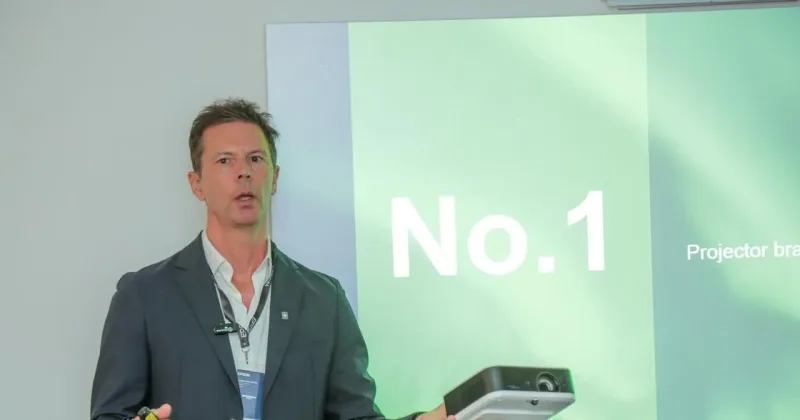
Epson President for Africa, Middle East and West and Central Asia Neil Colquhoun said the company sees an opportunity in Africa’s largely small and medium-sized business economy, where affordability, energy efficiency and ease of use can influence technology adoption.
“Our target market is very large because if we go into more rural locations in Africa, where sometimes you have to use an inverter or solar, you can still use Epson technology.”
The company is promoting its Heat-Free PrecisionCore printing technology, which it says can consume substantially less power than conventional laser systems, alongside ink-tank printers designed to reduce reliance on frequent cartridge purchases.
Colquhoun said the approach is particularly relevant for SMEs, schools and households operating in areas where electricity costs and reliability remain concerns.
“We want to have high-quality products, with low power consumption and low intervention, so customers can essentially forget about the product and get on with their business.”
Epson’s regional business has recorded about 20 percent year-on-year growth, according to the company, with demand spanning consumer and business printing, scanning, projection and professional printing.
The firm is also seeking to strengthen local partnerships and increase its brand presence as it expands in Africa, South America, Southeast Asia, the Middle East and Turkey.
As part of the expansion, Epson has opened a new 250-square-metre office in Nairobi that will serve as its East African base and include a demonstration facility where customers can test its technology.
Colquhoun said the Nairobi operation would allow Epson to better understand regional customer needs, with the company open to developing products specifically tailored to East and West African markets.
The strategy reflects a broader opportunity for technology manufacturers in emerging markets, where the ability to deliver lower-cost, energy-efficient equipment could prove as important as advanced features in winning customers.