NAIROBI, Kenya, Feb 18 — Civil society groups have raised the alarm following a decision by the Council of Governors (CoG) to suspend appearances before key Senate oversight committees.
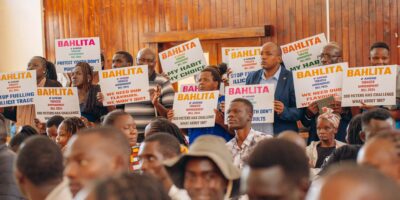
In a joint statement, the Okoa Uchumi Campaign and the National Integrity Alliance (NIA) said the boycott poses a serious threat to constitutional accountability and the rule of law, even as they acknowledged the gravity of the allegations raised by governors.
“These allegations raised by the CoG, though quite egregious, are not new and raise very serious concerns on the conduct of State Officers contrary to the Constitution of Kenya (2010) under Chapter Six on Leadership and Integrity,” the civil society groups said.
The CoG resolved earlier this month that governors would no longer appear before CPAC until their concerns are addressed and demanded the reconstitution of the committee over alleged misconduct by four unnamed senators.
The response by the civil society follows CoG’s announcement that cited allegations of extortion, harassment and political witch-hunts by members of the Senate County Public Accounts Committee (CPAC) and the County Public Investments and Special Funds Committee (CPIC).
The council has also indicated it will scale back engagements with CPIC, arguing that repeated summons over individual projects are disruptive and excessive.
The civil society alliance warned that suspending appearances before Senate committees amounts to evasion of constitutionally mandated oversight.
Impunity
Under Articles 96 and 125 of the Constitution, the Senate of Kenya is empowered to oversee the use of national revenue allocated to counties and to summon any person to appear before it.
“These provisions are not discretionary courtesies extended to governors but rather binding constitutional obligations, the boycott of which would undermine the rule of law and constitutional principles that all State Officers are accountable for the lawful and prudent use of public resources,” the statement noted.
The groups further criticised what they described as an “unholy alliance” of bribery and impunity, pointing out that some governors have allegedly admitted to paying bribes, only to later complain about a lack of reciprocal action from senators.
They said such conduct undermines justice and accountability in the management of public funds.
The standoff comes against a backdrop of persistent audit delays and weak enforcement of oversight timelines.
Courts have previously ruled that audit reports submitted outside the six-month constitutional timeline under Article 229(4) are null and void, rendering subsequent oversight ineffective.
Civil society warned that late submissions by county entities often create loopholes that governors exploit to avoid scrutiny.
On February 9, CoG chairperson and Wajir Governor Ahmed Abdullahi accused some senators of turning oversight hearings into “hostile political theatres,” alleging intimidation, humiliation and extortion of governors.
Hostile committee
He said governors are often kept waiting for hours and pressured for political or personal gain.
Tharaka Nithi Governor Muthomi Njuki echoed the concerns, insisting the dispute is not with the Senate as an institution but with the conduct of four CPAC members.
Abdullahi also raised procedural concerns, including the use of bloggers instead of official parliamentary communication channels and alleged intimidation of auditors to incriminate specific governors.
Despite the standoff, Abdullahi maintained that governors remain committed to accountability, warning, however, that they are prepared to seek judicial interpretation on the scope of Senate oversight if the issues persist.
In response, Okoa Uchumi and NIA outlined a series of demands, including immediate reporting of the allegations to the Ethics and Anti-Corruption Commission (EACC), disciplinary action by the Senate, and swift investigations and prosecutions by the Office of the Director of Public Prosecutions (ODPP).
They also called for greater collaboration between Parliament, county assemblies and the Office of the Auditor-General to ensure timely and effective scrutiny of public finances.
“The failure of our governments, both at national and county level, to uphold constitutional standards of transparency and accountability has resulted in an all-time loss of public trust in devolution and service delivery,” the groups said, citing recent youth-led civic actions as evidence of growing public frustration.
CPAC is currently reviewing Auditor-General Nancy Gathungu’s reports on county financial statements for the year ending June 30, 2025, with hearings scheduled to run until March 16, 2026, and a court-mandated deadline of March 31 for completion.
The civil society organisations warned that failure by the Senate, EACC and ODPP to act decisively could prompt civic and judicial interventions to enforce Chapter Six of the Constitution and restore public confidence in oversight institutions.