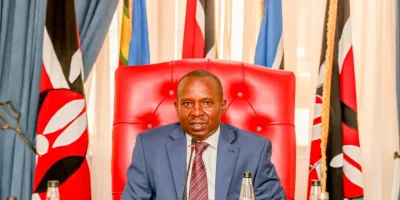
NAIROBI, Kenya, Jun 23 – The Kenya Conference of Catholic Bishops (KCCB) has urged the government to engage in “genuine and transparent dialogue” with stakeholders over the proposed Ebola quarantine and treatment facility linked to Laikipia Air Base.
The confrence Tuesday warned against decisions made without public participation and accountability.
Their intervention comes as Health Cabinet Secretary Aden Duale confirmed that Kenya and the United States have jointly suspended the proposed collaboration, following mounting public concern, legal scrutiny, and a contempt of court matter before the High Court.
The bishops expressed alarm over what they described as a lack of consultation and transparency in the handling of the proposed facility, which was reportedly intended to manage Ebola cases, including foreign nationals.
The twenty-eight bishops led by Archbishop Maurice Muhatia cautioned that the initiative had raised serious questions about national sovereignty, public safety, and the governance of international health agreements.
“We express our grave concern regarding the proposed establishment of an Ebola quarantine and treatment facility at Laikipia Air Base, mainly for American citizens,” the bishops said.
“This initiative has been imposed on Kenyans without adequate public consultation, parliamentary oversight, or transparent disclosure.”
They warned that any health infrastructure dealing with highly infectious diseases must be subject to full public accountability and scientific clarity, arguing that the lack of engagement had already contributed to tensions and loss of life during protests in Laikipia.
“There is an inherent threat to the life of Kenyan citizens because we would be importing a deadly disease,” the statement added, while questioning whether Kenya should host foreign patients who may not be accepted elsewhere.
Speaking alongside Vice Chair Most Rev. Anthony Muhera and Nairobi Archbishop Philip Anyolo, Muhatia called for structured engagement involving government, religious leaders, civil society, and healthcare professionals.
The bishops urged authorities to avoid unilateral decision-making on sensitive national issues, including foreign partnerships involving natural resources and strategic infrastructure.
“Kenya must affirm its sovereignty,” they said, adding that transparency must extend to all state agreements affecting national assets and public welfare.
Appearing in court earlier, Health Cabinet Secretary Aden Duale confirmed that the Kenyan and US governments had agreed to suspend the proposed Ebola-related collaboration.
Duale told the court that the Ministry of Health remains committed to constitutional principles, including respect for the rule of law, court orders, and judicial independence.
“The Ministry of Health remains firmly committed to the constitutional principles of the rule of law, respect for court orders, and the independence of the Judiciary,” he stated.
Following his appearance, the High Court opted not to pursue contempt proceedings but issued a stern warning over compliance with judicial directives.
The suspension marks a significant pause in a project that had drawn public debate over transparency, national security considerations, and the handling of foreign health partnerships.
Beyond the Ebola facility issue, the bishops used the platform to reflect on broader national concerns, warning about the erosion of respect for human dignity amid protests, insecurity, and governance challenges.
They emphasized that the sanctity of life must be protected in all circumstances, including during demonstrations, and condemned what they termed “goonism” and criminal infiltration of public protests.
“Society should not be infiltrated by crime when doing good things,” the bishops said, calling for peaceful civic expression and protection of both public and private property.
They also urged leaders across all arms of government to prioritize dialogue over confrontation, noting that unresolved grievances were contributing to growing frustration among citizens.
The bishops also announced that Kenya will host the 21st Plenary Assembly of the Association of Member Episcopal Conferences in Eastern Africa (AMECEA) from July 17 to 26, 2026, at the Catholic University of Eastern Africa in Nairobi.
The high-level gathering is expected to bring together more than 130 bishops from nine countries, including Sudan, South Sudan, Ethiopia, Eritrea, Uganda, Tanzania, Malawi, Zambia, and Kenya.
They described the event as a major milestone for the region’s Catholic Church and an opportunity to strengthen regional unity, governance, and social justice engagement.