NAKURU, Kenya Jun 30 – Hundreds of boys from marginalised and pastoral communities have undergone sensitisation programmes on the dangers of Female Genital Mutilation (FGM), early and forced marriages, and domestic violence as part of efforts to promote long-term social change and protect girls’ rights.
Dandelion Africa said involving boys and men in campaigns against harmful cultural practices is critical in achieving sustainable, community-driven solutions that support the education, health and empowerment of girls and women.
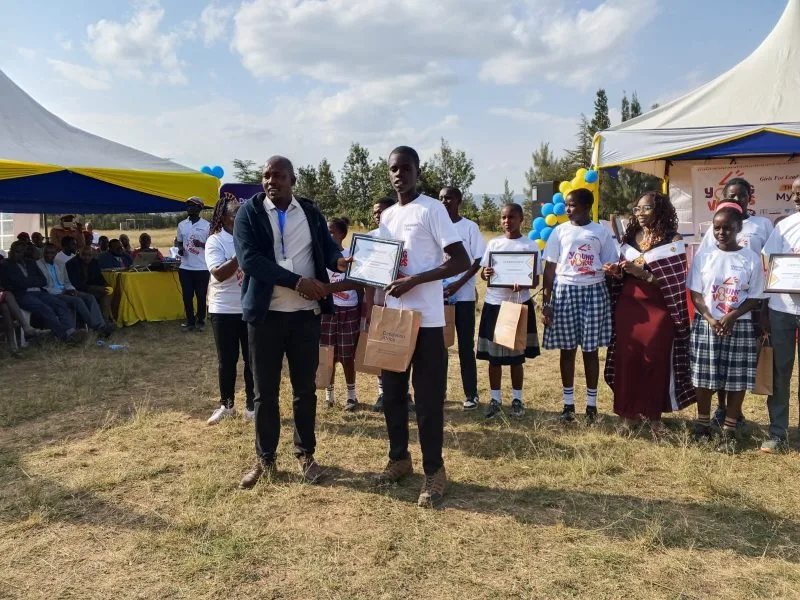
Speaking during a community engagement forum in Suswa, the organisation’s Girls for Leaders, Boys for Change Initiative officer, Tabitha Wamucii, said engaging the male gender in conversations around harmful cultural practices would help transform attitudes within communities.
She noted that school dropout rates among girls in pastoral areas remain high due to challenges such as FGM, teenage pregnancies and forced marriages.
“These forums are meant to ensure that young voices for change reach the target audience, while also encouraging students to openly discuss the challenges they face,” Wamucii said.
The Girls for Leaders, Boys for Change Initiative is a youth empowerment programme through which more than 14,000 junior and senior secondary school students have been trained to challenge harmful cultural norms at the grassroots level.
The students also serve as peer educators on menstrual hygiene, sanitation and reproductive health issues in schools across Baringo County, Kajiado County, Nakuru County and Narok County.
According to Wamucii, plans are underway to expand the initiative to Elgeyo-Marakwet County, Laikipia County and West Pokot County.
She said the programme has also helped break stigma surrounding menstruation among boys and men in pastoral communities.
“Boys under this programme understand that menstrual issues are natural and not shameful. They can openly discuss menstrual hygiene and advocate for improved sanitation facilities for girls in schools,” she said.
Wamucii added that men participating in the initiative are increasingly recognising sanitary towels as essential items for girls and women.
“Many of the men involved can now comfortably buy sanitary towels for their daughters and wives because they understand their importance,” she added.
The organisation said the initiative aims to eliminate teenage pregnancies, school dropouts and FGM within areas where the programme is being implemented while promoting full transition of girls through all levels of education.
One of the peer educators and menstrual hygiene champions, Zaituni Kapaya, said the mentorship programmes had helped young girls gain confidence and leadership skills.
Kapaya noted that girls from communities where women and youth were traditionally discouraged from speaking publicly are now increasingly able to articulate issues affecting them and participate in community discussions.