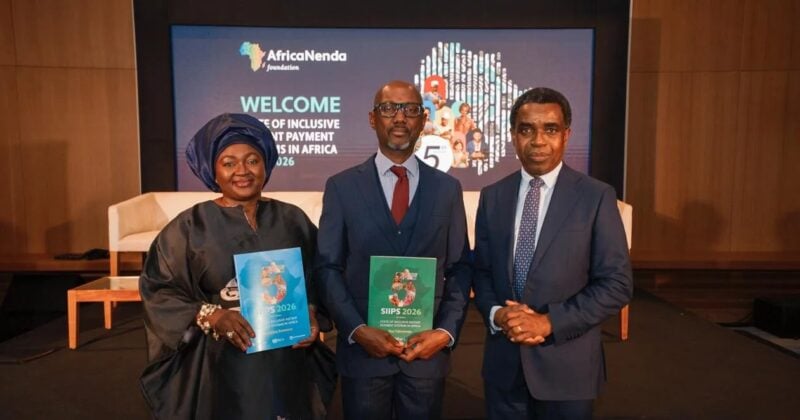
NAIROBI, Kenya Nov 19 – Africa processed 71.4 billion instant payment transactions worth $1.8 trillion in 2025, nearly three times the volume recorded in 2021, but concerns over trust and payment failures continue to hinder wider adoption.
The findings are contained in the 2026 State of Inclusive Instant Payment Systems in Africa (SIIPS) report, published on Thursday by AfricaNenda Foundation in partnership with the United Nations Economic Commission for Africa and the World Bank Group.
The report shows that 89 per cent of African adults live in countries with access to instant payment systems, highlighting the rapid expansion of digital financial infrastructure across the continent.
However, access has not translated into widespread everyday use, with cash remaining dominant in many transactions.
A survey of 1,403 digital payment users across 15 markets found that 55 per cent still use cash for about half of their transactions. More than half of respondents had experienced payment problems, including delays and sending money to the wrong recipient, while one in three never reported such issues, largely because they did not know how to do so.
Instant payment systems expand across Africa
Africa now has 39 live instant payment systems, comprising 35 domestic systems across 29 countries and four regional systems. A total of 43 countries have access to instant payment capabilities through domestic or regional platforms.
Four domestic systems were added in the past year in Liberia, Burundi, Guinea and Mauritania, while a new regional system now serves the eight countries of the West African Economic and Monetary Union (WAEMU). Another 17 countries have instant payment system projects underway.
Transaction volumes have grown by an average of 28 per cent annually since 2021, while the average payment value has declined from $45 to $26, reflecting increased use for smaller, everyday transactions.
Mobile money systems account for 73 per cent of all instant payment transaction volumes.
AfricaNenda Foundation Deputy CEO Sabine F. Mensah, who led the report, said the focus had shifted from expanding access to ensuring users trusted the systems enough to rely on them instead of cash.
“Five years ago, our first report mapped 29 instant payment systems; today there are 39, and one in two African adults live in a country served by an inclusive instant payment system,” Mensah said.
She said trust depended on payments being completed instantly, preventive safeguards such as recipient name validation and real-time confirmation messages, as well as timely resolution when transactions went wrong.
Trust and consumer protection remain critical
The report identifies payment reliability, clear confirmation messages and the ability to verify recipients before sending money as key factors influencing user confidence.
It also highlights the importance of resolving failed transactions and recovering lost funds. According to the findings, 43 per cent of users who lost money reduced their use of digital payments, while those who received refunds often increased their usage.
Payment service providers are adopting artificial intelligence tools to combat fraud more rapidly than instant payment system operators, the report says. However, users largely perceive AI as a risk, particularly because of emerging threats such as deepfakes.
The report also found that countries operating instant payment systems recorded active account usage about seven percentage points higher, suggesting that inclusive payment infrastructure can help deepen financial services usage.
Greater digital payment activity could also create opportunities for access to credit through digital cash-flow records.
AfricaNenda Foundation Chief Executive Officer Robert Ochola said the continent had made significant progress in building payment infrastructure but needed to focus on affordability, security and sustainability.
“Africa has built inclusive instant payment infrastructure at remarkable speed, drawing on the talent of its own software engineers and designers,” Ochola said.
“The next five years must be about making these systems affordable to use, safe and sustainable to run.”
The SIIPS report, now in its fifth edition, tracks the development of instant payment systems across Africa and provides policy recommendations aimed at strengthening trust, interoperability and financial inclusion.