Artificial intelligence (AI) is no longer a futuristic concept confined to research laboratories or science fiction. It is rapidly transforming economies, reshaping industries and redefining global competitiveness. From healthcare and education to manufacturing and public administration, AI is becoming the engine of the next technological revolution. Yet as nations compete to develop increasingly powerful AI systems, an equally important question is emerging: who should shape the rules that govern this transformative technology?
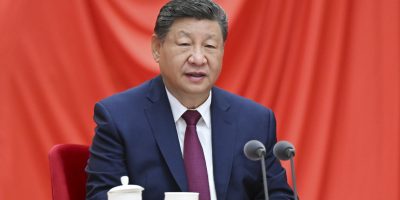
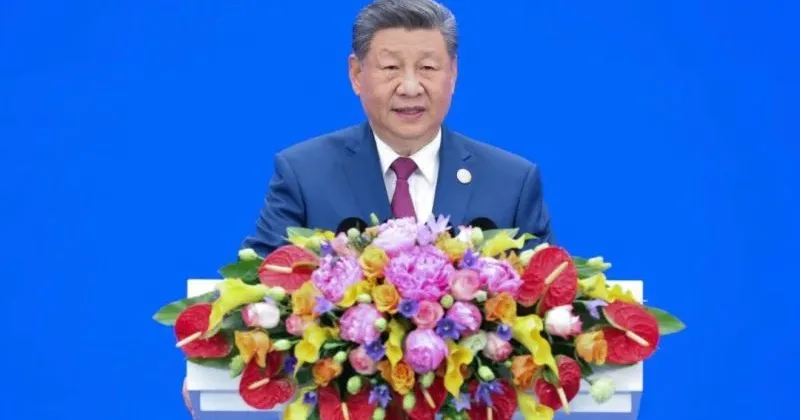
Chinese President Xi Jinping sought to answer that question at the opening of the 2026 World AI Conference and High-Level Meeting on Global AI Governance in Shanghai last week. While much of the global AI conversation has centred on breakthroughs in computing power and large language models, Xi shifted the focus towards governance, international cooperation and shared responsibility. His message was clear: the future of AI will be defined not only by innovation, but also by the principles that guide its development.
This vision did not emerge overnight. For more than a decade, Xi has consistently described AI as a strategic technology that will influence economic growth, scientific advancement and national development. As early as 2014, he urged Chinese scientists to anticipate emerging technological trends. In 2017, China elevated AI to a national strategic priority through its New Generation Artificial Intelligence Development Plan. A year later, Xi famously likened AI to the “lead goose” in a migrating flock, capable of driving transformation across multiple industries through innovation and productivity.
China’s sustained investment has produced tangible results. According to the Ministry of Industry and Information Technology, the country’s core AI industry surpassed 1.2 trillion yuan in 2025, supported by more than 6,200 AI enterprises. AI technologies are increasingly embedded in manufacturing, logistics, healthcare, finance and government services, while Chinese companies continue to make significant advances in robotics, autonomous systems and foundation models. These developments provide the backdrop against which China is increasingly contributing to global conversations on AI governance.
What made Xi’s speech in Shanghai particularly significant, however, was its emphasis on principles rather than performance.
The first was openness and cooperation. Xi argued that AI innovation should be driven by collaboration, open-source development and the sharing of scientific knowledge. Rather than allowing technology to become another casualty of geopolitical competition, he advocated creating an ecosystem where innovation benefits from international cooperation. It is a recognition that the world’s biggest technological challenges are unlikely to be solved in isolation.
The second principle was security. As AI systems become more capable and autonomous, Xi stressed that they must always remain under meaningful human control. He also warned against stretching the concept of national security in ways that unnecessarily restrict technological cooperation. Balancing innovation with safeguards is becoming one of the defining policy challenges of the AI era. Governments must protect their citizens and critical infrastructure while avoiding regulations that could stifle scientific progress or deepen technological divides.
Xi’s third pillar was inclusiveness. He argued that AI should enrich rather than diminish the diversity of world civilisations. As artificial intelligence increasingly influences education, communication and culture, it should respect different languages, traditions and development paths instead of promoting a single technological model. In a digital age where algorithms shape how information is produced and consumed, preserving cultural diversity is no longer simply a social concern but a governance issue.
Perhaps the most consequential aspect of Xi’s address was his call for stronger global governance. Artificial intelligence is advancing far more rapidly than the regulatory systems designed to oversee it. Different countries are adopting different legal and ethical frameworks, creating an inc reasingly fragmented global landscape. Xi argued that the United Nations should play a central role in coordinating AI governance, aligning technical standards and promoting international cooperation. He also emphasised the importance of helping developing countries build AI capacity so that technological progress does not widen existing digital inequalities.
The conference also produced a significant institutional outcome with the establishment of the World Artificial Intelligence Cooperation Organization (WAICO), the first intergovernmental international organisation dedicated specifically to AI cooperation and governance. Headquartered in Shanghai, WAICO aims to promote innovation, strengthen governance, encourage capacity building and foster international collaboration. Its creation reflects China’s intention to champion the interests of the Global South in the realm of AI, move beyond policy statements and help build institutions capable of addressing the challenges of the AI era.
Naturally, translating broad principles into globally accepted governance will not be straightforward. Artificial intelligence raises complex questions about ethics, accountability and security, and redefines national sovereignty and the international order. Countries have different political systems, legal traditions and strategic priorities. While AI should not be monopolized by the club of the rich and powerful, building international trust will require transparency, broad participation and confidence that emerging governance mechanisms serve the collective interests of humanity rather than the ambitions of individual states.
Xi’s message in Shanghai highlights an increasingly important reality. The global conversation about artificial intelligence has to go beyond the race to maximize the financial and strategic gains by building the most powerful models. It emphasizes the creation of a framework that levels the playing field for the majority of the international community, encourages innovation for the positive and good, and protects humanity from dangerous consequences that might be caused intentionally or inadvertently by the capitalists and politicians of a few countries. Xi’s proposition will shape that framework, influence the future of technology and the global economy, and contribute to a more just and equitable global order.
Shanghai, therefore, marked more than just another international technology conference. It demonstrated China’s determination to contribute not only to AI innovation but also to the global architecture that will govern it. Xi Jinping’s vision has undoubtedly elevated governance to the centre of the AI debate, and has the potential to become the foundation for international consensus among several competing approaches.
As artificial intelligence continues to transform the world, one conclusion is becoming increasingly difficult to ignore: technological leadership alone will not define the next era. Equally important will be the wisdom to ensure that innovation is guided by principles that are responsible, inclusive and beneficial to all. Xi Jinping’s call in Shanghai offers a compelling contribution to that conversation.
Elijah Mwangi is a scholar based in Nairobi who comments on local and global affairs.