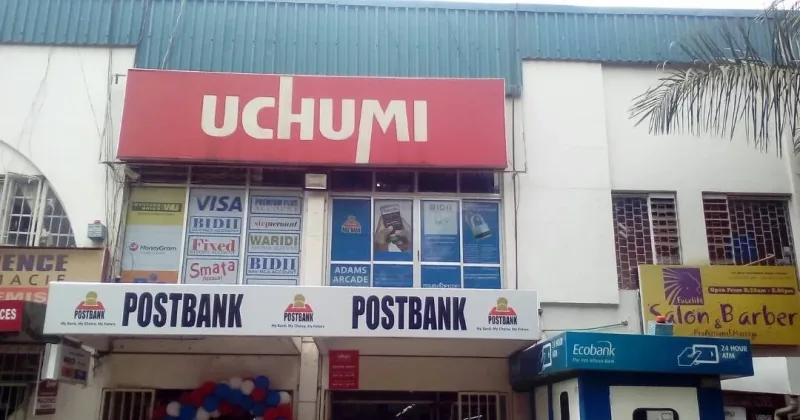
NAIROBI, Kenya, Aug. 5 – Fresh governance concerns have emerged at troubled retailer Uchumi Supermarkets after the court-appointed monitor overseeing its Company Voluntary Arrangement (CVA) said the company opened new branches without his knowledge or approval, even as former employees continue to pursue unpaid salary arrears and terminal benefits.
In submissions to Parliament’s Public Petitions Committee on Petition No. 9 of 2026, court-appointed monitor Owen Koimburi Njenga said Uchumi’s recent expansion raises questions about its financial priorities and compliance with the creditor-approved restructuring framework.
“The Company’s ability to fund new capital commitments while creditor and former-staff obligations remain outstanding is a legitimate and material question,” Njenga said.
“I was not briefed on the financing of either branch, nor was my approval as Monitor sought or obtained for either decision.”
Njenga said Uchumi recently opened branches at Unicity Mall along Thika Road and in Kitengela, despite a March 2025 creditor resolution requiring joint approval by the board and the monitor before surplus cash flows are deployed.
While noting that the board remains responsible for the company’s day-to-day management under the Insolvency Act, he said the monitor’s statutory role is to oversee compliance with the restructuring plan, adding that effective oversight is undermined when major capital decisions are made without disclosure.
The revelations come as lawmakers examine claims by former employees seeking payment of salary arrears and terminal dues.
Njenga told the committee that Sh6.83 million, or 85.3 percent, of the Sh8 million in salary arrears provided for under the revised CVA had been paid by April, with the remaining balance still being processed.
However, he said the broader creditor register still lists staff-related claims of about Sh521.7 million as part of Uchumi’s total creditor claims of approximately Sh9.79 billion, noting that the figures cover different obligations and should not be interpreted interchangeably.
Beyond employee claims, Njenga highlighted governance concerns, including the expiry of the original five-year CVA before confirmation of a court-approved extension, changes to debt-to-equity conversion terms without identifiable court approval in his records, unreconciled asset registers and incomplete disclosure of board decisions affecting implementation of the restructuring plan.
He said the issues do not point to criminal conduct based on the information available to him but reflect governance weaknesses that may have undermined oversight of Uchumi’s restructuring process.
The monitor is expected to present updated creditor records and implementation progress during the parliamentary committee hearing.