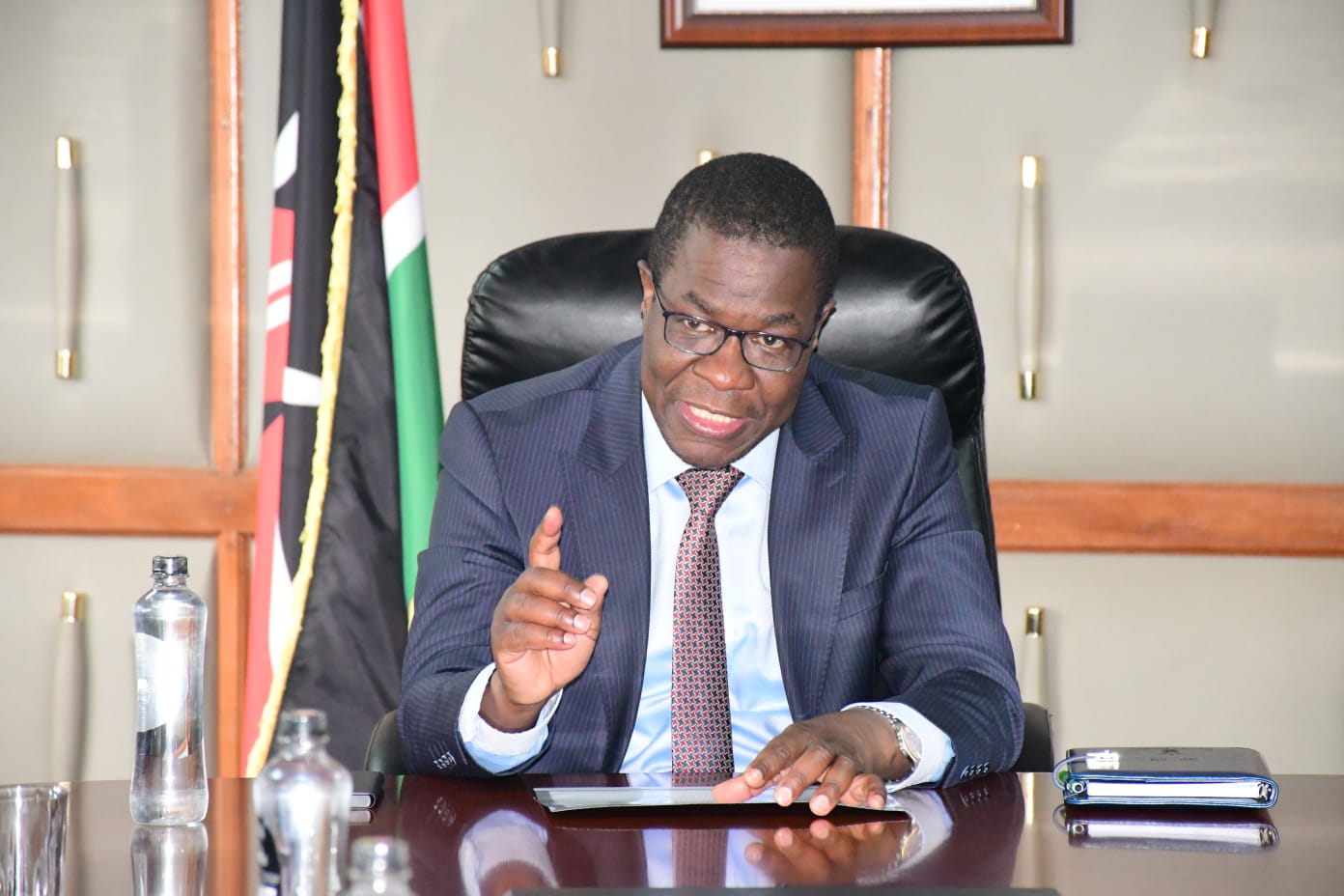
NAIROBI, Kenya, Oct 18 – Treasury Cabinet Secretary nominee Njuguna Ndung’u who is also former Central Bank of Kenya (CBK) governor has placed his net worth at Sh950 million.
Ndung’u who made the revelation before the National Assembly Appointment committee on Tuesday is comfortably in the list of millionaires in the country.
Njuguna is currently working with Africa Economic Research Consortium and he told the committee that he accumulated a majority of his wealth through financial investment.
“I think my anticipated earnings will be gratuity coming once my contract comes to an end unfortunately even I am approved I would have to leave this job,” he stated.
Njuguna was part of President Williami Ruto’s Kenya Kwanza strategy team assisting in crafting his bottom-up economic model strategy ahead of the August 9 general election.
He took part in developing the economic model which is expected to ensure more resources are invested in the grassroots, greater economic participation, and an expansion of the tax base.
Njuguna takes over an economy that has been battered by the economic effects of Covid-19 albeit slowly recovering amidst accumulating debt and soaring global inflation.
According to Treasury, as of June 2022, Kenya’s debt stood at Sh8.6 trillion.
Njuguna served as the Governor of the Central Bank of Kenya for two consecutive four-year terms, from March 2007 until March 2015.
He studied Bachelor of Economics at the University of Nairobi and did his Master’s in the same institution.
The professor of economics is credited for presiding over a period of growth and stability in the banking sector.
He had just taken over at CBK when Safaricom launched MPesa, a mobile money transfer service that has put Kenya on the global technology map.
It is also during his tenure that CBK allowed more technological experiments within the banking sector leading to the nurturing of other mobile money platforms, agency banking, and deepening of banking services in the country.
He listed the introduction of mobile phone financial services, the agency banking model, and currency centres to lower the cost of doing business for banks as part of his initiatives to increase financial inclusion.