NAIROBI, Kenya, Sep 9 – Getting to Eburru is a hustle. The small town, 34 km away from Naivasha town, is settled on a mountain, 2 856 m above sea level.
Early on your ascend, dusty roads, bushes, rocks, and the harsh breath similar to that of a semi-arid environment greet you—a topography that suggests little agricultural potential.
However, as the road climbs further, metamorphosis begins. Slowly, the chlorophyll dominance in the bumper stretches of land covered with fruits and crops manifests, signifying life at the top of Eburru Mountain.
Residents in Eburru have fabricated a productive and thriving ecosystem from the land, creating fertile farms in the shadows of the Eburru forest, which is also located on top of the mountain. However, what’s outstanding about this area is the methods that some farmers use to cultivate their crops.
At the foot of Eburru, modern agricultural techniques are heavily conspicuous. In Naivasha, heavy machinery and modern agricultural tactics have taken over in spraying and watering the vast pieces of land; however, despite the transformation of their neighbors, farmers in Eburru are still stuck with ‘old’ agricultural practices commonly known as organic farming.
46-year-old Joseph Irebe is a popular farmer and a resident of Eburru. He lives with his wife and children in his 2-acre piece of land, which borders Eburru Forest. Irebe is an agricultural fanatic, a trait that he says runs in his family bloodline.
“I was born here in Eburru, and my father was an agricultural officer, but he retired. So I have always had that passion after seeing what he was doing. After I finished my studies, I was not able to secure another job, and that’s when I decided to venture more into agriculture. I have been in agriculture for more than 15 years now,” he said.
Despite it being a relatively small piece of land, Irebe has made the most out of it. He has dedicated a quarter of his land to the household and the rest to dispense his agricultural passion.
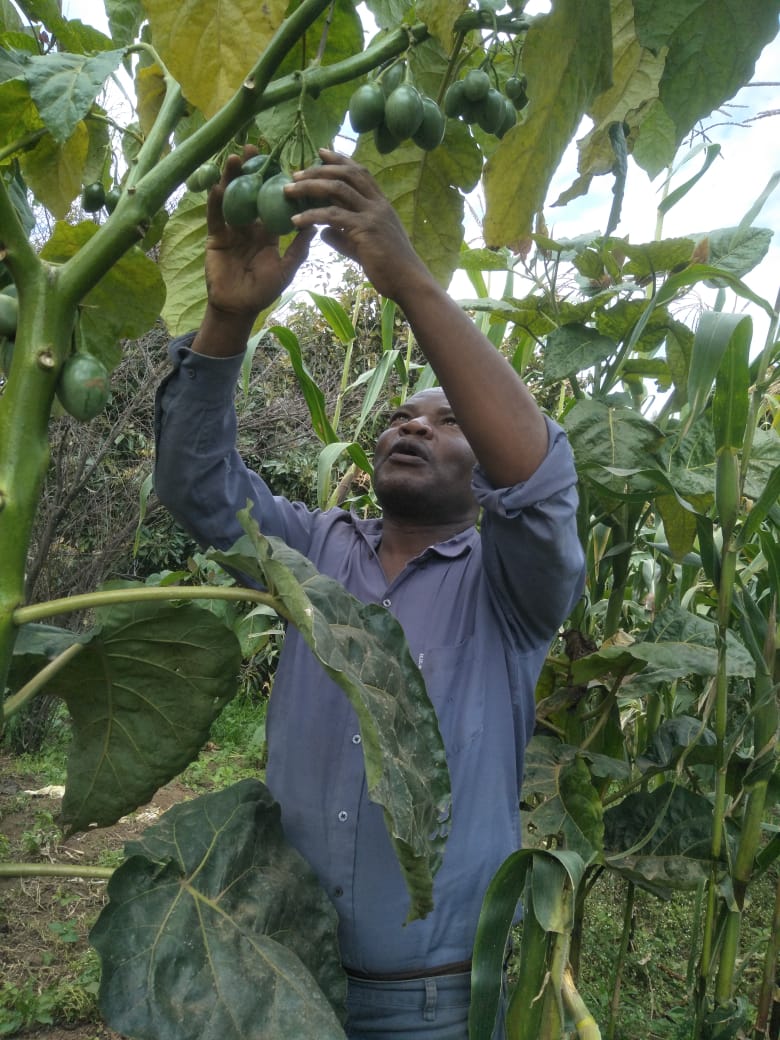
As you walk in his three-quarter-sized farm, a strong agricultural aura salutes you; his efforts are evident. Profuse rows of crops such as maize, potatoes, Pyrethrum, sugarcane, beans, and fruits such as oranges, avocados, potatoes, apples, and tree tomatoes, as well as domestic animals such as cows, sheep, and chickens, are vibrant with life.
To add attention to the situation Irebe clarifies that every piece of produce he grows on this farm is grown organically. “I have never used any chemical to grow my crops.”
Perhaps the most fascinating aspect of this farmer’s approach is the use of traditional herbs as pesticides. Irebe says that he uses a concoction of herbs commonly referred to as ‘Miti shambas’ to protect his plants against pests that attack his farm.
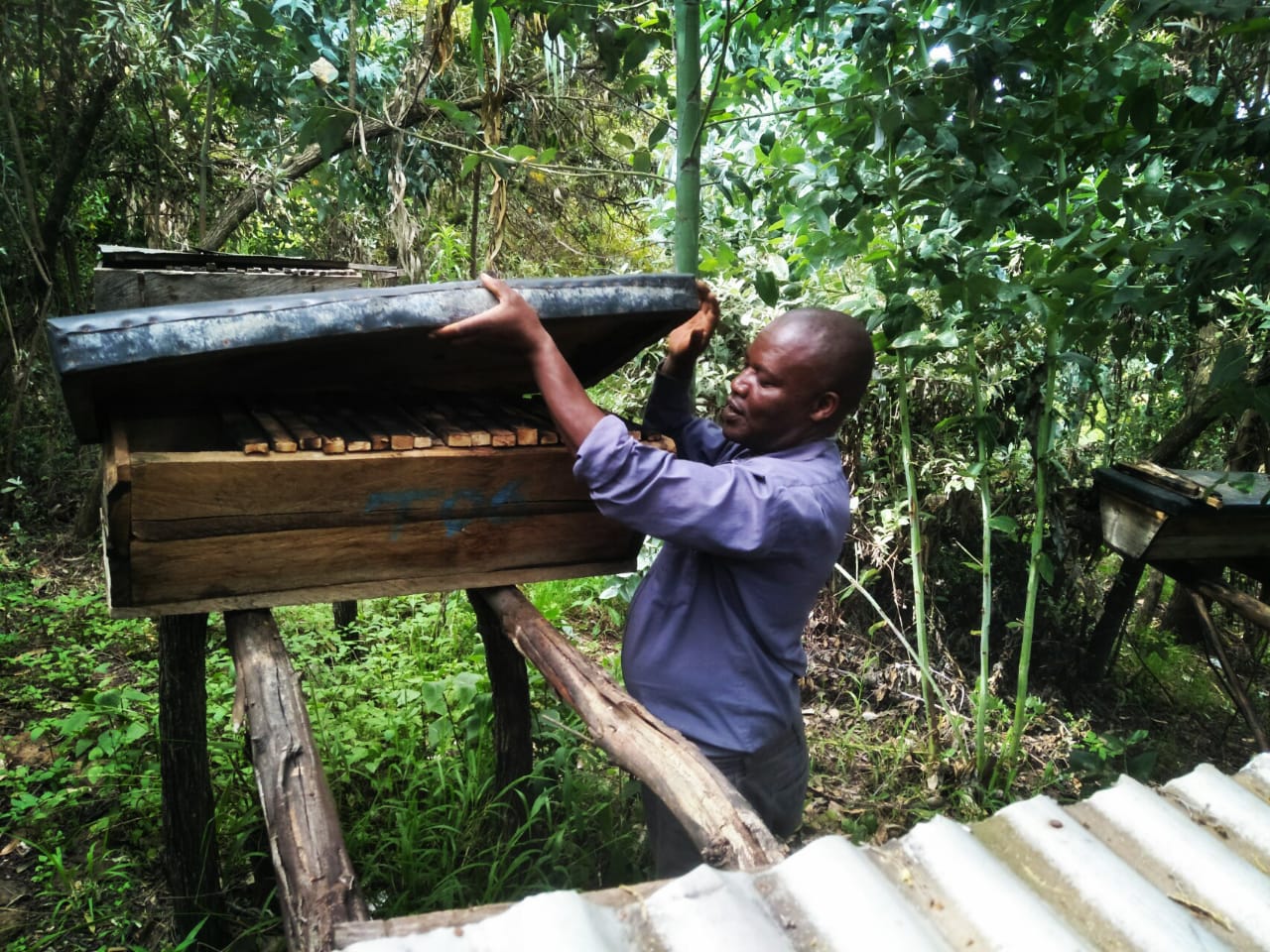
Furthermore, he also has over 40 beehives, two cows, and goats, which he says have also been foundational in maintaining his organic farming practices.
The bees, he says, have been fundamental in acting as pollination agents on his farm, where plants, particularly fruits, heavily benefit from natural pollination. On the other hand, the cows and goats produce dung, which he uses as fertilizer on his crops.
“For the fruits, we have had challenges with pests but I’m familiar with herbs, so I just mix them and spray. We don’t use chemicals here. I have two cows and some goats and they provide me with manure. So after three months, the manure is ready and I use it on my crops, and they do very well,” he stated.
Organic farming is a type of agriculture that relies on natural processes, rather than the use of synthetic inputs, such as chemicals, to grow crops and raise livestock and is considered by many as the healthiest and the most sustainable way to produce food and farm.
Some of the benefits linked with this technique of farming include soil enrichment, environmental sustainability, healthy living, preservation of biodiversity, economic empowerment, and water conservation.
The country has seen a discernible increase in farmers choosing to switch to organic farming in recent years, despite the quick uptake of modern agricultural techniques and technology. Currently, in Kenya, there are more than 170,000 hectares of land farmed organically.
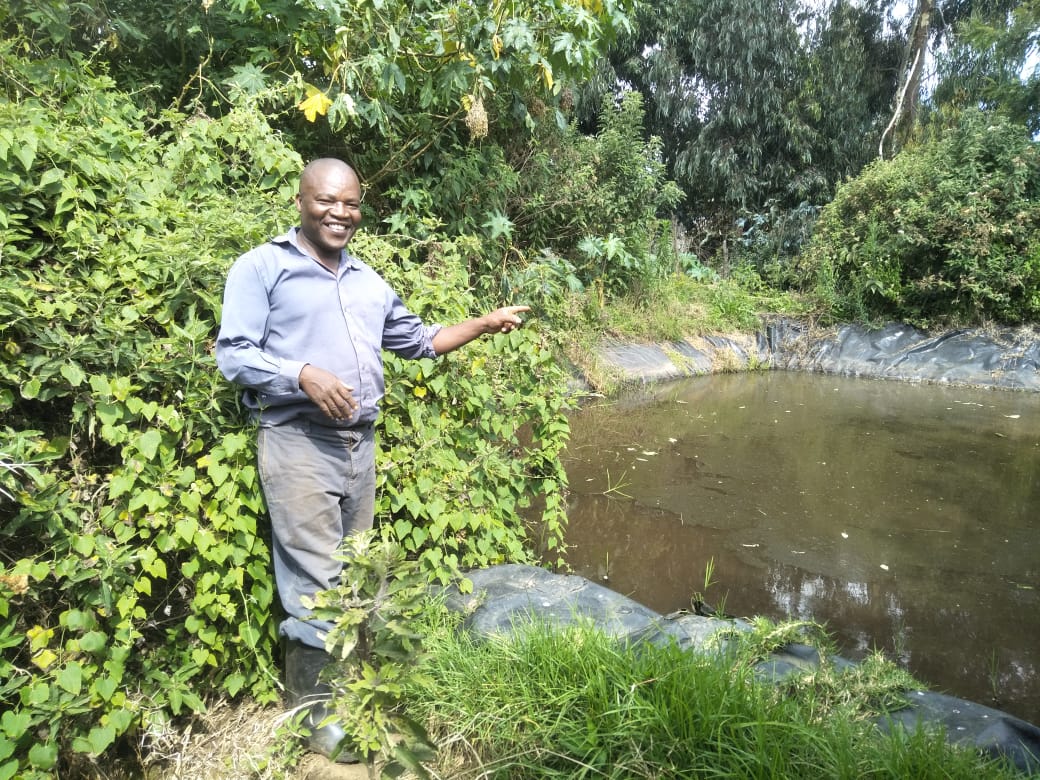
Irebe has also embraced water collection recipes, such as installing catchment systems, excavating dams to collect rainfall, and using drip irrigation, which he asserts have been essential to sustaining his agricultural output during dry seasons.
The agriculturist attributes much of his success to the conservation efforts of Eburru Forest and agricultural education by the Kenya Forest Service (KFS) in collaboration with the Rhino Ark Organization. In 2014, the organization completed the erection of an electric fence around the 8,715.3 hectares of woodland.
The fence, which utilizes solar power, has not only been fundamental in minimizing the human-wildlife conflict but has also played a key role in protecting farms in Eburru from wild animals.
“When someone or an animal touches the fence, it will throw him away, but it will not kill you, but you will feel the impact. The forest is home to animals like buffalos, which are a threat to both people and the crops. It has been preventing animals from getting out there and destroying people’s farms, and as a result, the area’s agricultural productivity is impressive,” said Josphat Wagura, Fence technician.

Moreover, the organization has taught farmers about beekeeping and other sustainable agriculture practices through partnerships with other institutions such as the National Beekeeping Institute and other initiatives.
Through these programs, Irebe and other local farmers in the area have access to agricultural officers once a month who visit their farms, evaluate progress, and offer advice, which has greatly elevated their agricultural wisdom.
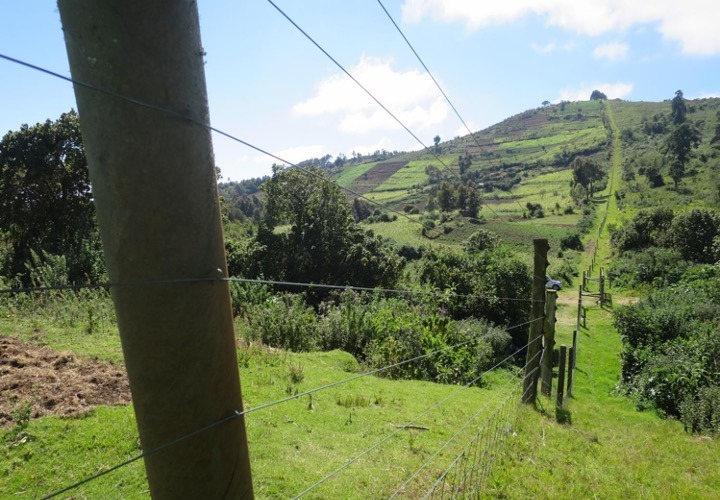
According to Eburru residents, the conservation of the forest has been a key catalyst in increasing the rains, which have been pivotal in maintaining the agricultural palatability of the lands that were once bare.
Despite it being a tourist destination, several farmers from Eburru have mounted beehives in the forest, a step that has not only boosted honey production but also their knowledge on forest conservation.
The absence of artificial pesticides and fertilizers has not only nurtured healthier crops but has also maintained the delicate balance of Mount Eburru’s ecosystem.
“In the past, we did not have the know-how on how to conduct sustainable agriculture, after we planted our crops just dried. When Rhino Work came through and gave us an agricultural offer, that’s when our eyes were open. In the past, we had a problem with water but after learning water harvesting techniques I now have a good supply of water,” Joseph said.
Irebe can sell his farm’s produce and maintain his family’s financial security. Moreover, the farm yields sufficient food for the family’s consumption. His agricultural prowess has further attracted other community members and other external parties to come and learn from him.
“It is a small shamba, but it gives me enough. When you go to the market to buy these fruits, it is very expensive, and also the quality of the fruits is not guaranteed, but here, we just pick these fruits; they are organic, so my family can feed well. I also sell some of my produce, and I get money to take my children to school; as you can see, I have also gained some weight (chuckles),” he said.
Throughout our conversation, Joseph’s passion for agriculture is heavily pronounced. “I love agriculture and forest conservation. I would like to also offer training to the youths who have less agricultural knowledge,” he said.