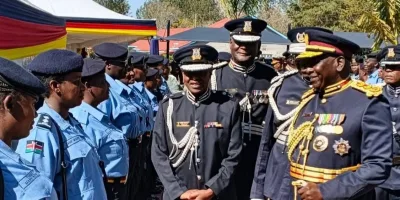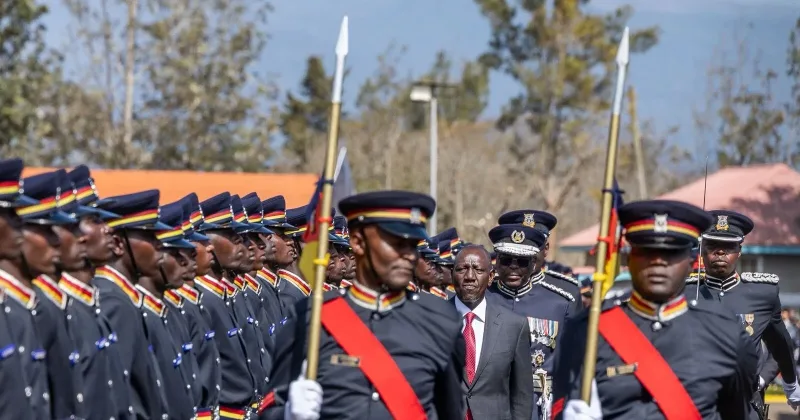
NAIROBI, Kenya, Aug 28 — President William Ruto has urged more than 6,000 newly trained police officers to exercise their authority responsibly, uphold the Constitution and remain accountable to Kenyans as they begin their careers in the National Police Service.
Ruto, speaking on Friday during the recruits’ passing-out parade at the National Police College in Kiganjo, said policing in a constitutional democracy requires officers to protect citizens while respecting their rights and freedoms.
The President told the recruits that their authority must be exercised lawfully and professionally, warning against corruption, excessive force and abuse of office.
“Wherever you are deployed, you must remain disciplined, impartial, incorruptible, protect the vulnerable, treat every citizen with dignity, and reject every inducement to compromise your duty,” Ruto said.
He said the police must strike a balance between maintaining public order and protecting individual liberty, particularly as Kenya approaches the 2027 General Election.
“Do not arrest only the young people holding a weapon while allowing the person who recruited, transported, and paid them to escape responsibility,” Ruto said, warning against politically sponsored violence.
Ruto said the police would have a constitutional responsibility to protect the democratic space during the next election, while taking lawful action against individuals who finance, organize, incite or perpetrate violence.
He also cautioned the new officers against treating policing merely as a job, telling them that public trust would be one of their most important operational assets.
“When citizens trust the police, they report crime, share intelligence, cooperate with investigations, and help prevent threats before they materialize,” he said.
The President said modern policing must be measured not only by arrests but also by crimes prevented, lives protected, and the confidence created among citizens.
The more than 6,000 recruits completed nine months of intensive training after joining the college on Nov. 24, 2025.
Their training covered legal studies, police procedures, firearms skills, field craft and tactics, countering violent extremism, national security, traffic management, criminal investigations, human rights and community policing.
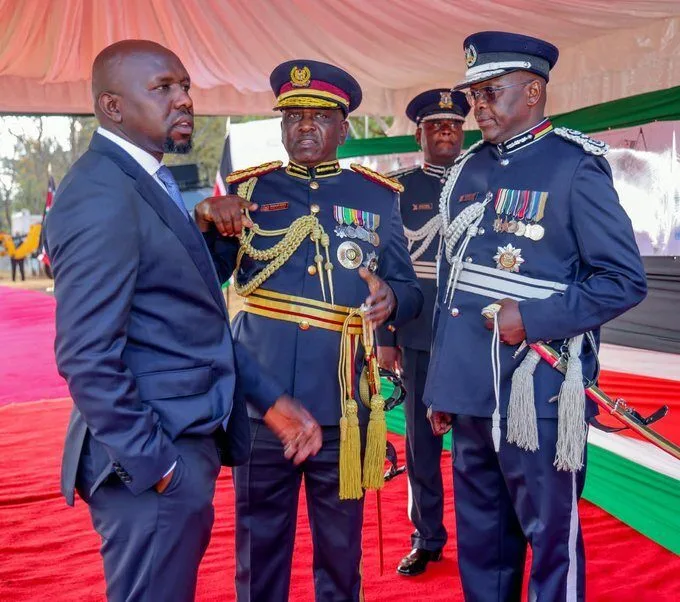
Inspector-General of Police Douglas Kanja said the recruits had acquired the competencies required for modern policing and were ready to serve the country.
“Indeed, the graduating officers will boost the personnel strength in the service,” Kanja said.
He said the service had also received investments in technology, equipment, transport and housing as part of efforts to modernize policing.
Kanja urged the graduates to maintain professional and ethical standards throughout their careers.
“I urge the graduates to always uphold professionalism and integrity in discharge of their policing duties,” he said.
He reminded them that policing was more than employment and carried a constitutional responsibility to protect Kenyans.
“They will be expected to adhere to the constitution and the rule of law at all times and to devote themselves fully in protection of the rights and freedom of all persons,” Kanja said.
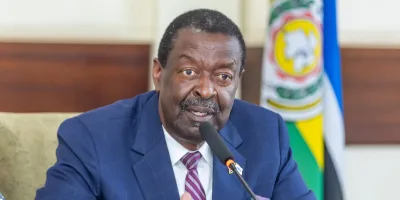
Interior Cabinet Secretary Kipchumba Murkomen said the latest recruitment was part of efforts to address personnel shortages within the National Police Service, with the new officers forming part of the 10,000 police officers recruited under the current administration.
Murkomen said the training curriculum had been upgraded to prepare officers for emerging security threats, including digital and online crime, while strengthening their ability to manage crowds, public order and other policing challenges.
“The curriculum that we have that has been used to train these officers is modern. It has been improved and we believe that the officers that are going to graduate today are better trained to serve this nation under the challenges that we face now,” Murkomen said.
He said reforms were also being undertaken to restore continuous training within the police service, including the reopening of regional police training centres and strengthening leadership training for officers in charge of police stations.
Murkomen said the government had also invested in police equipment, vehicles, air support and crowd-management capabilities.
He said such investments, together with reforms in training and digitization, were intended to give officers the tools needed to respond to modern security threats while improving their relationship with the public.
The passing-out ceremony marked the formal transition of the recruits from training to active policing. The recruits took an oath committing themselves to uphold the Constitution, preserve peace, prevent offences and discharge their duties faithfully according to law.
Ruto also used the occasion to outline measures aimed at improving police welfare, saying the government had implemented reforms covering remuneration, housing, healthcare, equipment and psychological wellbeing.
He said entry-level basic pay for police constables had risen from Sh21,000 to Sh29,000 following the completion of a three-phase review of police remuneration.
The President said improving the welfare of officers must accompany demands for professionalism and integrity.
“We cannot demand professionalism, integrity and sacrifice from our police officers while remaining indifferent to their remuneration, housing, health care, equipment, career progression, and psychological well-being,” he said.